

The easiest way to clean a flat top griddle is to scrape off food debris while it’s still warm, then degrease with hot water and a griddle-safe cleaner. This method prevents food from hardening, making cleanup much simpler and faster. You’ll keep your griddle ready for your next culinary creation.
Keeping your griddle clean is more than just good hygiene; it’s about preserving flavor and extending the life of your appliance. A well-maintained griddle prevents food from sticking and ensures even cooking every time. We found that a routine cleaning after each use makes a big difference.
- Scrape debris while warm.
- Use hot water and a cleaner.
- Rinse thoroughly.
- Dry completely.
- Apply a light coat of oil for protection.
Let’s walk through exactly how to clean a flat top griddle step by step, so yours can shine like new.
The Right Way to Clean Your Flat Top Griddle
Cleaning your flat top griddle isn’t just about making it look nice; it’s about keeping your food tasting great and your griddle lasting longer. A dirty griddle can transfer old flavors to new foods, and nobody wants last night’s bacon grease on their pancakes!
Gather Your Griddle Cleaning Toolkit
Before you dive in, make sure you have the right tools. Having everything ready makes the job quicker and easier. Think of it like a chef preparing their mise en place – everything in its place!
Essential Griddle Cleaning Tools
- Griddle Scraper: A sturdy, flat-edged scraper is your best friend for removing stuck-on food.
- Heat-Resistant Gloves: Protect your hands, especially when cleaning a warm griddle.
- Heavy-Duty Paper Towels or Clean Cloths: For wiping away grease and grime.
- Griddle Cleaner/Degreaser: Choose one specifically designed for griddles.
- Water: Hot water works wonders for loosening gunk.
- Griddle Bricks or Cleaning Pads (Optional): For stubborn spots or deeper cleaning.
- Cooking Oil (for seasoning): After cleaning, you’ll want to re-season a bit.
Step-by-Step Griddle Cleaning Process
Let’s get down to business! We’ll walk through the process from immediate post-cooking cleanup to deeper maintenance. Consistency is key here; a little effort after each use saves a lot of elbow grease later.
Cleaning While the Griddle is Still Warm
This is the golden rule! Cleaning a griddle while it’s still warm makes a huge difference. Food debris hasn’t had a chance to harden and bond to the surface. It’s much like trying to clean a plate right after dinner versus letting it sit overnight.
- Scrape Off Excess Food: While the griddle is still warm (but not scorching hot), use your griddle scraper at a low angle to push food bits and excess grease into the grease trap. You’ll be surprised how much comes off easily.
- Pour Hot Water: Carefully pour a small amount of hot water onto the griddle surface. Be cautious, as it will create steam. This helps to lift and loosen any remaining cooked-on bits.
- Scrape Again: Use your scraper to work the hot water around, pushing any loosened residue into the grease trap.
- Wipe Down: With heat-resistant gloves, use several layers of paper towels or a clean cloth to wipe the surface clean. You might need to repeat the hot water and wipe process a few times until the paper towel comes away relatively clean.
Deep Cleaning for Stubborn Grime
Sometimes, despite your best efforts, you might encounter some tough spots or burnt-on residue. Don’t worry; your griddle isn’t ruined! We found a few tricks for these situations.
- Apply Griddle Cleaner: Once the griddle has cooled slightly (or is just warm), apply a griddle-specific cleaner or degreaser. Follow the product instructions carefully. Some cleaners need a few minutes to work their magic.
- Scrub with a Griddle Pad or Brick: For really tough spots, a griddle cleaning pad or brick can be very effective. Use gentle, circular motions. These are abrasive, so don’t press too hard, especially if your griddle has a non-stick coating. You want to remove grime, not the griddle surface!
- Rinse Thoroughly: Use plenty of hot water to rinse away all cleaner residue. You don’t want any cleaning chemicals left behind for your next meal. Scrape the water into the grease trap.
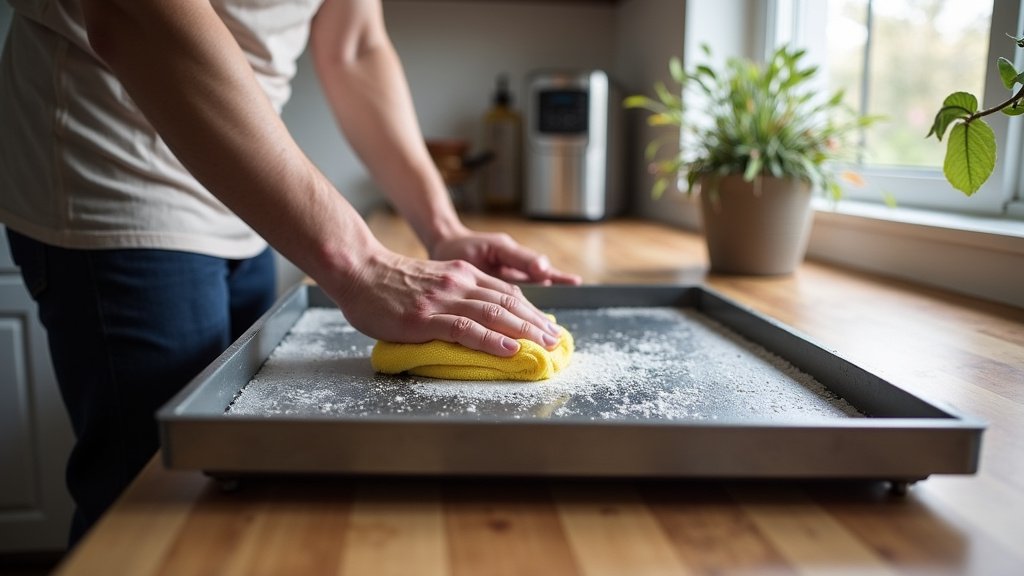
- Wipe Dry: Use clean paper towels or a cloth to wipe the griddle completely dry. Any lingering moisture can lead to rust.
The Importance of Re-Seasoning Your Griddle
Once your griddle is sparkling clean and dry, there’s one crucial step many people miss: re-seasoning. This isn’t just for brand-new griddles. It creates a protective, non-stick layer and prevents rust. Think of it as putting a moisturizer on your skin after a good wash – it keeps it healthy and protected.
How to Re-Season Your Griddle After Cleaning
- Heat the Griddle: Turn your griddle on to a low-medium heat setting.
- Apply a Thin Layer of Oil: Once warm, apply a very thin, even layer of high-smoke-point cooking oil (like flaxseed, grapeseed, or vegetable oil) to the entire cooking surface. You can use a paper towel for this.
- Wipe Off Excess: Use a clean paper towel to wipe off as much oil as you can. You want a barely visible layer. Too much oil will just get sticky.
- Let it Smoke: Allow the griddle to heat until it starts smoking. This is the oil polymerizing and bonding to the surface. It might take 10-15 minutes.
- Turn Off Heat and Cool: Once it stops smoking, turn off the heat and let the griddle cool completely.
You’ll notice a slightly darker, shiny finish – that’s your fresh seasoning!
Common Griddle Cleaning Mistakes to Avoid
We’ve all been there, making little mistakes that turn a simple task into a bigger headache. Here are some common pitfalls when cleaning your flat top griddle.
- Letting Food Sit and Harden: This is probably the biggest offender. Dried-on food is exponentially harder to remove.
- Using Abrasive Scrubbers on Seasoning: While griddle bricks are good for tough spots, harsh metal scrubbers can strip away your precious seasoning.
- Not Rinsing Thoroughly: Leaving cleaner residue can affect the taste of your food and potentially damage the griddle surface.
- Leaving Moisture on the Griddle: Water is the enemy of cast iron and steel. Always dry completely to prevent rust.
- Over-Oiling During Seasoning: Too much oil creates a sticky, gummy surface instead of a smooth, non-stick one. Less is more!
Griddle Cleaning Checklist for Success
Here’s a quick reminder of the key steps to keep your griddle in top shape. You can even print this out and stick it on your fridge!
- Scrape while warm.
- Use hot water to loosen bits.
- Apply griddle cleaner for stubborn spots.
- Rinse completely.
- Dry thoroughly every time.
- Apply a thin layer of oil for seasoning.
Comparing Cleaning Tools: A Quick Look
Sometimes it’s hard to know which tool is best for what. Here’s a simple table to guide your choices:
| Tool | Best Use | Notes |
|---|---|---|
| Griddle Scraper | Removing loose debris, pushing water/oil | Essential, invest in a good one. |
| Griddle Brick/Pumice | Burnt-on food, heavy carbon buildup | Use with caution, can be abrasive. |
| Griddle Pad | General scrubbing, removing light residue | Less abrasive than a brick, good for routine use. |
| Paper Towels/Cloth | Wiping away grease, drying | Keep plenty on hand, use fresh ones. |
As you can see, each tool has its moment to shine. Using the right tool for the job makes your cleaning routine much more efficient.
Maintaining Your Griddle for Longevity
A little preventative care goes a long way. Think of your griddle as an investment. You wouldn’t neglect your car, right? The same goes for your cooking surfaces.
We found that consistent, quick cleaning after each use prevents a lot of headaches. It keeps the seasoning intact and stops food from building up into layers of hard-to-remove gunk. Many experts say that maintaining a clean griddle also contributes to better food safety by reducing potential bacteria buildup (FoodSafety.gov).
Regular maintenance also means you won’t have to resort to super aggressive cleaning methods that can damage your griddle’s surface or strip away its precious seasoning. It’s a win-win: less effort for you, and a happier, longer-lasting griddle.
Conclusion
Keeping your flat top griddle clean isn’t a chore; it’s an investment in delicious meals and a long-lasting appliance. By consistently scraping while warm, using the right tools, and always re-seasoning, you’ll prevent sticky build-up and frustrating rust. We’ve seen firsthand how a little care after each cooking session makes a huge difference. You’ll enjoy better-tasting food and a griddle that’s always ready for your next culinary adventure. So, grab your scraper and make griddle cleaning a simple, satisfying part of your cooking routine!
Frequently Asked Questions
What if my griddle has burnt-on residue that won’t come off?
For really tough, burnt-on spots, try using a griddle brick or a heavy-duty griddle cleaning pad. Apply a bit of griddle cleaner and scrub gently in circular motions. You might need a little elbow grease, but avoid abrasive metal scrubbers that can damage your griddle’s surface.
How often should I deep clean my flat top griddle?
Ideally, you should do a quick clean after every use. A full deep clean with a griddle brick or strong cleaner might only be necessary every few weeks or months, depending on how often you use your griddle and what you cook. If you notice persistent sticking or a dull surface, it’s time for a deep clean.
Can I use soap to clean my flat top griddle?
It’s generally best to avoid regular dish soap, especially on well-seasoned griddles. Dish soap can strip away the non-stick seasoning you’ve worked hard to build up. Stick to griddle-specific cleaners or just hot water and a scraper for daily cleaning. If you must use soap for a deep clean, be sure to re-season immediately afterward.
My griddle is sticky after cleaning and seasoning. What went wrong?
A sticky griddle usually means you applied too much oil during the re-seasoning process. The key is to wipe off as much oil as possible after applying it, leaving only a microscopic layer. You want it barely visible. Too much oil doesn’t polymerize properly and leaves a gummy residue. You can try heating the griddle again and wiping off more excess oil while warm.
How do I prevent my flat top griddle from rusting?
The best way to prevent rust is to ensure your griddle is completely dry after every cleaning. Any lingering moisture will lead to rust, especially if it’s steel or cast iron. After drying, apply a very thin, even layer of cooking oil as a protective barrier. This seals the surface and keeps moisture away.
