
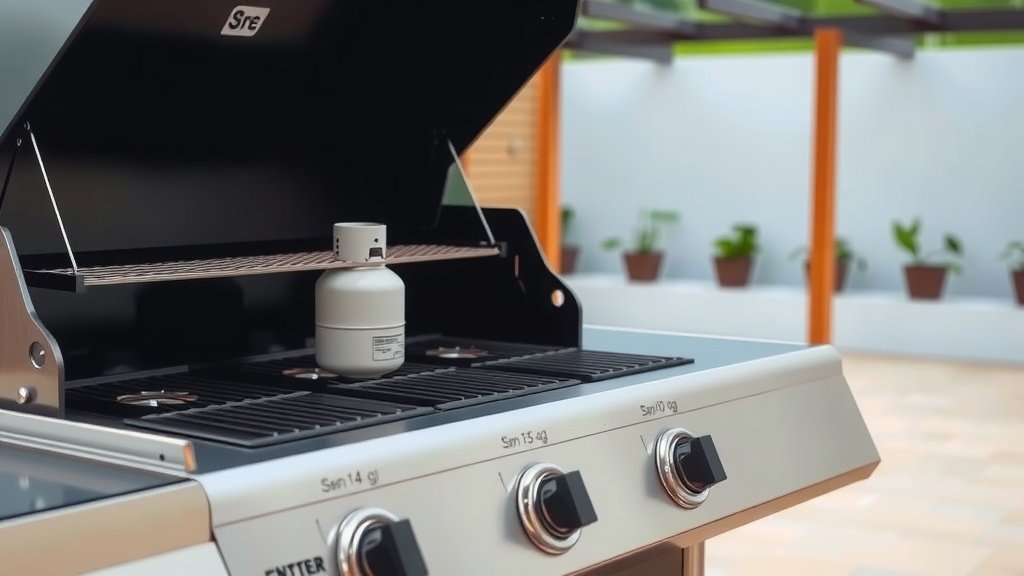
To change a propane tank on your gas grill, first ensure the grill is off and the old tank’s valve is completely closed by turning it clockwise. Then, unscrew the large black connector nut from the tank, lift out the empty tank, place a full tank into the grill’s base, and securely screw the connector nut back on by hand, turning clockwise until snug.
Always perform a leak test with soapy water before lighting your grill to confirm all connections are secure and prevent gas leaks.
- The quickest way to change a propane tank on your gas grill is to first turn off the grill and close the tank valve, then disconnect the old tank, place the new one, and reconnect it securely.
- Always do a leak test using soapy water on the connections to be safe.
- Check the date on your tank; tanks expire and need replacement, not just refills, after a certain time (typically 10-12 years).
- If your grill struggles to light after a tank change, a quick regulator reset can often fix it.
- Safety is key: work in a well-ventilated area and never use tools to overtighten connections.
How To Change Propane Tank On Gas Grill?
Changing a propane tank on your gas grill involves a few simple steps: closing the old tank’s valve, disconnecting it, placing a new tank, and reconnecting it securely before performing a leak test. It’s a straightforward task, but knowing the right process ensures your grilling is both delicious and safe.
Safety First: Your Grilling Golden Rule
Before you even think about touching that propane tank, stop for a moment. Safety is paramount when dealing with gas. Think of it like a chef preparing a meal; the first step is always to ensure the kitchen is safe and ready. Many experts say that preventing gas leaks is crucial (National Fire Protection Association).
Pre-Change Safety Checks
Always make sure your grill is completely off. Turn all the burner knobs to the “OFF” position. It sounds obvious, right? But sometimes in the excitement of a backyard barbecue, little things get missed. Also, ensure you are in a well-ventilated outdoor area. Never try to change a tank indoors or in an enclosed space. Gas needs room to dissipate safely.
Spotting an Empty Tank
How do you know if your tank is empty? Your grill will tell you! The flames might become very low, struggle to light, or simply go out mid-grill. A common trick is to pour warm water down the side of the tank; the water will feel cool where the liquid propane remains. Another way is the weight test: a full 20-pound tank is heavy, around 37-40 pounds, while an empty one is noticeably lighter, closer to 17-20 pounds.
Gathering Your Tools: What You’ll Need
Good news: you won’t need a toolbox full of gadgets for this job. Usually, your bare hands are enough. However, a few items can be helpful.
- A new, full propane tank.
- A small wrench (sometimes handy, but often not needed).
- Soapy water (a mix of dish soap and water in a spray bottle or cup).
- A rag or paper towels.
Step-by-Step Guide to Propane Tank Replacement
Let’s walk through this process together, step by step, so you can get back to grilling your favorite foods without a hitch. Remember, patience and precision are your best friends here.
Step 1: Shutting Off the Grill and Tank Valve
First, confirm all burner knobs on your grill are in the “OFF” position. Next, locate the valve on top of your propane tank. Turn this valve clockwise until it’s completely closed. You want to make sure no gas can escape from the old tank.
Step 2: Disconnecting the Old Tank
Most grill hoses connect to the tank with a large, black plastic nut. This nut is usually designed for hand-tightening. Turn it counter-clockwise to loosen it. If it’s a bit stubborn, a wrench can help, but avoid overtightening it when you connect the new tank. Once loose, lift the connector straight up and off the tank valve. Then, carefully lift the empty tank out of its base or holder.
Step 3: Positioning the New Tank
Take your fresh, full propane tank and carefully place it into the designated spot at the bottom of your grill. Most grills have a ring or platform that holds the tank securely. Ensure the tank sits flat and doesn’t wobble.
Step 4: Connecting the New Tank
Align the connector from your grill’s gas line with the valve on the new propane tank. Push the connector down onto the valve, then turn the large black nut clockwise. Tighten it firmly by hand. You want it snug, but resist the urge to use a wrench to overtighten it. Over-tightening can damage the seal. Research often connects proper hand-tightening with a secure fit (Consumer Product Safety Commission).
| Action | Direction | Notes |
|---|---|---|
| Close Old Tank Valve | Clockwise | Always first step for safety |
| Disconnect Nut (Old Tank) | Counter-clockwise | Hand-tighten normally, wrench if stuck |
| Connect Nut (New Tank) | Clockwise | Hand-tighten firmly, avoid overtightening |
| Open New Tank Valve | Counter-clockwise | Open fully for best gas flow |
Step 5: Leak Detection – A Crucial Check
This step is non-negotiable! You must check for leaks before lighting your grill. Open the new propane tank valve slowly by turning it counter-clockwise a few turns. Don’t open it all the way just yet.
Now, spray your soapy water solution over all the connections where the hose meets the tank. Watch for bubbles. If you see bubbles forming, even small ones, you have a leak. Tighten the connection a little more and retest. If bubbles persist, close the tank valve immediately and contact your grill manufacturer or a professional. Many guidelines point to checking for leaks as a good first step (NFPA).
Leak Test Checklist:
- Confirm grill knobs are OFF.
- Open propane tank valve slowly.
- Spray soapy water on regulator-to-tank connection.
- Look for bubbles (even small ones).
- If bubbles appear, tighten slightly and retest.
- If no bubbles, you’re good to go!
Step 6: Testing the Grill
Once you’ve confirmed there are no leaks, open the propane tank valve all the way, turning it counter-clockwise until it stops. Then, try lighting your grill as you normally would. If it lights up successfully, congratulations! You’ve done it. You’re ready to grill.
Troubleshooting Common Propane Tank Issues
Sometimes, things don’t go perfectly. Don’t worry, a few common hiccups have easy solutions.
Grill Won’t Light After Tank Change?
This is a frequent complaint. You’ve changed the tank, but your grill refuses to light, or the flame is very low. The culprit is often the grill’s regulator. Propane regulators have a safety device that can “trip” if they sense a sudden rush of gas, like when a new tank is opened too quickly. This restricts gas flow.
Regulator Reset
To reset it: First, close the tank valve. Then, turn all your grill burner knobs to the “OFF” position. Disconnect the regulator from the propane tank. Wait about 5-10 minutes. Reconnect the regulator to the tank securely. Open the propane tank valve very slowly, only about a quarter to a half turn. Then, try lighting the first burner, followed by the others. This slow opening often prevents the safety device from tripping.
Checking for Clogs
Occasionally, spider webs or debris can clog the small orifices where the gas comes out, or even inside the gas hose. If a regulator reset doesn’t work, ensure your gas hose isn’t kinked and check the burner ports for any visible blockages. This is less common immediately after a tank change but worth noting for ongoing grill maintenance.
When to Replace Your Propane Tank (Not Just Refill)
Did you know propane tanks have an expiration date? It’s true! Most standard 20-pound tanks are only certified for 10 or 12 years from their manufacturing date. This date is stamped on the tank’s collar. After this period, refill stations usually won’t refill them because the tank’s integrity might be compromised. So, always check the date before heading out for a refill. We found that this expiration helps keep everyone safe (Pipeline and Hazardous Materials Safety Administration).
Proper Disposal of Old Tanks
Never just throw an old propane tank in the trash. They contain residual gas and are under pressure, making them a hazard. Many recycling centers, waste management facilities, or even propane exchange services can safely dispose of or recycle expired tanks. Call your local facility to inquire about their specific procedures.
Pro Tips for Extending Tank Life and Safety
Taking a few extra precautions can enhance your grilling experience and keep you safe.
When not in use, always store your propane tank upright in a well-ventilated outdoor area, away from direct sunlight or heat sources. Never store a tank indoors or in a garage. It’s also a good practice to keep the plastic safety cap on the tank’s valve when it’s disconnected or stored. This protects the valve from debris.
Avoid leaving your tank connected to the grill for long periods when not in use. Some experts recommend disconnecting it if you won’t be grilling for a while. This small habit reduces strain on connections and potential for tiny, unnoticed leaks.
Conclusion
Changing a propane tank on your gas grill is a fundamental skill for any backyard chef. By following these straightforward steps, prioritizing safety, and performing a quick leak test, you ensure your grilling sessions are always secure and enjoyable. Remember to check tank expiration dates and properly dispose of old tanks to maintain a safe grilling environment. Now, go fire up that grill and enjoy some delicious food!
How often should I check my propane tank for leaks?
You should check your propane tank and grill connections for leaks every time you change a tank or if you suspect an issue. A simple soapy water test is quick and effective for this.
Can I use any propane tank with my gas grill?
Most gas grills are designed for standard 20-pound (BBQ size) propane tanks with the Acme-thread type 1 connector. Always check your grill’s manual to confirm compatibility, but typically, they are interchangeable.
What should I do if I smell gas around my grill?
If you smell gas, immediately turn off all burner knobs on your grill and close the valve on the propane tank. Evacuate the area and do not use the grill or any ignition source until the source of the leak is identified and fixed by a qualified professional.
Is it safe to store a propane tank in my garage?
No, it is not safe to store a propane tank in your garage or any enclosed space. Propane tanks should always be stored outdoors, in an upright position, in a well-ventilated area, away from direct sunlight, heat sources, and potential ignition sources.
Why does my propane tank sometimes seem to run out quickly?
If your tank seems to run out faster than expected, it could be due to a grill regulator issue that’s allowing too much gas flow, or sometimes, a small, unnoticed leak. Always perform a leak test and consider having your regulator checked if the problem continues.
