
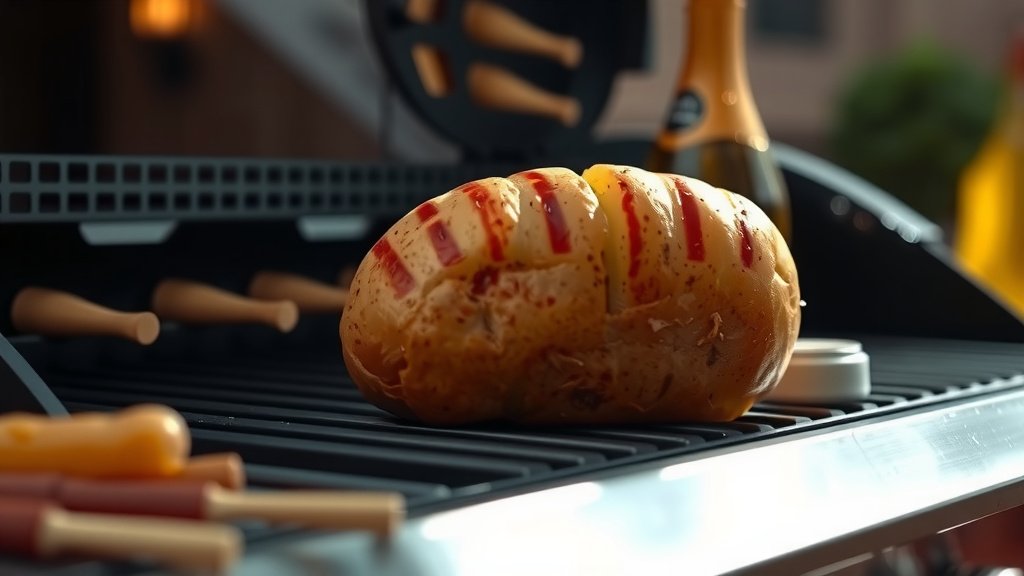
To bake a potato on a gas grill, you’ll first wash and prick the potato, then cook it over indirect medium heat (around 375-400°F) for 45-60 minutes until fork-tender.
For a perfect result, ensure your grill is set up for two-zone cooking, allowing the potato to bake slowly without burning.
- Get a fluffy interior and crispy skin by starting with a clean, pricked potato.
- Set up your gas grill for two-zone cooking: one side hot, one side off.
- Bake potatoes over indirect heat at 375-400°F for about an hour.
- Check for doneness when a fork slides in easily.
- Enjoy perfectly baked potatoes straight from your grill!
How To Bake A Potato On A Gas Grill?
Baking a potato on a gas grill creates a fluffy interior with a delightfully crispy skin, all without heating up your kitchen. You achieve this by using your grill’s indirect heat, much like an outdoor oven.
Why Bake Potatoes on Your Gas Grill?
Have you ever wanted that perfect side dish but dreaded turning on the oven on a hot day? Grilling potatoes offers a fantastic solution. It frees up oven space and adds a subtle smoky flavor that traditional baking just can’t match.
Many grill enthusiasts choose this method for its convenience and the unique texture it provides. It’s a wonderful way to round out your barbecue spread.
Selecting the Right Potato for Grilling
Choosing the right potato sets the stage for success. We found that Russet or Idaho potatoes are ideal for baking on a grill.
Their high starch content makes them fluffy and light once cooked. Opt for medium-sized, firm potatoes without green spots or sprouts for the best results.
Essential Potato Preparation Steps
Proper preparation ensures your potato bakes evenly and develops that amazing texture. This involves cleaning, pricking, and seasoning.
Cleaning and Poking Your Potatoes
First, give your potatoes a good scrub under cold water to remove any dirt. Dry them thoroughly with a paper towel. Then, use a fork to prick each potato 4-5 times all over. This prevents them from exploding on the grill (a tiny anecdote from a past grilling mishap!) by allowing steam to escape (USDA).
The Best Seasonings for Grilled Potatoes
Once clean and pricked, a little seasoning goes a long way. Drizzle each potato with a light coating of olive oil or another high-smoke-point oil. Rub it in gently.
Then, sprinkle generously with coarse salt and freshly ground black pepper. Some people like garlic powder or paprika too; feel free to get creative with your favorite spices.
Setting Up Your Gas Grill for Baking
A well-set grill is critical for evenly baked potatoes. You need to create different heat zones.
Understanding Two-Zone Grilling
For baked potatoes, you’ll want two-zone cooking. This means turning one or two burners to medium-high heat while leaving other burners off. This creates a direct heat zone and an indirect heat zone.
Many experts say to aim for an ambient grill temperature of 375-400°F in the indirect zone. This allows for slow, gentle baking.
Mastering the Grilling Process
With your grill ready, it’s time to get those potatoes cooking. The process is straightforward but requires a bit of patience.
Initial Sear for Crispy Skin
Some grillers like to start their potatoes directly over the flames for a few minutes. This can give you a super crispy skin, almost like a thin crust. Just a few minutes per side is enough to achieve this initial sear.
Indirect Baking for Tenderness
After any initial sear, move your potatoes to the indirect heat zone. Close the grill lid to allow the heat to circulate, effectively turning your grill into an oven. This is where the magic happens, slowly softening the potato from the inside out.
Turning Your Potatoes Evenly
To ensure even cooking, turn your potatoes every 15 minutes or so. This prevents one side from drying out or overcooking while the other remains undercooked. Uniform turning helps in achieving a consistently tender interior.
Checking for Potato Doneness
How do you know when your potato is perfectly baked? The best way is simple: the fork test. Carefully open the grill lid and gently insert a fork into the center of a potato.
If the fork slides in easily with little resistance, your potato is ready. Research often connects fork-tenderness with proper internal cooking (Culinary Institute of America).
Foil-Wrapped vs. Naked: Which is Better?
This is a classic grilling debate. Wrapping potatoes in foil traps moisture, resulting in a softer, steamed potato. A naked potato, however, develops a crispy, flavorful skin.
If you love crispy skin, go naked. If you prefer a very soft interior and don’t care about the skin, foil is your friend. We found that most grill masters prefer the naked method for its superior texture and flavor development on a gas grill.
Common Mistakes and Solutions
Even seasoned grillers can hit a snag. Is your potato still hard? It likely needs more time. Is the outside burnt but the inside raw? Your heat might be too high, or you’re cooking it over direct heat.
Remember, consistency in indirect heat is key. Adjust your burner settings if the temperature is fluctuating too much.
Delicious Toppings for Your Grilled Spuds
Once your baked potato is done, the fun begins with toppings! A classic dollop of sour cream, some fresh chives, and crumbled bacon are always winners.
Consider chili, cheese sauce, or even a generous pat of compound butter for something different. The possibilities are truly endless for creating a meal out of your potato.
A Quick Checklist for Grilling Potatoes
- Scrub and dry potatoes thoroughly.
- Prick potatoes 4-5 times with a fork.
- Oil and season generously.
- Set up grill for two-zone indirect cooking (375-400°F).
- Place potatoes on indirect heat.
- Turn every 15 minutes.
- Check for fork-tenderness after 45-60 minutes.
Approximate Grilling Times and Temperatures
Here’s a quick guide to help you plan your grilling time. Remember, these are estimates, and your grill might vary.
| Potato Size | Grill Temperature (Indirect) | Approximate Cooking Time |
|---|---|---|
| Small (4-6 oz) | 375-400°F | 35-45 minutes |
| Medium (6-8 oz) | 375-400°F | 45-60 minutes |
| Large (8-10 oz) | 375-400°F | 60-75 minutes |
Conclusion
Baking a potato on your gas grill is a fantastic way to enjoy a classic side dish with a unique twist. By following these steps, from choosing the right potato to mastering two-zone cooking, you’ll achieve a perfect balance of fluffy interior and crispy skin. So, the next time you fire up your grill, give these techniques a try. Your taste buds will surely thank you for the delicious, perfectly baked results.
How do I prevent my potatoes from burning on the grill?
To prevent burning, always cook your potatoes over indirect heat. This means placing them on the part of the grill where the burner directly underneath is turned off, while adjacent burners maintain the desired temperature. Avoid placing them directly over high flames for extended periods.
Can I bake sweet potatoes on a gas grill using the same method?
Yes, you can bake sweet potatoes on a gas grill using very similar methods. Sweet potatoes tend to cook a bit faster than Russets, so keep an eye on them. The same indirect heat and fork-tenderness test will generally work well for sweet potatoes.
What’s the ideal internal temperature for a baked potato?
Many culinary guidelines suggest an internal temperature of 205-210°F (96-99°C) for a perfectly baked potato. This temperature ensures a fluffy texture. You can check this with an instant-read thermometer if you want to be extra precise.
Should I pre-boil potatoes before grilling them?
For whole baked potatoes, pre-boiling is generally not necessary. The indirect heat of the grill is designed to cook them through from raw. However, if you’re making grilled potato wedges or slices, a quick boil beforehand can speed up the cooking process and ensure a tender interior.
How long can baked potatoes stay warm on the grill after cooking?
You can keep baked potatoes warm on the grill over very low indirect heat, or with the heat off and the lid closed, for about 15-20 minutes. We found that much longer than that, they might start to dry out or become overcooked. It’s always best to serve them fresh off the grill.
