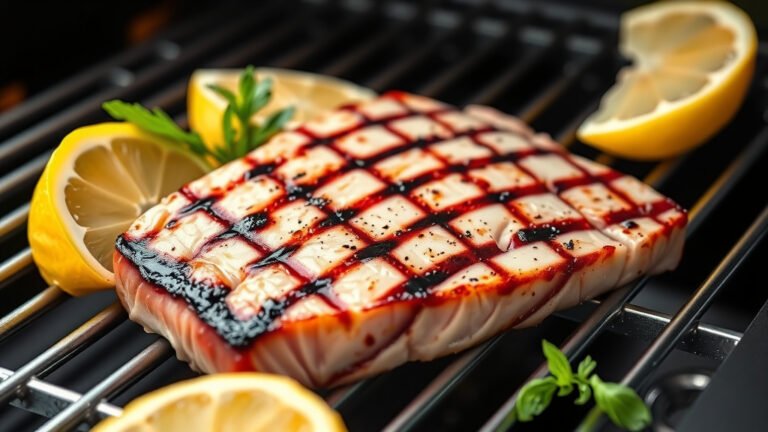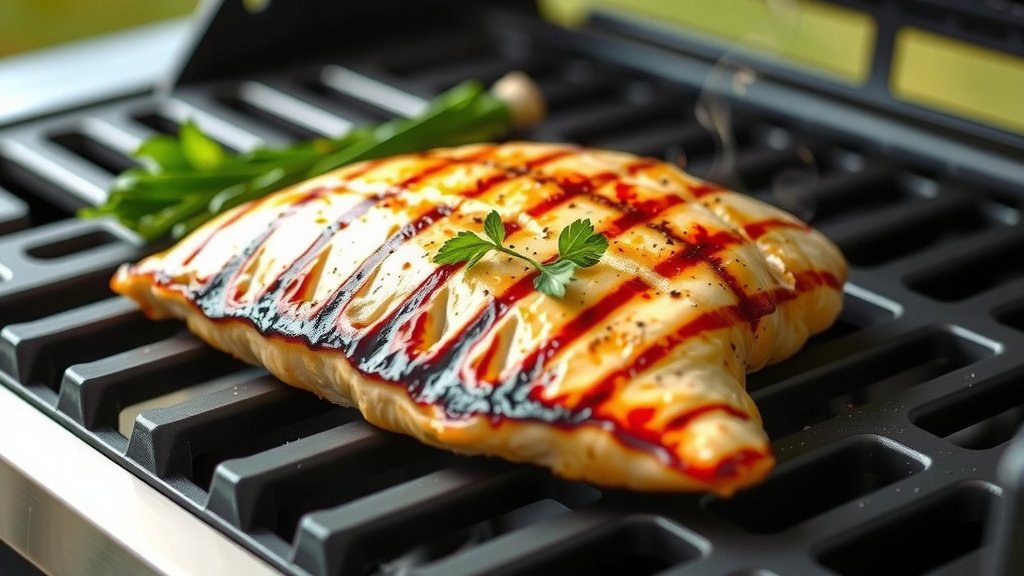
You can expect to grill boneless chicken breast on a gas grill for about 12-16 minutes total, turning once, until it reaches an internal temperature of 165°F (74°C).
The precise “how long to grill boneless chicken breast on gas grill” depends on thickness and grill temperature, but usually it’s 6-8 minutes per side over medium-high heat.
TL;DR: Here’s the quick guide to grilling perfect boneless chicken breast:
- Aim for an internal temperature of 165°F (74°C) to ensure safety and juiciness.
- Preheat your gas grill to medium-high heat (around 400-450°F or 204-232°C).
- Grill average 1-inch thick breasts for 6-8 minutes per side.
- Always use a meat thermometer; visual cues can be misleading.
- Let the chicken rest for 5-10 minutes after grilling for maximum juiciness.
How Long To Grill Boneless Chicken Breast On Gas Grill?
For most boneless chicken breasts about one inch thick, plan for roughly 12-16 minutes of grilling time over medium-high heat. Always cook until the internal temperature reaches 165°F (74°C).
Why Internal Temperature Is Your True North
Grilling times are helpful guides, but the most important factor is always the chicken’s internal temperature. You want it safe to eat and perfectly cooked.
Many food safety guidelines, including those from the USDA, state that all poultry must reach a minimum internal temperature of 165°F (74°C). This kills harmful bacteria, keeping you and your family safe.
Getting Your Chicken Ready: A Few Key Steps
Before any heat touches that chicken, a little prep goes a long way. Are your breasts all different sizes? Uneven thickness leads to uneven cooking.
Pound It Out for Even Cooking
We found that pounding your chicken breasts to a uniform thickness, about 3/4 to 1 inch, helps immensely. Place them between two sheets of plastic wrap and use a meat mallet or rolling pin. This ensures each part cooks at the same rate.
Season Generously for Flavor
Don’t be shy with your seasonings! A good rub or marinade can add a burst of flavor and even help keep the chicken moist. Consider letting it sit for at least 30 minutes, or even a few hours, for best results.
Preheating Your Gas Grill: The Foundation of Good Grilling
Just like baking, preheating your grill is non-negotiable. You want a hot, consistent cooking surface before the chicken goes on.
Achieving Medium-High Heat
For boneless chicken breast, aim for a medium-high grill temperature, usually around 400-450°F (204-232°C). Close the lid and let your grill preheat for 10-15 minutes.
A properly preheated grill gives you those beautiful grill marks and prevents sticking. It also helps to sear the outside quickly, locking in juices.
Grilling Time by Chicken Breast Thickness
Here’s a general guide for how long to grill boneless chicken breast on gas grill, assuming your grill is at medium-high heat.
| Chicken Breast Thickness | Total Grilling Time (approx.) | Flip Interval |
|---|---|---|
| 1/2 inch (thin cut) | 6-8 minutes | 3-4 minutes per side |
| 1 inch (average) | 12-16 minutes | 6-8 minutes per side |
| 1.5 inches (thick) | 18-24 minutes | 9-12 minutes per side |
Always remember these are estimates. Your meat thermometer is your best friend to confirm doneness.
Mastering the Flip: When and How Often
You might wonder, “Should I flip my chicken constantly?” Generally, no. For consistent cooking and good grill marks, we found it’s best to flip only once.
Let the chicken cook undisturbed for the first half of the total grilling time. Then, flip it and let it cook for the remaining time. Resist the urge to poke and prod!
Checking for Doneness: Your Meat Thermometer
This is where precision matters. You can’t tell if chicken is cooked just by looking at the outside color. The inside needs to be safe.
The Magic Number: 165°F (74°C)
Insert an instant-read meat thermometer into the thickest part of the breast, avoiding the bone if present. You are looking for that 165°F (74°C) reading. If it’s not there yet, keep grilling.
Many experts say that taking the chicken off the grill a few degrees early, around 160°F (71°C), can work if you let it rest. The carryover cooking will bring it up to 165°F (74°C) (USDA). This can help prevent overcooking.
The Crucial Resting Period for Juiciness
You’ve worked hard to grill that chicken perfectly. Don’t ruin it by cutting into it right away! This step is often overlooked, but it’s vital for a juicy result.
After removing the chicken from the grill, place it on a clean cutting board and loosely tent it with foil. Let it rest for 5-10 minutes. This allows the juices, which have rushed to the center during cooking, to redistribute throughout the meat. Skip this, and you’ll find all those delicious juices on your board instead of in your mouth.
Common Mistakes to Avoid
Even seasoned grillers can sometimes make these small errors. But with a little awareness, you can avoid them.
- Starting with a cold grill: Leads to sticking and uneven cooking.
- Not pounding to even thickness: Results in dry edges and undercooked centers.
- Overcrowding the grill: Lowers grill temperature, leading to steaming instead of grilling.
- Flipping too often: Disrupts searing and grill marks.
- Eyeballing doneness: A thermometer is non-negotiable for safety and quality.
- Skipping the rest: All those wonderful juices escape, leaving you with dry chicken.
Tips for Extra Juicy Chicken Breast
Want to go above and beyond? These tips can help you achieve truly moist and tender chicken.
Consider a Brine or Marinade
A simple brine (saltwater solution) or a good marinade can add moisture and flavor before you even start grilling. Many recipes show that marinating for at least 30 minutes can make a big difference.
Using a Gas Grill for Different Cuts
While we focused on boneless breasts, your gas grill is versatile. You can apply similar principles to other cuts, always adjusting for thickness and bone presence. Just remember that internal temperature is key for all poultry.
Conclusion
Grilling boneless chicken breast on a gas grill is a straightforward process once you know the core steps. By preparing your chicken, preheating your grill, understanding approximate cooking times, and using a meat thermometer, you’re set for success.
Remember that 165°F (74°C) internal temperature and the vital resting period. With these practical tips, you can confidently grill juicy, flavorful chicken every time. Happy grilling!
How do I prevent my chicken breast from drying out on the grill?
To prevent dry chicken, pound breasts to an even thickness, marinate or brine them, don’t overcook (always use a thermometer for 165°F), and let them rest for 5-10 minutes after grilling. High heat for a quick sear can also help.
Can I grill frozen boneless chicken breast on a gas grill?
It’s generally not recommended to grill frozen boneless chicken breast directly. The outside cooks too quickly while the inside remains frozen, leading to uneven cooking and potential food safety issues. Always thaw chicken completely before grilling for the best and safest results (USDA).
What grill temperature is best for boneless chicken breast?
A medium-high heat setting, typically 400-450°F (204-232°C), is ideal for grilling boneless chicken breast on a gas grill. This temperature allows for a good sear and efficient cooking without burning the exterior before the interior is done.
How do I know if my gas grill is at the right temperature?
Most gas grills have built-in lid thermometers that give a good general reading. For more accuracy, you can use an external grill thermometer placed on the grates. Close the lid and let the grill preheat for 10-15 minutes until it reaches your target temperature.
Should I use direct or indirect heat for grilling boneless chicken breast?
For boneless chicken breast, direct medium-high heat is generally preferred to get those nice grill marks and cook through quickly. If your breasts are very thick, you might start with direct heat for a sear and then move them to a cooler, indirect heat zone to finish cooking without burning.