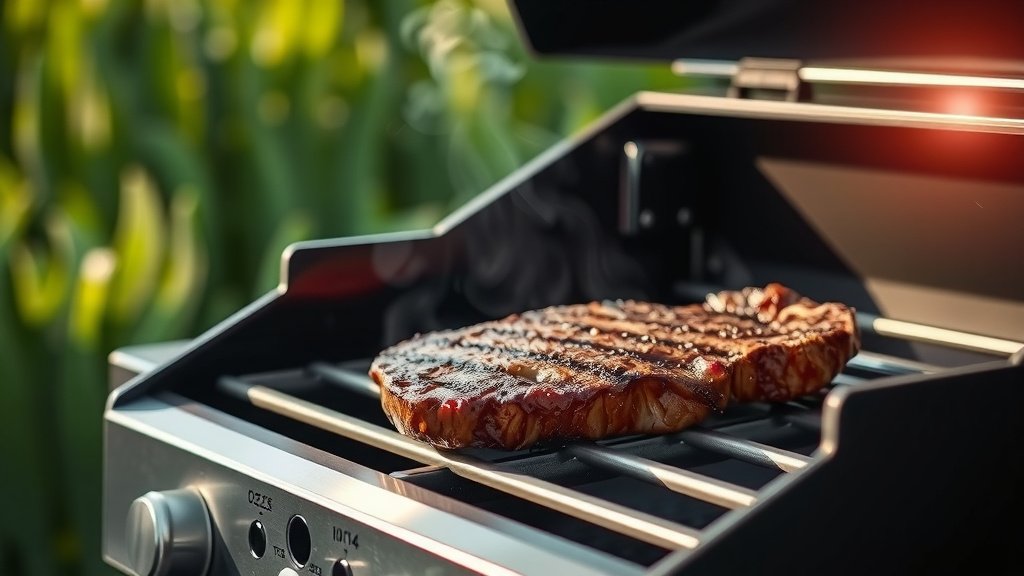
Cooking steaks on a pellet grill typically takes about 6 to 12 minutes per side, varying with thickness, grill temperature, and your preferred doneness.
To achieve a perfect medium-rare, you should target an internal temperature of 130-135°F before resting your steak.
- You will usually cook steaks on a pellet grill for 12-25 minutes total, flipping halfway.
- The exact time depends on steak thickness and whether you are aiming for rare, medium, or well-done.
- Always rely on an instant-read thermometer to check internal temperature, which is the most accurate method.
- Reverse searing can give you a better crust and more even doneness.
- Don’t forget to rest your steak after grilling for juicy results.
You want to cook a delicious steak on your pellet grill, but how long does it really take? It’s a common question we hear often. You might worry about overcooking or undercooking that beautiful cut of meat. Rest assured, getting it right is simpler than you think.
The key isn’t just time; it’s about hitting the right internal temperature. This method ensures your steak is perfect every time, whether you like it rare or well-done. Let’s explore how to master pellet grill steaks.
How Long To Cook Steaks On Pellet Grill?
You are looking at roughly 12 to 25 minutes total cook time for most steaks, with a flip halfway through the process. This range helps you adjust for steak thickness and your desired result.
Understanding Steak Doneness
What does “done” mean to you? This is the most important question. Some like a steak with a cool red center, while others prefer no pink at all. Your ideal doneness guides your cooking time.
We found that a reliable meat thermometer is your best friend here. It takes the guesswork out and makes sure your steak is exactly how you like it. Trust the temperature, not just the clock.
Internal Temperature Guide
Here’s a simple guide to internal temperatures for different doneness levels. Remember, these are target temperatures *before* resting, as the steak will continue to cook a few degrees afterward (carryover cooking).
| Doneness Level | Target Internal Temperature (Before Resting) |
|---|---|
| Rare | 120-125°F (49-52°C) |
| Medium-Rare | 130-135°F (54-57°C) |
| Medium | 135-140°F (57-60°C) |
| Medium-Well | 140-145°F (60-63°C) |
| Well-Done | 150-155°F (66-68°C) |
Factors Affecting Cook Time
Several things can change how long your steak needs on the pellet grill. You might wonder why one steak cooks faster than another. It’s usually one of these reasons.
Steak Thickness Matters Most
A thick-cut ribeye will naturally take longer than a thin sirloin. For steaks around 1 inch thick, you’re looking at shorter times. A 1.5-inch or 2-inch steak needs more minutes to reach its internal temperature.
Always consider the steak’s thickness first. It gives you the best starting point for estimating your cook time. Thicker cuts may benefit from a different cooking approach, like reverse searing.
Grill Temperature Setting
Are you grilling at high heat for a quick sear, or a lower temperature for a slow cook? A hotter grill means faster cooking. Many experts recommend a 400-450°F grill temperature for direct grilling steaks (USDA).
Using a smoke setting first will increase your overall cook time but add a smoky flavor. Think about your desired flavor profile when setting the grill temperature. Do you want smoke, or just grill marks?
Type of Steak Cut
Different cuts of steak also cook differently. A flat iron might cook faster than a porterhouse of the same thickness. This is due to variations in fat content and muscle structure. Some cuts are more forgiving than others.
A New York strip or a filet mignon will cook more consistently than a skirt steak, for example. Understanding your cut helps you anticipate cooking behavior. Are you using a tenderloin or a flank steak?
The Reverse Sear Method for Pellet Grills
You might have heard about reverse searing. It’s a fantastic technique for pellet grills, especially for thicker steaks (1.5 inches or more). It gives you a beautiful crust and incredibly even doneness.
First, you cook the steak slowly at a lower temperature, like 225°F, until it’s about 10-15°F below your target internal temperature. Then, you crank up the grill to high heat (450°F or higher) to sear it for a few minutes per side. This two-stage process yields amazing results.
Quick Reverse Sear Checklist
- Preheat grill to 225°F (low and slow).
- Cook steak until 10-15°F below target.
- Remove steak and increase grill temperature to 450°F or higher.
- Sear steak 2-4 minutes per side for a crust.
- Let it rest before slicing.
Prepping Your Steak for the Pellet Grill
Preparation is key to a great steak. You don’t want to skip these simple steps. A little effort beforehand pays off big time in flavor and texture.
Seasoning Your Steak
Generously season your steak with salt and pepper, or your favorite steak rub. Do this at least 30 minutes before grilling, or even the night before if you have time. This helps the flavors penetrate.
Allowing the seasoning to sit lets it work its magic. We found that a good dry brine with salt really improves the crust and moisture retention (America’s Test Kitchen). Don’t be shy with the salt.
Bringing to Room Temperature
Take your steaks out of the fridge about 30-60 minutes before grilling. This allows them to come closer to room temperature. A warmer steak cooks more evenly than a cold one.
When the steak isn’t ice-cold, the heat penetrates the meat more uniformly. This prevents the outside from overcooking while the inside remains raw. It’s a small step that makes a big difference.
The Importance of Resting Your Steak
You’ve cooked it perfectly, and it smells amazing. It’s tempting to cut right into it, isn’t it? But patience is a virtue here. Resting your steak is crucial for juiciness.
Allow your steak to rest for 5-10 minutes after taking it off the grill. Loosely tent it with foil. This allows the juices, which have been driven to the center by the heat, to redistribute throughout the meat. Cutting too soon lets all those delicious juices escape.
Common Mistakes to Avoid
Even seasoned grillers make mistakes. Avoiding these common pitfalls will help you achieve pellet grill perfection. We’ve all been there, haven’t we?
- Not Using a Thermometer: Guessing doneness is a recipe for disappointment. Always check the internal temperature.
- Overcrowding the Grill: Give your steaks space. Overcrowding lowers the grill temperature and prevents proper searing.
- Flipping Too Often: Resist the urge to constantly flip. Let the steak cook for several minutes per side to develop a good crust.
- Not Cleaning Grill Grates: Dirty grates lead to sticking and uneven cooking. Start with a clean surface every time.
- Skipping the Rest: As we discussed, this is vital for juicy steaks. Don’t rush it.
Conclusion
Cooking steaks on a pellet grill is a rewarding experience, giving you smoky flavor and great results. The biggest secret is focusing on internal temperature rather than strict timing. Always use a reliable meat thermometer, account for steak thickness, and don’t forget that crucial resting period.
Whether you choose direct grilling or the reverse sear method, these tips will help you create a tender, juicy steak every time. Enjoy the process, and most importantly, enjoy your perfectly cooked steak!
How do I know my steak is medium-rare without a thermometer?
While a thermometer is always the most accurate method, some people use the “touch test.” A medium-rare steak will feel soft but springy when pressed, similar to the fleshy part of your palm below your thumb when your thumb and middle finger are touching. However, this method requires practice and is less reliable than a digital thermometer.
Can I cook frozen steaks on a pellet grill?
Yes, you can cook frozen steaks on a pellet grill, but it will significantly increase the cooking time. Research from food safety experts suggests cooking from frozen is safe but takes about 50% longer to reach the desired internal temperature. You’ll also likely miss out on a good sear and crust compared to thawed steaks.
What is the best temperature to set my pellet grill for searing steaks?
For searing steaks, you want your pellet grill as hot as it can get, typically between 450°F and 500°F. Some grills have a dedicated “sear” setting. High heat creates that desirable crust quickly, locking in juices and flavor.
Should I oil my steaks or the grill grates?
Many grill masters suggest oiling the steak lightly rather than the grates. Applying a thin layer of high-smoke-point oil (like canola or avocado oil) to the steak helps prevent sticking and promotes a better sear. Ensure your grates are clean for the best results, regardless.
My steak tastes too smoky. How can I reduce the smoke flavor?
If your steak tastes too smoky, you might be cooking it for too long at a low “smoke” setting. For a less intense smoke flavor, try cooking at higher temperatures (350°F+) for the majority of the cook time, or use a blend of pellets that includes less aggressive woods like oak or fruitwoods instead of hickory or mesquite.