Cooking ham on a pellet grill typically takes about 10-15 minutes per pound for a fully cooked, bone-in ham when smoked at 250°F (120°C). For an uncooked ham, you’re looking at 20-25 minutes per pound at the same temperature.
The crucial factor isn’t just time, but reaching an internal temperature of 140°F (60°C) for pre-cooked ham, or 145°F (63°C) for an uncooked ham, using a reliable meat thermometer.
TL;DR: Here’s the quick rundown for your pellet grill ham:
- Most pre-cooked hams need 10-15 minutes per pound at 250°F (120°C).
- Uncooked hams require 20-25 minutes per pound, also at 250°F.
- Always aim for the right internal temperature, 140°F for pre-cooked and 145°F for uncooked.
- A good meat thermometer is your secret weapon for success.
- Don’t forget to let your ham rest after cooking for the juiciest results.
How Long To Cook Ham On Pellet Grill?
The time you spend cooking ham on your pellet grill truly depends on the type of ham you start with and its size. For a fully cooked ham, you’re primarily warming it through and adding smoke flavor.
Understanding Your Ham: Pre-cooked vs. Uncooked
Before firing up your grill, know your ham’s starting point. Is it fully cooked, often labeled “ready-to-eat,” or is it a fresh, uncooked ham? This makes a huge difference in cooking duration and target temperature.
Fully Cooked Ham on the Pellet Grill
Most hams you buy are already fully cooked. Your goal here is to gently reheat it without drying it out, while infusing it with that wonderful smoky flavor. We found that cooking it at a lower temperature for a longer time works best.
Set your pellet grill to 250°F (120°C). For a bone-in, fully cooked ham, expect around 10-15 minutes per pound. A boneless ham might be a bit quicker. Always cook until the internal temperature reaches 140°F (60°C).
Uncooked Ham on the Pellet Grill
Cooking an uncooked ham is more like roasting a fresh pork cut. You need to cook it thoroughly to ensure it’s safe to eat. This process takes considerably longer than reheating a pre-cooked ham.
Maintain your pellet grill at 250°F (120°C). For an uncooked ham, plan on roughly 20-25 minutes per pound. The target internal temperature for uncooked ham is 145°F (63°C), followed by a three-minute rest (USDA).
The Crucial Role of Your Meat Thermometer
Forget the clock alone. Your meat thermometer is the single most important tool when grilling ham. It tells you the truth about doneness, preventing undercooked food or dry, overcooked meat. You want an accurate, instant-read thermometer.
Insert the thermometer into the thickest part of the ham, avoiding the bone. This gives you the most accurate reading of the core temperature. Check it periodically, especially as you get closer to your estimated cooking time.
Setting Your Pellet Grill Temperature
For ham, we generally recommend a consistent grill temperature of 225°F to 275°F (107°C to 135°C). Many experts say 250°F (120°C) is the sweet spot. This allows for gentle reheating or cooking and optimal smoke penetration.
Why not higher? A lower temperature helps prevent the ham from drying out and allows the smoke flavor to slowly build. Rushing it can lead to a tough, less flavorful result, and nobody wants that on their dinner table.
Preparing Your Ham for the Grill
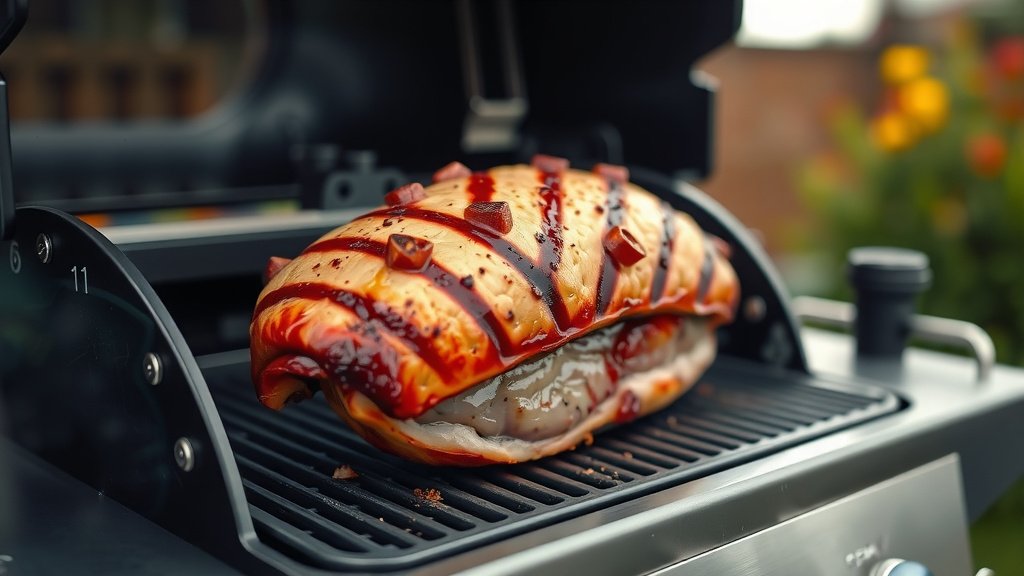
A little prep goes a long way. If your ham has a thick skin or rind, scoring it in a diamond pattern can help render fat and allow any glaze to stick better. This also creates a beautiful presentation.
For spiral-sliced hams, you might want to consider covering them lightly with foil for most of the cooking. This helps retain moisture, as the pre-cut slices can dry out quickly. Remove the foil for the last 30 minutes to apply glaze.
Glazing Your Ham: Timing is Everything
Glaze adds a fantastic layer of flavor and a beautiful sheen. But when should you apply it? If you add it too early, the sugars can burn, creating a bitter taste and a crusty mess. That’s a disappointment!
Apply your glaze during the last 30-45 minutes of cooking. This allows the glaze to melt, adhere, and caramelize without scorching. You might need to brush it on a couple of times to build up a nice layer.
Wood Pellets for Optimal Ham Flavor
What kind of pellets should you use? For ham, lighter, sweeter woods often work best. Think apple, cherry, or pecan pellets. These impart a mild, fruity smoke that complements the ham’s natural flavor without overpowering it.
Avoid strong, assertive woods like mesquite or hickory unless you prefer a very robust smoke flavor. We found that a subtle smoke enhances the ham beautifully, making it a crowd-pleaser every time.
Resting Your Ham After Cooking
Just like any other large cut of meat, ham needs to rest after coming off the grill. Tent it loosely with foil and let it sit for at least 15-20 minutes. This allows the juices to redistribute throughout the meat.
Skipping the rest means those delicious juices will run out onto your cutting board when you slice, leaving you with a drier ham. A rested ham is a **juicier, more flavorful ham** – trust us on this one.
Quick Checklist for Pellet Grill Ham Success
- Confirm if your ham is pre-cooked or uncooked.
- Preheat your pellet grill to 250°F (120°C).
- Insert a reliable meat thermometer into the thickest part.
- Cook until 140°F (pre-cooked) or 145°F (uncooked).
- Apply glaze in the final 30-45 minutes of cooking.
- Rest the ham for 15-20 minutes before carving.
Troubleshooting Common Ham Issues
Worried about a dry ham? It’s a common concern! If your ham starts to look dry, especially spiral-sliced, cover it with foil. You can also spritz it with apple juice, cider, or even soda every hour or so to add moisture.
Is your ham taking longer than expected? Don’t panic. Grill temperatures can fluctuate, and every ham is different. Rely on your thermometer, not just the clock. Patience is a virtue in grilling.
| Ham Type | Grill Temp | Target Internal Temp | Approx. Time Per Pound |
|---|---|---|---|
| Fully Cooked, Bone-in | 250°F (120°C) | 140°F (60°C) | 10-15 minutes |
| Fully Cooked, Boneless | 250°F (120°C) | 140°F (60°C) | 10-14 minutes |
| Uncooked, Bone-in | 250°F (120°C) | 145°F (63°C) | 20-25 minutes |
| Uncooked, Boneless | 250°F (120°C) | 145°F (63°C) | 18-22 minutes |
Conclusion
Cooking ham on a pellet grill can elevate a simple meal into something truly special. The key is understanding your ham, setting the right temperature, and most importantly, using a reliable meat thermometer. By following these guidelines, you’ll consistently achieve a juicy, flavorful ham with a wonderful smoky essence. So, go ahead, fire up that pellet grill and enjoy a fantastic ham that will surely impress!
FAQs About Cooking Ham on a Pellet Grill
Can you put a raw ham directly on a pellet grill?
Yes, you absolutely can cook a raw, uncooked ham on a pellet grill. Treat it similarly to any large pork roast. The key is to ensure it reaches an internal temperature of 145°F (63°C) for safety, often taking 20-25 minutes per pound at 250°F.
How do I keep my ham from drying out on the pellet grill?
To prevent a dry ham, maintain a lower grill temperature (around 250°F), cover the ham loosely with foil for most of the cooking, especially if it’s spiral-sliced. You can also spritz the ham periodically with apple juice or broth to add moisture.
Should I pre-soak my ham before grilling?
Most hams are already cured or brined, so pre-soaking is generally not necessary. If you have a very salty country ham, you might choose to soak it to reduce saltiness, but for standard grocery store hams, it’s not required for pellet grilling.
What kind of wood pellets are best for smoking ham?
For ham, we found that lighter, fruitier wood pellets work exceptionally well. Apple, cherry, or pecan pellets are excellent choices as they impart a mild, sweet smoke flavor that complements the ham without overpowering its taste.
Can I cook a frozen ham on a pellet grill?
It’s generally not recommended to cook a large frozen ham on a pellet grill, or any grill, as it can lead to uneven cooking and unsafe temperatures. Always thaw your ham completely in the refrigerator before placing it on the grill for the best and safest results.