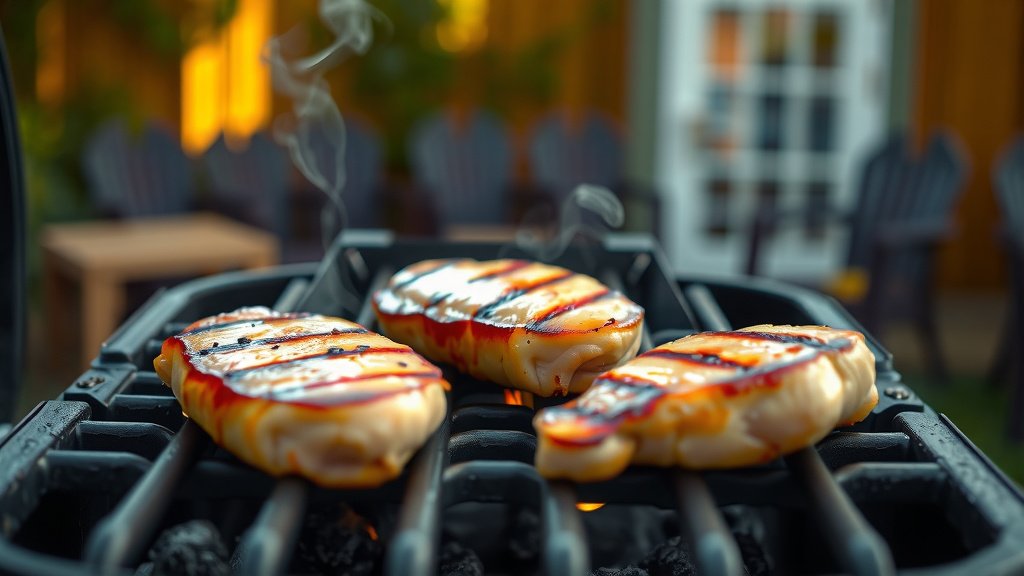
To charcoal grill chicken breast, aim for 10 to 15 minutes of grilling time over direct medium heat, flipping halfway through. Always cook until the internal temperature reaches a safe 165°F (74°C).
The exact time to charcoal grill chicken breast will depend on its thickness, your grill’s temperature, and whether it’s boneless or bone-in, but checking the internal temperature with a meat thermometer is key.
- For boneless, skinless chicken breasts, expect 10-15 minutes total.
- Thicker breasts take longer; thinner ones cook faster.
- Medium-high heat is ideal for a good sear and even cooking.
- Always use a meat thermometer to ensure a safe internal temperature of 165°F (74°C).
- Resting the chicken after grilling keeps it juicy and tender.
How Long To Charcoal Grill Chicken Breast?
You’ll generally need 10 to 15 minutes for boneless, skinless chicken breasts on a charcoal grill, depending on their thickness and your grill’s actual temperature.
Understanding Grill Temperature
Getting your charcoal grill to the right temperature is a foundational step for successful chicken. We often find that medium-high heat is best for chicken breasts.
How do you know it’s medium-high? You should be able to hold your hand about 5 inches above the grate for 4 to 5 seconds before pulling it away due to the heat.
Direct vs. Indirect Heat Zones
When grilling, you want to create two zones. A direct heat zone is for searing and cooking quickly. An indirect zone allows you to move food away from intense heat if it’s cooking too fast (USDA).
This setup gives you flexibility and control, which is very helpful for perfectly cooked chicken.
Factors Influencing Grill Time
Several things change how long your chicken breast needs on the grill. Think of it like baking a cake; different sizes need different times.
Chicken Breast Thickness
This is arguably the biggest factor. A very thin breast will cook much faster than a thick, plump one. Standard chicken breasts are usually about 1 inch thick.
Thicker pieces might need more indirect cooking time to prevent burning the outside before the inside is done.
Bone-In vs. Boneless
Boneless, skinless chicken breasts cook the fastest. Bone-in chicken breasts take longer because the bone acts as an insulator, slowing heat transfer.
If you’re using bone-in, expect to add another 5-10 minutes to the total grilling time.
Marinade or Brine
Marinating or brining chicken not only adds flavor but can also impact cooking time slightly. Some marinades, especially acidic ones, can tenderize the meat, potentially speeding up cooking a little.
Always pat your chicken dry after marinating to get a good sear and avoid steaming it on the grill.
Prepping Your Chicken Breast for the Grill
Proper preparation makes a significant impact on your grilling results. Don’t skip these simple steps.
- Pound Chicken Evenly: For uniform cooking, place chicken breasts between plastic wrap and pound them to an even thickness (about 3/4 to 1 inch). This prevents one part from drying out while another part finishes cooking.
- Season Generously: Apply your favorite rub or seasoning. Don’t be shy; the grill will mellow some of the flavors.
- Oil the Chicken, Not the Grates: Lightly brush the chicken breasts with a high-smoke-point oil. This prevents sticking better than oiling cold grates.
Step-by-Step Charcoal Grilling Guide
Let’s walk through the process to ensure your chicken is perfect every time. It’s simpler than you might think!
Setting Up Your Charcoal Grill
Arrange your coals to create those direct and indirect heat zones we mentioned. Use a chimney starter for quick, even heating of your charcoal.
Once the coals are ash-gray, spread them for your zones. Replace the grill grate and let it heat up for about 10-15 minutes.
Grilling the Chicken Breasts
Place your prepared chicken breasts over the direct heat zone. Close the lid to help cook them through. After 5-7 minutes, flip them over.
Continue cooking on the second side for another 5-7 minutes. If they are browning too quickly, move them to the indirect heat zone to finish cooking.
The Internal Temperature is King
The only truly accurate way to know if your chicken is done is with a meat thermometer. Insert it into the thickest part of the breast, away from any bones.
We found that the USDA recommends 165°F (74°C) for poultry safety. Pull your chicken off the grill right when it hits this mark.
Troubleshooting Common Grilling Issues
Even seasoned grill masters encounter challenges. Here are a few common ones and how to handle them.
Chicken Sticking to the Grates
This often happens if your grill grates aren’t hot enough or if they aren’t clean. Make sure to clean your grates thoroughly before grilling and allow them to heat up properly.
Lightly oiling the chicken itself also helps considerably, as mentioned earlier.
Overcooked and Dry Chicken
This is a common grilling sadness. Overcooking usually results from guessing instead of using a thermometer. Pulling the chicken off at exactly 165°F is the antidote.
Resting the chicken afterward is also critical for juiciness.
Unevenly Cooked Chicken
This points to uneven chicken thickness or inconsistent grill temperature. Pounding the chicken evenly helps immensely.
Also, make sure your coals are evenly distributed in the direct heat zone, or adjust the chicken’s position as needed.
The All-Important Resting Period
Once your chicken hits 165°F, resist the urge to cut into it right away. Transfer it to a clean cutting board and tent it loosely with foil.
Allowing the chicken to rest for 5-10 minutes lets the juices redistribute throughout the meat, resulting in a much juicier and more flavorful bite (Cleveland Clinic).
Quick Checklist for Grilling Success
- Pre-heat grill to medium-high heat.
- Pound chicken breasts to even thickness.
- Season chicken generously.
- Oil chicken, not grates.
- Use a meat thermometer for accuracy.
- Rest chicken for 5-10 minutes after grilling.
Charcoal Grilling Time Table for Chicken Breast
Here’s a general guide for boneless, skinless chicken breasts. Remember, these are estimates; always verify with a thermometer.
| Chicken Breast Thickness | Direct Medium Heat (375-400°F) | Internal Temperature |
|---|---|---|
| < 3/4 inch (thin) | 8-10 minutes (4-5 min per side) | 165°F (74°C) |
| 3/4 – 1 inch (standard) | 10-15 minutes (5-7 min per side) | 165°F (74°C) |
| 1 – 1.5 inches (thick) | 15-20 minutes (7-10 min per side, with optional finish on indirect) | 165°F (74°C) |
Conclusion
Grilling chicken breast on a charcoal grill can create truly delicious results, packed with smoky flavor. The key takeaways are simple: prepare your chicken well, get your grill to the right temperature, and most importantly, use a meat thermometer.
Don’t be afraid to move chicken to an indirect heat zone if it’s browning too fast. And always, always let it rest. With these tips, you’ll be serving perfectly juicy chicken every time. Happy grilling!
Frequently Asked Questions About Grilling Chicken Breast
How do I prevent chicken breast from drying out on the grill?
To prevent dry chicken, pound breasts to an even thickness, avoid overcooking by using a meat thermometer to reach exactly 165°F (74°C), and always let the chicken rest for 5-10 minutes after grilling to redistribute juices.
Can I grill frozen chicken breast on a charcoal grill?
No, it is not recommended to grill chicken breast from frozen on a charcoal grill. Frozen chicken will cook unevenly, taking much longer and potentially leading to unsafe internal temperatures. Always thaw chicken completely before grilling (FDA).
What is the best way to get grill marks on chicken breast?
To achieve those appealing grill marks, ensure your grill grates are clean and hot before placing the chicken. Avoid moving the chicken for the first few minutes, allowing it to sear properly, then rotate it 45 degrees for crosshatch marks if desired, before flipping.
How do I know if my charcoal grill is at medium-high heat?
You can gauge medium-high heat by holding your hand about 5 inches above the grill grate. If you can only keep it there comfortably for 4 to 5 seconds, your grill is likely in the medium-high range (around 375-400°F).
Should I keep the lid open or closed when grilling chicken breast?
It’s generally best to keep the lid closed when grilling chicken breast, especially thicker pieces. Closing the lid helps to retain heat, cook the chicken more evenly, and infuse more smoky flavor. Open it only to flip or check the temperature.