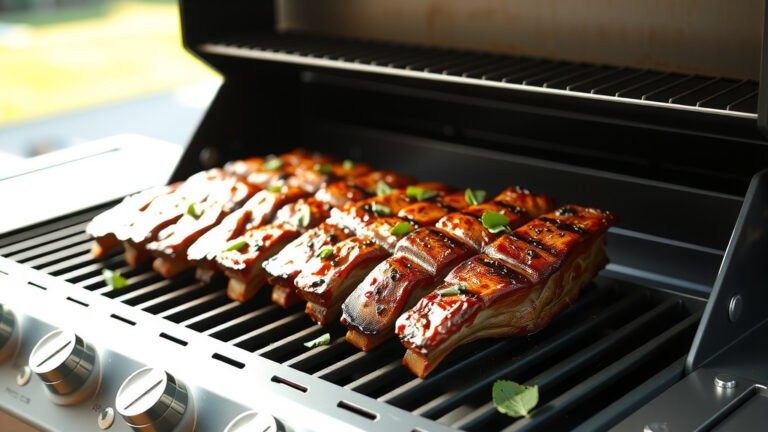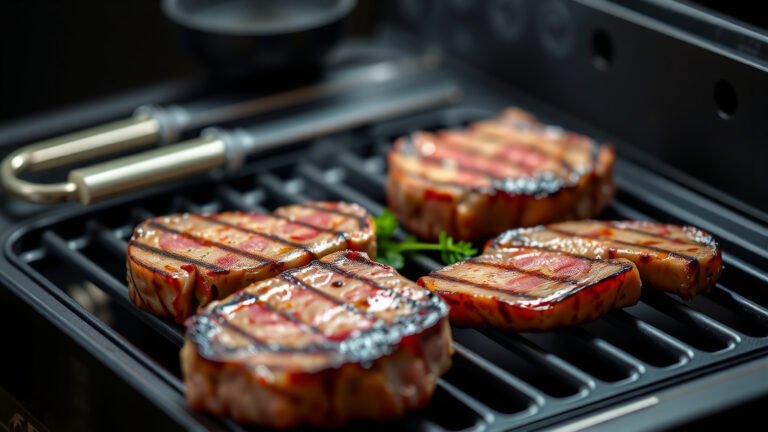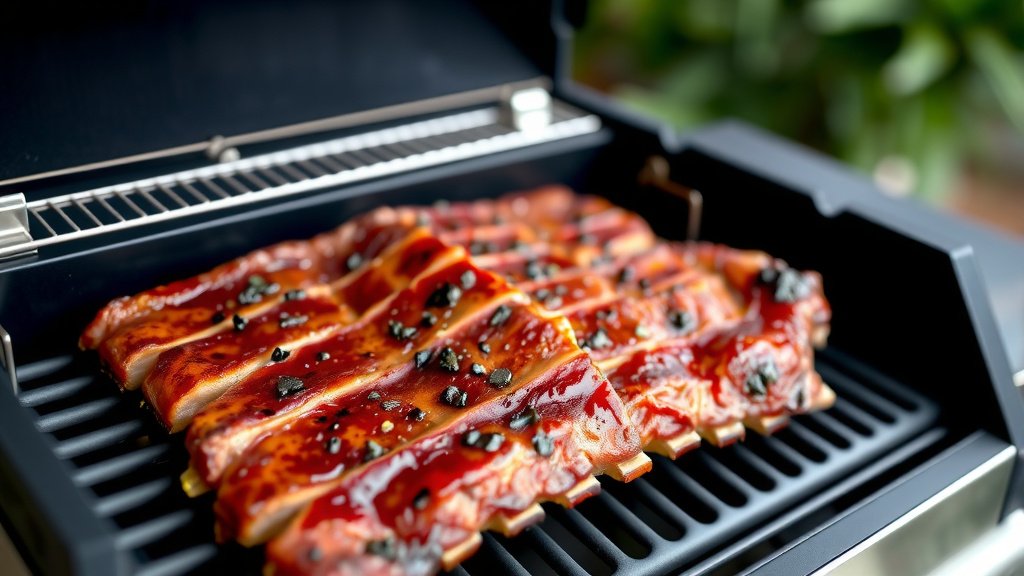
You can typically cook ribs on a gas grill for about 3 to 6 hours, depending on the rib type, grill temperature, and your preferred tenderness.
For juicy, fall-off-the-bone ribs, maintain a consistent low heat around 225-275°F (107-135°C) and use indirect grilling methods.
- Achieve tender ribs on a gas grill by cooking low and slow, aiming for 225-275°F.
- The 2-2-1 method (2 hours grill, 2 hours wrapped, 1 hour sauced) is a popular technique for gas grills.
- Always set up your gas grill for indirect heat to prevent burning and ensure even cooking.
- Doneness is best checked with the bend test or by monitoring internal temperature around 203°F.
- Factors like rib type, size, and grill consistency will affect your total cooking duration.
How Long Cook Ribs On Gas Grill?
Cooking ribs on a gas grill usually takes 3 to 6 hours when you use a low, indirect heat setting, ensuring they become tender and succulent.
This duration varies by the cut of ribs and your grill’s ability to hold a steady temperature for the long haul.
Thinking about grilling ribs can feel a bit like planning a road trip, right? You need to know your destination and how long it will take to get there. Nobody wants tough, chewy ribs!
Your gas grill can absolutely deliver amazing ribs. It just takes a little know-how and patience, which we’re happy to share.
Prepping Your Ribs for the Grill
Before any heat hits your ribs, some prep work makes a big difference. First, remove the membrane from the back of the ribs.
This thin, silvery layer prevents moisture and flavor from penetrating, making your ribs less tender. Just slip a knife under it and peel it off.
Next, apply your chosen rub generously. Many experts say a good rub is the secret to flavorful, crusty ribs (AmazingRibs.com).
You can do this an hour before grilling or even the night before, letting those spices work their magic.
The Art of Low and Slow
When it comes to ribs, low and slow is not just a saying; it’s the golden rule. Forget high heat for a moment.
You want to cook ribs gently, allowing the connective tissues to break down, resulting in that incredible tenderness.
Why Low and Slow Matters
High temperatures can quickly dry out ribs and burn the rub, giving you an unpleasant chew. Low and slow cooking keeps the meat juicy.
It slowly renders the fat and transforms tough collagen into gelatin, creating a moist, fall-off-the-bone texture.
Setting Up Your Gas Grill for Ribs
Achieving indirect heat on a gas grill is simple. You only light one or two burners on one side of the grill.
You place the ribs on the unlit side, away from the direct flame. This creates a roasting effect, like an oven.
Aim for a consistent grill temperature between 225-275°F (107-135°C). Use your grill’s thermometer or a reliable probe.
The 2-2-1 Method for Gas Grills
The 2-2-1 method is a popular and very effective technique for cooking spareribs on a gas grill. It breaks the cooking into three distinct phases.
This method ensures your ribs are both smoky and incredibly tender, giving you a very satisfying result.
First Phase: Smoke/Grill (2 Hours)
Start by placing your seasoned ribs on the unlit side of your gas grill. Maintain that 225-275°F temperature.
This initial phase develops a smoky flavor and a nice bark. You can add a small smoke box or foil pouch with wood chips for extra smoke flavor (Weber).
Second Phase: Wrap and Tenderize (2 Hours)
After two hours, remove the ribs and wrap them tightly in foil. Some people add a splash of apple juice, cider vinegar, or beer inside the foil.
This steaming helps to further tenderize the ribs, making them incredibly moist. Return the wrapped ribs to the indirect heat for another two hours.
Third Phase: Sauce and Finish (1 Hour)
Unwrap the ribs carefully. They should be looking very tender by now. At this point, you can brush them with your favorite BBQ sauce.
Place them back on the indirect heat for a final hour, allowing the sauce to caramelize and set. Keep an eye on them to prevent burning.
What About the 3-2-1 Method?
You might have heard of the 3-2-1 method too. This is similar but generally recommended for tougher spareribs.
It involves 3 hours unwrapped, 2 hours wrapped, and 1 hour sauced. For baby back ribs, the 2-2-1 or even 2-1-1 method is often better.
Baby back ribs are smaller and cook faster, so they don’t need as much time to tenderize. Adjust based on your specific cut of ribs.
Monitoring Rib Doneness
Knowing when your ribs are truly done is key. You don’t want them falling apart too soon, nor do you want them chewy.
Several methods can help you determine perfect doneness without guessing. Trust these simple tests for best results.
The Bend Test
The bend test is a classic. Pick up one end of a rack of ribs with tongs. If the rack bends significantly and cracks in the middle, they are ready.
This shows the connective tissue has broken down, leaving you with tender meat. It’s a very reliable visual cue.
Internal Temperature
While often used for pork, ribs are more about texture than a specific internal temperature. However, many pitmasters look for around 203°F (95°C).
At this temperature, the collagen has usually broken down sufficiently. Insert a probe thermometer into the thickest part of the meat, avoiding the bone.
Cooking Time Factors
Several things can influence how long you need to cook your ribs on a gas grill. It’s not always a one-size-fits-all duration.
Understanding these factors helps you adapt and achieve perfect results every time. Every grill can be a little different.
- Type of Ribs: Baby back ribs are smaller and leaner, cooking faster (3-4 hours total). Spareribs are meatier and take longer (5-6 hours).
- Rib Thickness: Thicker racks naturally require more time on the grill. Always account for variations in size.
- Grill Temperature Consistency: Maintaining a steady temperature is crucial. Fluctuations can prolong or shorten cooking times.
- Weather Conditions: Cold or windy weather can affect your grill’s ability to hold heat, potentially extending cook times.
Avoiding Common Rib Grilling Mistakes
We all make mistakes, especially when learning something new. Here are some common pitfalls to avoid for fantastic ribs.
Being aware of these can save you frustration and lead to much better results. Learning from experience truly helps.
| Mistake | How to Avoid It |
|---|---|
| Too High Heat | Always use indirect heat and aim for 225-275°F. |
| Not Removing Membrane | Always peel off the membrane for better tenderness. |
| Opening Grill Too Often | “If you’re lookin’, you ain’t cookin'”. Maintain consistent heat. |
| Over-Saucing Too Early | Add sauce during the last hour to prevent burning. |
| Not Enough Patience | Ribs need time. Don’t rush the low and slow process. |
Essential Rib Grilling Checklist
Before you fire up that grill, run through this quick checklist. It ensures you have everything ready for a smooth cook.
Preparation is half the battle, and a well-prepared cook leads to stress-free grilling. You’ll thank yourself later.
- Gas grill set up for indirect heat
- Ribs with membrane removed
- Generous rub applied
- Grill thermometer and meat probe ready
- Foil for wrapping (if using 2-2-1 method)
- Apple juice/cider vinegar (optional for wrapping)
- BBQ sauce for the final hour
- Tongs for handling ribs
- A good playlist for the wait (optional, but highly recommended!)
Conclusion
Cooking ribs on a gas grill is a rewarding experience that produces incredibly tender, flavorful meat with a little dedication. The key truly lies in patience and controlling your grill’s temperature.
Whether you follow the 2-2-1 method or adjust for your specific ribs, remembering “low and slow” will guide you to success. Don’t be afraid to experiment a little to find what works best for your grill and your taste buds. Enjoy those delicious ribs!
How do I keep ribs from drying out on a gas grill?
To prevent ribs from drying out, always use indirect heat, keep the grill lid closed as much as possible, and maintain a low cooking temperature of 225-275°F. Wrapping them in foil during the middle phase of cooking, often with a little liquid, also helps retain moisture.
Can I speed up the rib cooking process on a gas grill?
While you might be tempted to increase the heat to cook ribs faster, it’s generally not recommended. Higher temperatures tend to dry out the meat and make it tough. Ribs truly benefit from the low and slow approach for optimal tenderness and flavor. Patience is a virtue here.
What’s the best wood for smoking ribs on a gas grill?
For ribs, popular wood choices include apple, hickory, and cherry. Apple wood offers a mild, sweet flavor, hickory provides a stronger, bacon-like taste, and cherry adds a beautiful mahogany color with a fruity note. Use wood chips in a smoker box or foil pouch on your gas grill.
How do I know if my gas grill is at the right temperature for ribs?
Rely on a good external grill thermometer or an accurate internal grill probe, rather than just the built-in lid thermometer, which can sometimes be inaccurate. Aim for a consistent temperature range of 225-275°F (107-135°C) in the cooking chamber where the ribs are placed.
Do I need to flip ribs while grilling on a gas grill?
When cooking with indirect heat, flipping ribs frequently is not necessary. You can generally leave them undisturbed on the unlit side of the grill for the majority of their cooking time. Flipping once or twice when wrapping or saucing is usually sufficient.