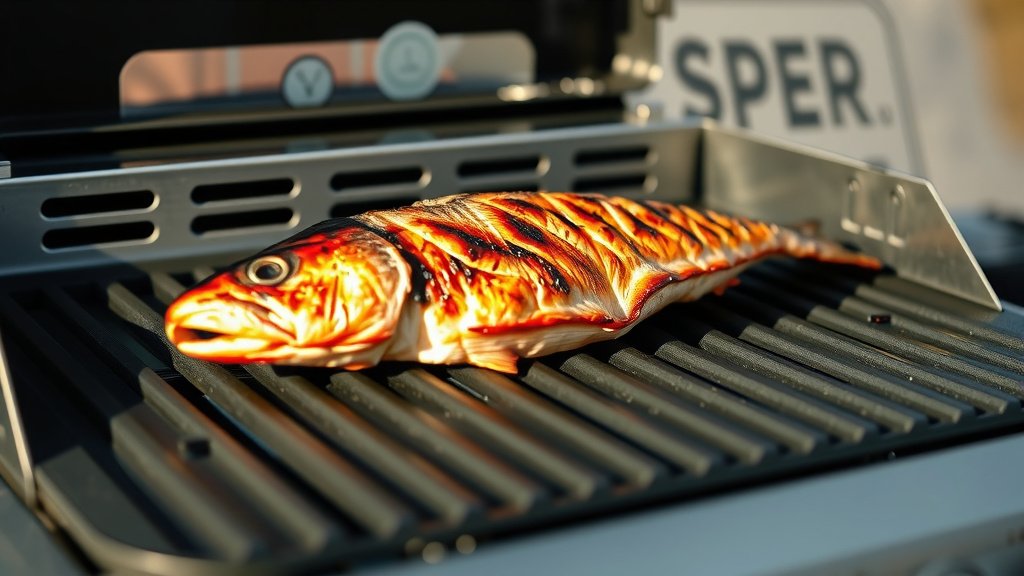
To grill fish on a gas grill, ensure your grates are clean and preheated to a medium-high temperature, then lightly oil the fish itself, not the grates, before placing it skin-side down.
Flip the fish gently with a thin metal spatula only once, aiming for a flaky, opaque texture, typically grilling for 4-6 minutes per side depending on thickness.
- Get started by picking the right fish: firm-fleshed fish work best.
- Always clean and preheat your grill to medium-high heat.
- Lightly brush the fish with oil and seasoning; never oil the grates directly.
- Grill fish for 4-6 minutes per side until it flakes easily with a fork.
- Use a thin, wide spatula to turn the fish carefully, preventing it from breaking.
How Do You Grill Fish On A Gas Grill?
Grilling fish on a gas grill means you are aiming for a delicate balance of heat and care, resulting in a beautifully cooked meal with minimal sticking.
You can achieve perfectly grilled fish by focusing on proper preparation, precise temperature, and gentle handling.
Why Grill Fish on a Gas Grill?
A gas grill offers fantastic temperature control, which is a big win when cooking delicate foods like fish. You can adjust the heat easily, preventing burning while ensuring an even cook.
This control makes grilling fish less intimidating, allowing you to focus on flavor and texture. Plus, cleanup is often simpler compared to charcoal grills.
Choosing the Right Fish for Your Grill
The type of fish you choose makes a difference on the grill. Many experts say that firm-fleshed fish stand up best to direct heat, making them ideal for gas grilling.
Think about fish like salmon, tuna, swordfish, or mahi-mahi. Their sturdy texture helps them stay together and not fall apart on the grates.
Steaks vs. Fillets
When selecting your fish, consider if you want steaks or fillets. Fish steaks, like swordfish or tuna, are thick-cut and very forgiving, much like grilling a piece of meat.
Fillets, especially skin-on salmon, are also great. The skin creates a natural barrier, protecting the delicate flesh from the direct heat of the gas grill.
Essential Tools for Fish Grilling Success
Having the right tools makes grilling fish a breeze. We found that a good quality fish spatula is your best friend here; it’s wide and thin, perfect for slipping under fish.
Consider a grill basket for more delicate fillets. This tool keeps the fish contained and makes flipping incredibly easy, a real game-changer for fragile pieces.
Prepping Your Fish for the Grill
Preparation is key to preventing sticking and boosting flavor. Before anything else, pat your fish dry with paper towels; excess moisture causes steaming, not grilling.
A dry surface also helps achieve that lovely sear you want on the outside. This small step makes a huge difference in the final texture.
Seasoning Your Catch
When it comes to seasoning, simple often wins. We found that salt, pepper, and a dash of lemon are often all you need to let the fish’s natural flavor shine through.
Of course, feel free to use your favorite herbs and spices. Just remember not to overdo it, as delicate fish can be easily overpowered.
Oiling the Fish (Not the Grates!)
This is a critical step many people miss. Instead of oiling your grill grates, which can cause flare-ups and burn off quickly, lightly brush the fish itself with a high-smoke-point oil like grapeseed or canola.
This creates a protective layer on the fish, helping prevent it from sticking to the hot grates. It’s a trick that seasoned grillers often use.
Preparing Your Gas Grill for Action
Before any food touches the grates, your gas grill needs a little love. Proper grill preparation ensures even cooking and helps avoid frustrating sticking situations.
Take a few moments to get your grill ready, and you’ll be rewarded with perfectly cooked fish every time.
Clean Grates Are a Must
Always start with spotlessly clean grill grates. Leftover food particles from previous cooks are notorious for causing fish to stick and tear.
Turn your grill on high for about 10-15 minutes, then use a sturdy wire brush to scrape off any residue. A clean surface makes a smooth release.
Preheating for Success
Just like baking, preheating is non-negotiable. Preheat your gas grill to a medium-high temperature, generally around 400-450°F (200-230°C).
This ensures the grates are hot enough to sear the fish immediately, forming a crust that helps prevent sticking. Many chefs advise this critical step.
Temperature Control for Delicate Fish
Maintaining the right temperature is paramount for fish. While you preheat to medium-high, you might adjust burners to create a two-zone grilling setup if you have a larger fish.
One side can be high for searing, and the other lower for finishing, giving you more flexibility. For most fillets, even medium-high direct heat works fine.
The Grilling Process: Step-by-Step
- Once your grill is preheated and clean, place your oiled and seasoned fish directly on the hot grates, skin-side down first if applicable.
- Let the fish cook undisturbed for about 4-6 minutes, allowing it to develop a nice sear and release naturally from the grates.
- Use your wide fish spatula to gently lift and flip the fish only once.
- Continue grilling for another 4-6 minutes, or until the fish is opaque and flakes easily.
- Remove the fish from the grill with care and let it rest for a few minutes before serving, allowing the juices to redistribute.
How Long to Grill Fish?
Grilling times can vary quite a bit, depending on the type and thickness of your fish. A good rule of thumb is to grill for about 10 minutes per inch of thickness, but this is a general guideline.
Many guidelines point to checking the fish frequently as it nears the estimated cooking time (USDA).
| Fish Type | Thickness | Estimated Grill Time (Medium-High) |
|---|---|---|
| Salmon Fillet | 1 inch | 10-12 minutes |
| Tuna Steak | 1 inch | 8-10 minutes (for medium-rare) |
| Cod/Halibut Fillet | 3/4 inch | 8-10 minutes |
| Swordfish Steak | 1 inch | 10-12 minutes |
Doneness Indicators You Can Trust
The best way to tell if your fish is done is by checking its internal temperature or texture. We found that fish is ready when it reaches an internal temperature of 145°F (63°C) (FDA).
Visually, the flesh should look opaque throughout and flake easily with a fork at its thickest point. Don’t push it too far; overcooked fish is dry and less appealing.
Avoiding Common Fish Grilling Mistakes
Even seasoned grillers can sometimes make errors when cooking fish. Knowing what to watch out for can save you from a disappointing meal.
Here are some quick tips to help you keep your fish intact and perfectly cooked:
- Not preheating enough: Cold grates equal sticky fish.
- Oiling the grates directly: Brush the fish, not the grill.
- Flipping too soon: Let it sear and release naturally.
- Overcooking: Pull it off the heat as soon as it flakes.
- Using a small spatula: Invest in a wide fish spatula.
Sticking to the Grates
This is perhaps the most common frustration. As we mentioned, clean, hot, and oiled fish are your triple threat against sticking.
If your fish still wants to cling, resist the urge to force it. Let it cook a little longer; often, it will release more easily once a proper crust has formed.
Overcooking is a No-Go
Fish goes from perfectly done to dry and rubbery very quickly. Because fish is lean, it doesn’t have much fat to protect it from drying out.
Keep a close eye on it and remove it promptly once it reaches that opaque, flaky stage. A digital thermometer can be a great help here.
Serving Your Masterpiece
Once your grilled fish is ready, carefully transfer it to a serving platter. A brief rest, just a couple of minutes, allows the juices to settle back into the flesh.
A squeeze of fresh lemon, some chopped herbs, or a simple salsa can really elevate your dish. Enjoy the fruits of your grilling labor!
Conclusion
Grilling fish on a gas grill truly is an accessible and rewarding experience. By taking the time to prepare your fish and grill properly, you set yourself up for delicious success.
Remember the simple rules: clean, hot grates, oiled fish, and gentle handling. With these steps, you’ll be serving up perfectly grilled, flaky fish that your family and friends will love.
Can you grill fish directly on the grates of a gas grill?
Yes, you absolutely can grill fish directly on the grates of a gas grill, especially if you’re using firm-fleshed varieties like salmon or swordfish. Ensure your grates are clean and hot, and lightly oil the fish itself to prevent sticking.
What temperature is best for grilling fish?
The best temperature for grilling most fish on a gas grill is medium-high, typically around 400-450°F (200-230°C). This heat range helps create a nice sear without overcooking the interior too quickly.
Should I grill fish with the skin on or off?
Many experts recommend grilling fish with the skin on. The skin acts as a protective barrier, keeping the delicate flesh from sticking to the grates and helping it retain moisture during cooking. Plus, crispy grilled fish skin is a treat!
How do I stop fish from sticking to the grill?
To prevent fish from sticking, make sure your grill grates are clean and preheated. Most importantly, brush the fish itself with a high-smoke-point oil before placing it on the grill. Avoid flipping the fish too soon; let it cook undisturbed until it naturally releases.
Can I use aluminum foil to grill fish on a gas grill?
Yes, you can use aluminum foil to grill fish, especially for very delicate fillets or fish that have been marinated extensively. Create a foil packet or place the fish on a sheet of heavy-duty foil directly on the grates. This method steams the fish more than grills it, resulting in a different texture but still very tasty.