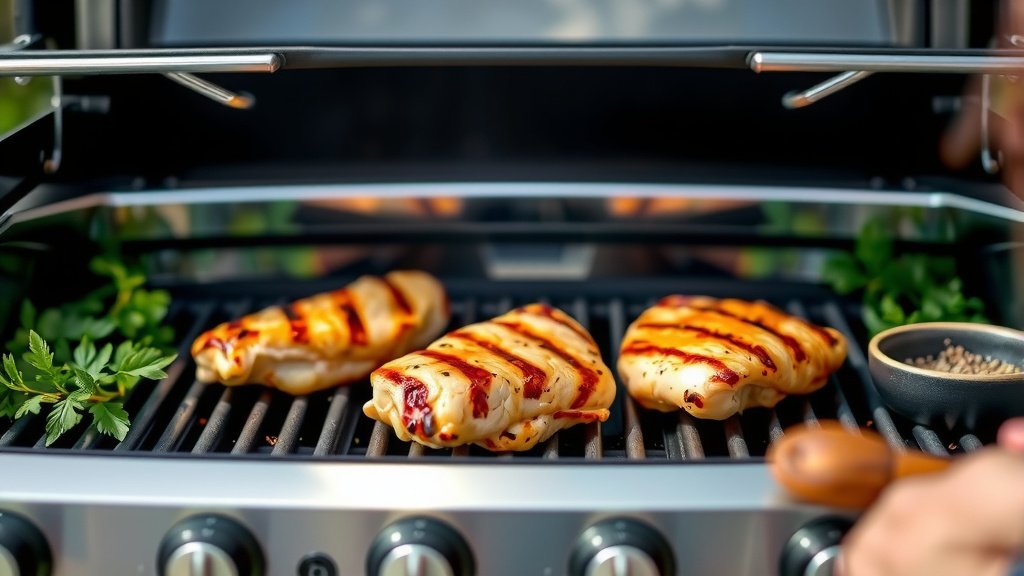
To grill chicken on a gas grill, preheat your grill to medium-high heat, around 400-450°F (200-230°C), then sear the chicken over direct heat before moving it to indirect heat to finish cooking until its internal temperature reaches 165°F (74°C).
Always ensure your chicken is well-seasoned and brought close to room temperature for the best, most even cooking results on your gas grill.
- TL;DR: Grilling perfect chicken on a gas grill involves careful preparation, setting the right two-zone heat, and always checking the internal temperature for safety.
- You’ll start with a hot sear to build flavor, then move to a cooler zone to cook through without burning.
- Patience and a good meat thermometer are your best friends in this process.
- Resting the chicken afterward is key for juicy, tender meat.
How Do You Grill Chicken On A Gas Grill?
Grilling chicken on a gas grill means mastering temperature zones and monitoring internal doneness for juicy, flavorful results every time. It’s simpler than you might think.
Getting Your Chicken Ready for the Heat
Before any flame touches your food, a little prep work makes a big difference. You want the chicken as dry as possible to achieve a beautiful sear.
We found that patting the chicken pieces thoroughly with paper towels helps remove excess moisture. This step prevents steaming and encourages a golden-brown crust.
Seasoning is next. A simple sprinkle of salt, pepper, and your favorite spices works wonders. Some chefs even recommend a dry rub an hour before grilling to infuse more flavor.
Bringing Chicken to Temperature
Allow your chicken to sit at room temperature for about 15-20 minutes before it hits the grill. This helps it cook more evenly from edge to center.
Cold chicken tends to seize up and cook unevenly, sometimes leaving the outside burnt and the inside raw. Nobody wants that for their grilled chicken.
Setting Up Your Gas Grill: Two Heat Zones
A gas grill gives you fantastic control over heat. For chicken, you’ll want to create two zones: a hot zone for searing and a cooler zone for gentle cooking.
Preheat your grill to medium-high. Many experts say aim for a grill surface temperature of 400-450°F (200-230°C).
To create zones, simply turn off one or more burners on one side while keeping the others on high. This creates your direct (hot) and indirect (cooler) cooking areas.
The Dance of Direct and Indirect Heat
Using both direct and indirect heat is the secret to perfectly grilled chicken that is both crispy and tender.
Direct heat provides that intense, immediate sizzle for a beautiful crust and rich flavor. Indirect heat allows the chicken to cook through gently without burning.
- Start chicken pieces over direct, high heat for 2-3 minutes per side.
- Look for a nice sear and light char marks.
- Move the chicken to the indirect heat zone to finish cooking.
- Close the lid to maintain an even oven-like temperature.
Grilling Different Chicken Cuts
Different chicken cuts cook at different rates. Knowing this helps you manage your grill time effectively.
| Chicken Cut | Initial Direct Heat | Indirect Heat Cook Time (Approx.) | Target Internal Temperature |
|---|---|---|---|
| Boneless Breasts | 2-3 mins per side | 8-12 minutes | 165°F (74°C) |
| Bone-in Thighs | 3-4 mins per side | 15-20 minutes | 170-175°F (77-79°C) |
| Drumsticks | 3-4 mins per side | 15-20 minutes | 170-175°F (77-79°C) |
| Wings | 2-3 mins per side | 15-20 minutes | 170-175°F (77-79°C) |
Mastering Chicken Breasts
Boneless, skinless chicken breasts are popular but can dry out easily. Keep an eye on them in the indirect zone.
Many guidelines point to pounding them to an even thickness as a good first step (USDA). This ensures they cook uniformly and prevents one end from drying out.
Juicy Chicken Thighs and Legs
Bone-in pieces, like thighs and drumsticks, tolerate higher temperatures better due to their fat content and bone. They often taste better cooked to a slightly higher internal temperature for tenderness.
These cuts are more forgiving and remain super juicy even if you cook them a bit longer. They’re a favorite for a reason!
Checking for Doneness: Your Meat Thermometer is Key
Forget guessing. An instant-read meat thermometer is your absolute best friend when grilling chicken. It’s the only way to know for sure that your chicken is safe to eat.
Insert the thermometer into the thickest part of the meat, avoiding any bones. For chicken breasts, aim for 165°F (74°C). For thighs and legs, 170-175°F (77-79°C) often provides the best texture.
Research often connects undercooked poultry with foodborne illness (CDC), so always double-check that temperature!
The Golden Rule: Rest Your Chicken
Once your chicken hits the target temperature, don’t cut into it immediately. This is a common mistake that lets all those precious juices escape.
Transfer the chicken to a clean cutting board or platter and tent it loosely with foil. Let it rest for 5-10 minutes, depending on the size of the pieces.
This resting period allows the juices to redistribute throughout the meat, resulting in a significantly more tender and flavorful bite. Trust us, it’s worth the wait.
Tips for Amazing Grilled Chicken Flavor
Want to take your chicken from good to incredible? Consider these flavor-boosting ideas:
* Marinades: A good marinade adds flavor and can help tenderize the meat. Always marinate in the fridge.
* Brining: For super juicy chicken, especially breasts, a simple brine of salt and water can work wonders.
* Sauces: Apply BBQ sauce during the last 10-15 minutes of cooking to avoid burning sugars.
* Wood Chips: If your gas grill has a smoker box, a few wood chips can add a subtle smoky flavor.
Gas Grill Safety Checklist
Grilling is fun, but safety comes first. Here’s a quick checklist:
- Check gas lines for leaks before grilling season.
- Keep a spray bottle of water nearby for flare-ups.
- Never grill indoors or in enclosed spaces.
- Clean your grill grates regularly to prevent buildup.
- Always have a fire extinguisher accessible.
Conclusion
Grilling chicken on a gas grill is a rewarding experience when you know the steps. From proper preparation and understanding heat zones to checking for doneness and resting, each step plays a vital role.
Don’t be afraid to experiment with seasonings and marinades to find your perfect flavor profile. With these tips, you’re well on your way to serving up perfectly juicy, flavorful grilled chicken every time.
How long does it take to grill chicken on a gas grill?
Grill time varies by chicken cut. Boneless breasts take 10-15 minutes, while bone-in pieces like thighs or drumsticks typically require 18-25 minutes, all cooking over medium-high heat with a mix of direct and indirect heat.
What temperature should a gas grill be for chicken?
For grilling chicken, preheat your gas grill to a medium-high temperature, aiming for an internal grill temperature of 400-450°F (200-230°C) when the lid is closed. This provides good searing heat and a steady indirect cooking zone.
Do you grill chicken with the lid open or closed?
You should grill chicken with the lid closed during the indirect cooking phase. This helps maintain a consistent internal temperature, allowing the chicken to cook through evenly and preventing excessive heat loss, much like an oven.
How do I prevent chicken from sticking to the gas grill?
To prevent chicken from sticking, make sure your grill grates are clean and hot. Lightly oil the grates before placing the chicken. Also, avoid moving the chicken too soon; allow it to sear and form a crust, and it will release naturally.
Can you grill frozen chicken on a gas grill?
No, it’s not recommended to grill frozen chicken directly on a gas grill. It cooks unevenly, can dry out, and poses a food safety risk because the outside might burn while the inside remains raw. Always thaw chicken completely before grilling.