
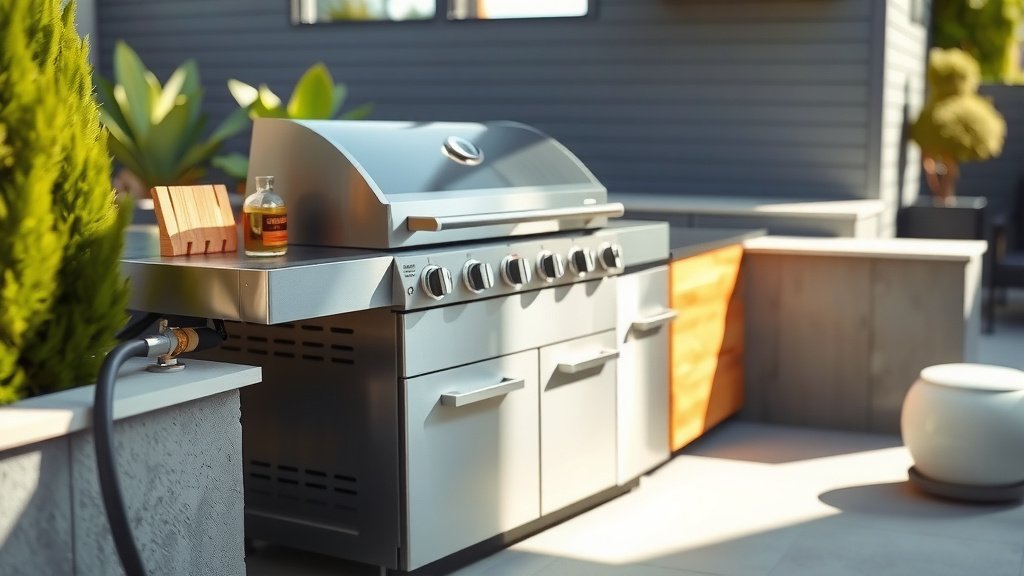
No, you generally cannot use natural gas directly with a propane grill without significant, professional modification. Your propane grill is designed for a much higher fuel pressure than natural gas systems.
Attempting to connect natural gas to a propane grill without proper conversion is extremely dangerous and could lead to serious accidents or damage.
- You cannot just swap natural gas into a propane grill; they use different pressures.
- Doing so without modification creates significant fire and explosion hazards.
- Converting a propane grill to natural gas requires specific parts and technical know-how.
- Always consult a qualified professional for any grill fuel conversions for safety reasons.
- Many grills are not designed for conversion at all; check your owner’s manual first.
Can You Use Natural Gas With A Propane Grill?
You absolutely cannot simply connect natural gas to a propane grill and expect it to work safely. These fuel types operate under vastly different pressure systems. Trying to force this connection is a major safety risk.
Imagine trying to use a garden hose to put out a huge fire; it just isn’t designed for that level of intensity. The principle is similar with your grill’s fuel system.
The Core Difference: Pressure and Orifices
What truly separates a propane grill from a natural gas grill? It boils down to two critical factors: pressure and the size of the fuel orifices. Propane (LP gas) is stored under high pressure in a tank.
When it reaches your grill, a regulator reduces this pressure. Natural gas, however, comes from a utility line at a much lower pressure. This pressure difference means the tiny holes (orifices) that let the gas flow to the burners must be different sizes.
Why Orifice Size Matters So Much
Think of it like a faucet. If you have a tiny faucet hole, but a lot of water pressure, you get a powerful, thin stream. If you have a wide faucet hole and low water pressure, you get a gentle trickle. Your grill’s burners are precisely engineered for a specific pressure and orifice size combination.
This ensures you get the right amount of fuel and oxygen mix for a clean, efficient flame. Many grill manufacturers highlight this in their safety manuals.
Understanding the Dangers of a Mismatch
Trying to use natural gas on a propane grill is not just inefficient; it’s genuinely dangerous. Because natural gas operates at a much lower pressure, connecting it to a propane grill’s higher-pressure system leads to problems.
You might get a weak flame or no flame at all, but the real hazard comes from the potential for gas leaks. A system designed for high pressure cannot always safely contain low-pressure gas in unexpected ways, or vice versa.
The Risk of Leaks and Explosions
Without the correct orifices, natural gas might not flow correctly or burn efficiently. This can cause gas to build up around your grill. Gas leaks are incredibly dangerous, leading to fire or explosion hazards.
Safety organizations and fire departments consistently warn against mixing fuel types without proper conversion. Always prioritize your safety and the safety of those around you.
When is Conversion Possible?
Good news! Some propane grills can be converted to natural gas, but it’s not a DIY project. We found that many grill manufacturers offer conversion kits for specific models. These kits include the necessary new orifices and a natural gas regulator.
Always check your grill’s owner’s manual first to see if it is “field convertible” for safety.
What a Conversion Kit Includes
A typical natural gas conversion kit will include a new regulator that matches the lower pressure of natural gas. It will also provide new burner orifices, which have slightly larger openings than the propane ones. Sometimes, it includes new burner tubes or hoses as well.
These components are specifically designed to safely adapt your grill to the new fuel source.
Should You Convert Your Grill Yourself?
Many experts strongly advise against attempting a grill conversion yourself. It requires precise technical knowledge and the proper tools. Even a small error can result in a dangerous gas leak.
Instead, professionals who are certified in gas appliance installation should handle such conversions. They know the correct procedures and safety checks.
- Inspect your grill’s owner’s manual for conversion instructions and kit requirements.
- Purchase the exact, manufacturer-approved conversion kit for your specific grill model.
- Turn off all gas supply to the grill and disconnect the propane tank completely.
- Carefully replace the propane regulator with the new natural gas regulator.
- Replace the burner orifices with the larger natural gas orifices.
- Perform a thorough leak test using soapy water on all connections.
The Benefits of Natural Gas Grilling
Once converted, natural gas grilling offers some fantastic perks. You get an endless fuel supply, so no more running out of propane halfway through cooking that perfect steak! This means fewer trips to refill tanks.
We found that many grill owners appreciate the convenience and the typically lower cost of natural gas over time, especially for frequent grillers.
Propane vs. Natural Gas: A Quick Comparison
Let’s look at the key differences between these two popular grilling fuels. Understanding these will help you appreciate why conversion is more involved than a simple swap.
| Feature | Propane (LP Gas) | Natural Gas |
|---|---|---|
| Storage/Delivery | Portable tanks (high pressure) | Fixed utility line (low pressure) |
| BTU Output (per volume) | Higher (around 2,500 BTU/cubic foot) | Lower (around 1,000 BTU/cubic foot) |
| Grill Orifices | Smaller openings | Larger openings |
| Regulator Pressure | Higher pressure (e.g., 11″ WC) | Lower pressure (e.g., 4″ WC) |
| Convenience | Portable, but tanks run out | Unlimited supply, but fixed location |
Connecting to Your Natural Gas Line
You’ll need a natural gas line installed on your patio or deck to use a natural gas grill or a converted one. This often involves extending a gas line from your home’s main supply. This step alone typically requires a licensed plumber or gas fitter.
They will ensure the connection is safe, meets local codes, and has the correct shut-off valves.
Always Leak Test New Connections
Whether you’re connecting a new natural gas grill or a converted one, always perform a leak test. Use a solution of soapy water brushed over all connections. If you see bubbles, you have a leak. Turn off the gas immediately and tighten connections until the bubbles stop. This simple step can prevent serious hazards.
Conclusion
In summary, while you cannot simply use natural gas with a propane grill as-is, conversion is a possibility for some models. The key is to understand the differences in pressure and orifice sizes. Never attempt a conversion without proper guidance and the correct manufacturer-approved kit.
For your safety, and to ensure your grill operates efficiently, it’s always best to consult a certified professional for any fuel type changes. Enjoy your grilling, no matter what fuel you choose!
Can all propane grills be converted to natural gas?
No, not all propane grills are designed for conversion. Many manufacturers offer specific conversion kits for certain models, but others are propane-only. Always check your grill’s owner’s manual or the manufacturer’s website to confirm if your model is convertible before buying any parts.
What happens if I try to connect natural gas to a propane grill without conversion?
If you try to connect natural gas to a propane grill without proper conversion, you will likely experience a very weak flame, or no flame at all, because natural gas operates at a much lower pressure. More critically, it creates a significant safety hazard due to potential gas leaks and incomplete combustion.
Is it cheaper to use natural gas or propane for grilling?
Many experts agree that natural gas is often cheaper per BTU than propane, especially for frequent grillers. However, the initial installation cost for a natural gas line and professional conversion can be higher. Propane offers portability, but you pay for tank refills.
Do I need a professional to convert my grill?
Yes, it is highly recommended to have a qualified professional, such as a licensed plumber or gas fitter, handle any grill fuel conversion. This ensures the job is done safely, correctly, and according to local codes, preventing dangerous gas leaks or improper operation.
How can I tell if my grill is compatible with a natural gas conversion kit?
The best way to determine compatibility is by checking your grill’s owner’s manual. Look for sections on “fuel conversion” or “natural gas options.” You can also visit the manufacturer’s official website and search for your specific model number to see if a conversion kit is available and approved.
