How to Choose a Built-In Pellet Grill
Choose a built in pellet grill by matching its cutout dimensions, required clearances and service access to your outdoor kitchen. Then size the cooking area for the meals you make and confirm the installation requirements before building the opening.
On this page (8 sections)
- How do you check a built-in pellet grill cutout?
- What clearances and ventilation does a pellet grill need?
- How much service access should you leave?
- How much cooking capacity do you need?
- What power and pellet storage should you plan for?
- Which features matter after installation?
- How should you plan the installation?
- Which built-in pellet grill should you choose?
Choose a built in pellet grill by matching the cutout, clearances and service access to the outdoor kitchen before construction begins. Then decide how much cooking space you need and confirm the model is approved for built-in installation.
A freestanding grill may have legs, shelves or a hopper shape that will not fit an enclosure. Measure the planned opening and check the manufacturer’s installation instructions before choosing a model.
If you are comparing installed options, our guide to the best pellet grill for outdoor kitchen can help you explore models intended for this setting.
How do you check a built-in pellet grill cutout?
Check the manufacturer’s required cutout dimensions and clearances before you finalize the island. The grill’s outside dimensions alone do not tell you the opening size it needs.
Measure the opening’s width, depth and height. Also record the counter thickness, nearby walls, doors, cabinets and any overhangs that could affect fit or access.
Compare your measurements with the grill’s installation manual. Look for minimum and maximum cutout dimensions, approved countertop material, required gaps and any support or trim parts needed around the opening.
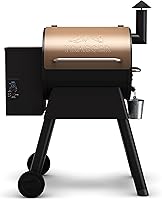
A model described as freestanding is not automatically suitable for enclosure use. For example, the Traeger Pro 22 is described as having a stable chassis, wheels and a side lift bar, so treat it as a movable grill and verify built-in approval before considering it for an island.
Do not assume that a close fit is a safe fit. If the manual does not give clear installation requirements for your setup, contact the manufacturer before building around the grill.
What clearances and ventilation does a pellet grill need?
Use the clearance and ventilation rules in the grill’s manual. Pellet grills produce heat and exhaust, and an enclosure can change how heat and smoke move around the unit.
Check the required spacing behind and beside the grill, above the cooking surface and around the hopper. Keep combustible surfaces and stored items outside any restricted zone.
The manual should also explain how exhaust leaves the unit and whether an enclosure needs vent openings. Do not cover vents or assume an outdoor location alone provides enough airflow.
Plan for the lid to open fully without hitting a backsplash, roof, cabinet or other appliance. A lid that opens only partway can make cooking and cleaning harder.
If instructions are unclear, pause the build and ask the manufacturer or a qualified installer to review the proposed location. Your island design should follow the grill’s stated installation limits.
How much service access should you leave?
Leave enough room to reach parts that need routine cleaning, refilling or repair. A grill that fits the cutout can still be difficult to use if the hopper, grease system or electrical connections are trapped behind fixed cabinets.
Check how the grill is loaded with pellets and how its grease, ash and cooking parts are removed. Find out which side panels or access doors need to open and whether the grill must slide out for service.
Plan access to the power connection and any controller wiring. Keep the outlet reachable without dismantling the island, and follow local electrical requirements.
Think about service before choosing doors, drawers or storage around the grill. A removable panel or open cabinet section may make maintenance easier, but it must not block required ventilation or clearances.
How much cooking capacity do you need?
Choose cooking area based on the number of people and foods you usually cook at once. Consider your largest planned meal, not only the usual weeknight cook.
A grill with 572 sq in of cooking space, such as the Traeger Pro 22, is described as fitting up to 24 burgers, 5 racks of ribs or 4 whole chickens. Those examples can help you picture capacity, but the grill’s installation style still needs separate verification.
The Pit Boss 850 Navigator Series WiFi has 932 sq in of cooking space and a 30 lb hopper. Its product details describe it as a freestanding outdoor grill, so do not treat its size or features as proof that it can be installed in an enclosure.
If cooking multiple foods at once matters, look at the rack layout as well as the total area. A large number can still be awkward if the shelves do not fit the pans or food you plan to use.
For connected controls, compare a model’s app and controller features in our guide to the best pellet grill with wifi and bluetooth. For brand comparisons, see Weber Searwood vs Traeger.
What power and pellet storage should you plan for?
Plan for the grill’s power source and pellet access before the countertop is installed. A corded electric grill needs a suitable outlet, while the hopper needs enough room for filling and cleaning.
Check the model’s manual for power requirements, outlet placement and cord routing. Keep the connection accessible and protected as directed by the manufacturer.
Measure how the hopper lid opens and where you will store pellets. A nearby dry storage spot can make refills easier, but keep fuel away from heat and follow the pellet and grill makers’ storage guidance.
The Traeger Signature Blend is an 18 lb bag of hardwood pellets with hickory, maple and cherry. It can be one fuel option to consider if you choose a compatible Traeger grill.
Which features matter after installation?
Prioritize features you can reach and use once the grill is in place. Controls, probes, shelves and cleanout parts matter only if the enclosure leaves room to operate them.
A built-in meat probe can let you monitor food temperature without opening the lid. A hopper cleanout door can help with fuel changes, but check that it remains reachable after installation.
WiFi and Bluetooth can support remote monitoring on compatible models. Compare pellet grills with Wi-Fi when app control is a priority.
Confirm that the controller and app features suit your cooking habits, and compare them in our Weber Searwood vs Traeger comparison.
Shelves and tool hooks can be useful on freestanding grills, but they may not fit an island layout. Decide whether you need them or whether the outdoor kitchen will provide its own prep space.
For a wider look at premium options, browse our best high end pellet grills guide. If you want to compare pellet grills beyond built-in setups, see our Best Pellet Grill roundup.
How should you plan the installation?
Make a dimensioned plan before ordering the grill or cutting the counter. Include the opening, required clearances, ventilation, lid swing, hopper access, service access and power connection.
- Confirm that the model is approved for built-in installation.
- Copy the manufacturer’s cutout dimensions and clearance rules into your plan.
- Mark where the lid, hopper and access panels open.
- Identify how the grill will be removed or reached for service.
- Plan power and pellet storage according to the manual.
- Have the installer check the completed layout against those instructions.
Do not use a grill’s overall width and depth as a substitute for cutout measurements. A manufacturer may require a different opening or extra space around the unit.
Which built-in pellet grill should you choose?
Choose a grill only after its approved installation details fit your measured island plan.
Start with cutout dimensions and clearances, then check service access, power and cooking capacity.
If the installation details are clear and accessible, compare cooking area and controls for your routine. If the model is freestanding or its manual does not confirm enclosure use, choose another option designed for built-in installation.
A compatible pellet blend, such as Traeger Signature Blend, can be considered after you settle on a compatible grill. For older cooks or anyone who prefers simpler controls, our Best Pellet Grill For Seniors guide offers another way to compare features.
Frequently asked questions
Can any pellet grill be installed in an outdoor kitchen?
No. A freestanding pellet grill is not automatically safe or suitable for a built-in enclosure.
Check the model’s manual for approved installation, cutout dimensions, clearances, ventilation and access needs.
If those details are not confirmed for your planned setup, choose a model made for built-in installation.
What should I measure before choosing a built-in pellet grill?
Measure the planned opening’s width, depth and height, plus the countertop thickness and nearby walls or cabinets. Compare those measurements with the manufacturer’s required cutout and clearance dimensions.
Also plan room to open the lid, load pellets, remove grease or ash parts, and reach electrical and service connections.
How much cooking capacity do I need?
Choose cooking capacity around your usual meal and your largest planned cook. A smaller area may suit weeknight meals, while entertaining or cooking several foods at once can call for more space.
Compare usable cooking area and rack layout, then leave room around the grill for safe operation and access.
Does a built-in pellet grill need electricity?
Many pellet grills need power for their controller and pellet feed system, so check the model’s power requirements before planning the island. Confirm the outlet location and access, and use an installation method that follows local electrical rules and the grill manufacturer’s instructions.