
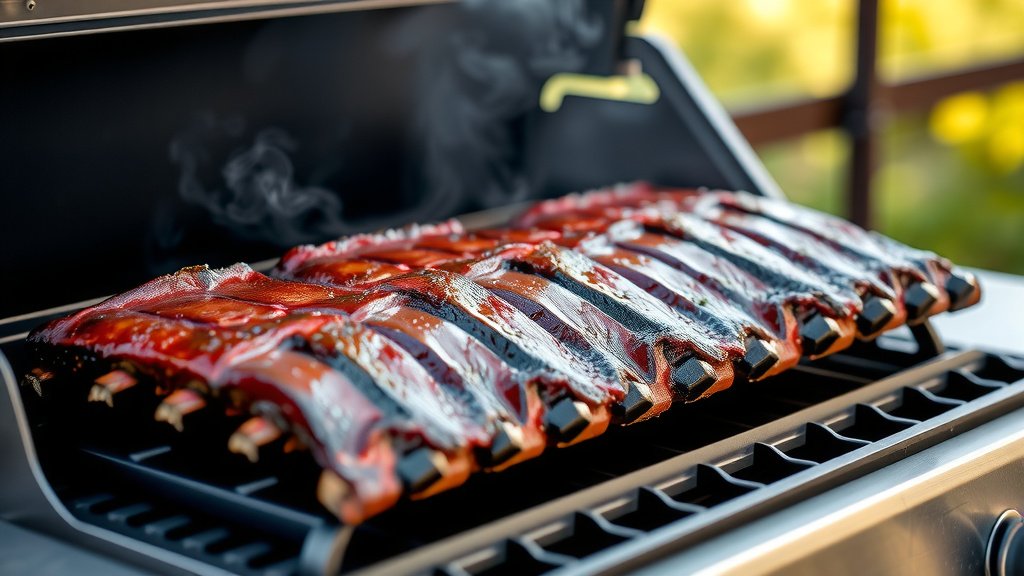
How long to cook ribs on a gas grill at 350 degrees Fahrenheit typically ranges from 2.5 to 4 hours for tender, fall-off-the-bone results, depending on the rib type and your desired tenderness.
You’ll want to aim for an internal temperature of 190-203°F (88-95°C) for the best texture when cooking ribs at 350°F.
- Target Time: Expect 2.5 to 4 hours for ribs on a gas grill at 350°F.
- Key Temp: Ribs are ready when they reach 190-203°F internal temperature.
- Rib Type Matters: Different cuts like baby backs or spare ribs have varying cook times.
- Grill Consistency: Maintaining a steady 350°F is important for even cooking.
- Tenderness Test: The bend test or bone wiggle shows you when ribs are perfect.
How Long To Cook Ribs On Gas Grill At 350?
Cooking ribs at 350°F on a gas grill will generally take between 2.5 and 4 hours. The precise timing changes based on the type of ribs you choose and how tender you want them.
The Magic Temperature: Why 350°F for Ribs?
Why choose 350°F for your ribs? This temperature strikes a nice balance. It is hot enough to cook them through in a reasonable time. It is also gentle enough to break down the tough connective tissues without drying out the meat.
Lower temperatures can take much longer. Higher temperatures risk burning the outside before the inside softens. Many grill masters find 350°F a sweet spot for juicy results.
Prepping Your Ribs for the Grill
Great ribs start with great preparation. Don’t skip these simple but important steps. They build a strong foundation for flavor and texture.
Trimming and Membrane Removal
First, inspect your ribs. You might see some loose bits of meat or fat. Trim these away for a cleaner cook. The most critical step is removing the thin membrane from the bone side.
This membrane is tough and doesn’t break down easily. It can make your ribs chewy. We found that gently prying it up with a knife and pulling it off with a paper towel works best (BBQ Pitmasters Association).
Seasoning for Flavor
After trimming, it’s time for seasoning. A good dry rub is essential. Apply it generously to all sides of the ribs. Don’t be shy; the ribs can take a lot of flavor.
Let the rub sit for at least 30 minutes. You can even refrigerate them for a few hours. This allows the flavors to sink deep into the meat.
Setting Up Your Gas Grill for Success
Your grill setup makes a huge difference. Uneven heat can lead to unevenly cooked ribs. We want a consistent cooking environment.
Indirect Heat is Your Friend
Cooking ribs at 350°F on a gas grill usually means using indirect heat. This prevents the ribs from burning. Light burners on one side and place ribs on the other. This creates a small oven inside your grill.
For a two-burner grill, light one burner. For a three or four-burner grill, light the outer burners. Keep the middle burner off. This ensures gentle, steady cooking.
Maintaining That Steady Temperature
Keeping a consistent 350°F is key. Use your grill’s lid thermometer. Also, consider a separate grill thermometer for accuracy. You may need to adjust your burner settings. Small tweaks are often needed.
Close the lid as much as possible to hold heat. Each time you open it, heat escapes. This lengthens your cook time. Try to open it only when necessary.
The Cooking Process: A Step-by-Step Guide
Let’s walk through the actual cooking. This simple method, often called the 3-2-1 method for smokers, can be adapted. It ensures tender, juicy ribs.
Initial Grill Time
Place your seasoned ribs on the cool side of the grill. Close the lid. Let them cook for about 2 to 2.5 hours. Maintain that 350°F temperature. The ribs will start to develop a nice bark.
You are looking for the meat to pull back slightly from the bones. The color will also deepen. This first stage develops flavor and color.
The Wrap Stage: Why and How
After the initial cooking, it’s time to wrap them. This stage is critical for tenderness. Wrapping traps moisture and steam. It helps the connective tissues break down faster.
Use heavy-duty foil. Place the ribs meat-side down. Add a little liquid, like apple juice or broth. Wrap them tightly, making sure there are no leaks. Return the wrapped ribs to the grill for 1 to 1.5 hours.
Finishing Unwrapped
After wrapping, carefully unwrap your ribs. Return them to the grill, bone-side down. This is when you can brush on your favorite BBQ sauce. Close the lid again.
Cook for another 30-60 minutes. This allows the sauce to caramelize and set. It also firms up the bark a little. Watch for burning during this final stage.
How to Know When Your Ribs Are Done (The Bend Test and More)
How do you know when your ribs are perfect? A good meat thermometer is your best friend. For true tenderness, aim for an internal temperature between 190-203°F (88-95°C) (USDA guidelines).
Beyond temperature, there are other clues. Try the “bend test.” Pick up a rack of ribs with tongs in the middle. If they are ready, they will bend easily. The meat will crack on the surface. You might also notice the meat pulling away from the bone.
Common Rib Types and Their Cook Times
Different types of ribs have varying cook times due to size and fat content. Knowing these differences helps you plan. Here is a quick guide:
| Rib Type | Typical Weight (per rack) | Approximate Cook Time at 350°F (Indirect) |
|---|---|---|
| Baby Back Ribs | 1.5 – 2.5 lbs | 2.5 – 3.5 hours |
| Spare Ribs (St. Louis Style) | 2.5 – 3.5 lbs | 3 – 4 hours |
| Country Style Ribs | (Often individual pieces) | 1.5 – 2.5 hours (less common for whole rack) |
Troubleshooting: What If Your Ribs Aren’t Tender?
Sometimes ribs don’t quite hit that perfect tenderness. Don’t worry; there are solutions. Often, they just need more time. If they’re tough, continue cooking them wrapped.
Check your grill temperature. Is it truly at 350°F? A lower temperature means longer cooking. If you pulled them too early, wrapping them with liquid and cooking longer is your best bet. Patience is a virtue in rib cooking.
Here’s a quick checklist to ensure your ribs turn out amazing:
- Remove the tough membrane from the bone side.
- Apply a generous dry rub.
- Set up your grill for indirect heat at a steady 350°F.
- Use a meat thermometer to check for 190-203°F internal temperature.
- Perform the bend test for ultimate tenderness.
- Don’t rush the process; low and slow-ish wins the race.
Conclusion
Cooking ribs on a gas grill at 350°F is a rewarding experience. It brings tender, flavorful results right to your backyard. Remember that patience and a keen eye on temperature are your best tools. With the right prep, consistent heat, and knowing when to wrap, you’ll be a grill master in no time. Enjoy the process, and get ready for some fantastic ribs!
What’s the best way to keep ribs from drying out on a gas grill?
The best way to prevent ribs from drying out is to use indirect heat and wrap them in foil with a little liquid (like apple juice) during the middle cooking stage. This method, often called the “2-2-1” or “3-2-1” method, helps trap moisture and steam.
Can I add wood chips to my gas grill for a smoky flavor?
Yes, you can definitely add wood chips to a gas grill for extra smoky flavor. Place dry wood chips in a foil packet with holes poked in it, or use a smoker box. Position it over a lit burner to generate smoke, then move your ribs to the indirect heat side.
How do I achieve a good bark on my ribs without burning them?
To get a good bark, cook your ribs unwrapped for the first part of the cooking process. The dry rub and direct exposure to grill heat help create that crust. Finishing them unwrapped for the last 30-60 minutes also helps set the bark and caramelize any sauce.
Should I flip my ribs while they are cooking on the gas grill?
When cooking with indirect heat, flipping ribs is generally not necessary. Place them bone-side down on the cooler side of the grill. They will cook evenly without needing to be turned. Only flip them if you are trying to achieve a specific sear or caramelization.
What type of liquid is best to use when wrapping ribs?
Many experts say that apple juice is a popular choice for wrapping ribs because its sweetness complements pork beautifully. Other good options include apple cider vinegar, beer, or even a simple chicken or vegetable broth. Choose something that adds flavor and moisture without overpowering the ribs.
