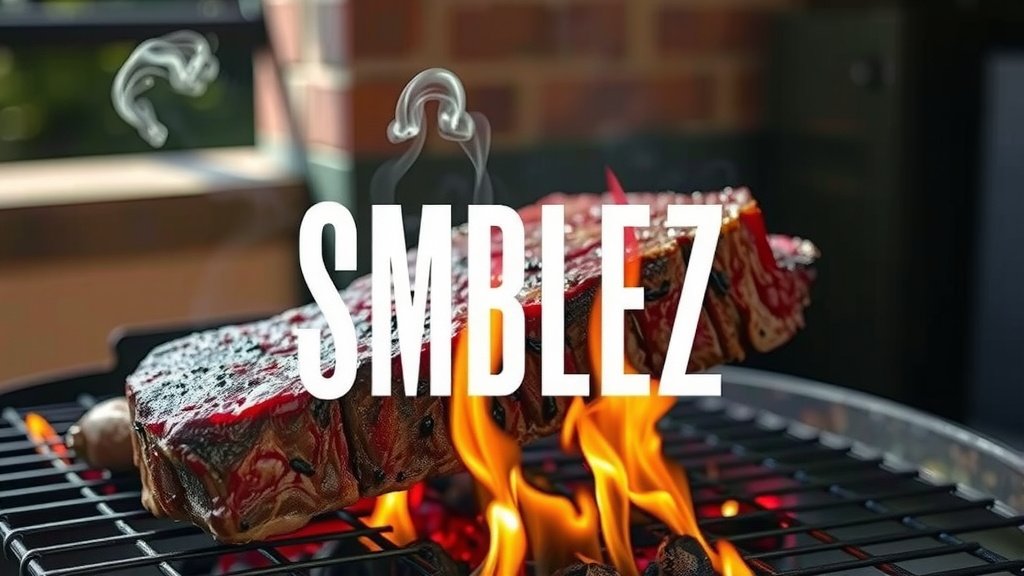
Cooking prime rib on a charcoal grill generally takes about 15-20 minutes per pound for medium-rare, though this can vary depending on your grill’s temperature and the roast’s starting condition. Always rely on an internal meat thermometer for accuracy to reach your desired doneness.
For a perfect prime rib, target an internal temperature of 120-125°F for medium-rare before resting, as it will continue to cook a few degrees afterward.
TL;DR: Grilling Prime Rib on Charcoal
- Aim for 15-20 minutes per pound for medium-rare results.
- Use a two-zone grilling setup for indirect heat.
- Pull your roast off the grill at 120-125°F for medium-rare.
- Rest the prime rib for at least 20-30 minutes before carving.
- An accurate meat thermometer is your absolute best friend here.
How Long To Cook Prime Rib On Charcoal Grill?
You’re ready to tackle a magnificent prime rib on your charcoal grill, a truly rewarding cooking experience. The primary goal is achieving that perfect internal temperature, which typically means planning for about 15 to 20 minutes of cooking time per pound.
The Golden Rule: It’s All About Temperature, Not Just Time
Think of cook time as a guide, not a strict rule. Every prime rib is unique. Factors like its thickness and how cold it is when it hits the grill really matter. We found that the most important tool you can own is a reliable meat thermometer (USDA guidelines recommend this for safety).
Understanding Your Desired Doneness
What’s your perfect prime rib? Most people aim for medium-rare. For that, you’ll pull the roast off the grill around 120-125°F. Remember, it will continue cooking a bit during the rest, reaching its final temperature. Are you looking for a different doneness? We’ve got you covered.
| Doneness | Target Internal Temperature (Off Grill) | Final Internal Temperature (After Rest) |
|---|---|---|
| Rare | 115-120°F | 120-125°F |
| Medium-Rare | 120-125°F | 125-130°F |
| Medium | 125-130°F | 130-135°F |
| Medium-Well | 135-140°F | 140-145°F |
Factors Influencing Your Cook Time
Many things can change how long your prime rib needs on the grill. Let’s look at the big players. Knowing these will help you adjust your strategy.
Roast Size and Weight
A heavier roast needs more time. A smaller one cooks faster. It sounds obvious, but it’s easy to forget. A 5-pound roast will cook quicker than a 10-pound one. We often advise adding about 5 minutes per pound for larger roasts compared to smaller ones if you are aiming for the same doneness.
Bone-In vs. Boneless Prime Rib
Bone-in roasts often cook a bit slower and can cook more evenly. The bone acts as an insulator. Boneless roasts might cook faster. However, the bone adds incredible flavor, which is a trade-off many grill masters love. Many experts suggest a boneless roast might take slightly less time per pound (Cook’s Illustrated).
Starting Temperature of the Roast
Did you put a cold roast straight from the fridge onto the grill? It will take much longer. For the best results, let your prime rib sit out at room temperature for 2-3 hours. This brings the internal temperature up, promoting more even cooking. We find this step makes a noticeable difference.
Your Grill’s Temperature Consistency
Charcoal grills can be tricky to keep at a constant temperature. Fluctuations will impact your cook time. Aim for a steady 225-275°F for indirect cooking. Learning to manage your vents is a key skill here. Using an accurate grill thermometer is just as important as your meat thermometer.
Setting Up Your Charcoal Grill for Prime Rib Perfection
You can’t just throw a prime rib directly over blazing coals. You need a specific setup. This will ensure your roast cooks through without burning the outside.
The Two-Zone Cooking Method
This is non-negotiable for prime rib. Pile your lit coals on one side of the grill. Leave the other side empty. This creates a hot zone for searing and a cooler, indirect zone for slow cooking. You’ll place your prime rib over the empty side. This setup ensures gentle, even heat distribution.
Maintaining Grill Temperature
Keep your grill lid closed as much as possible to maintain a consistent temperature. Use the bottom and top vents to control airflow. More air means hotter coals; less air cools things down. Aim for that sweet spot: 225-275°F. You might need to add a few more coals during the cook. We suggest using a chimney starter to get them ready. Many barbecue pros monitor grill temperature with a separate thermometer at grate level for more precision.
The Reverse Sear Method: Your Best Friend
For prime rib, the reverse sear is incredibly popular, and for good reason. It gives you an amazing crust and a perfectly cooked interior. Why does it work so well? It cooks the roast slowly first, then finishes with a high-heat sear.
Here’s how it generally works:
- Start your prime rib in the indirect zone, cooking it slowly at 225-275°F until it’s about 10-15 degrees shy of your target internal temperature.
- Remove the roast from the grill, tent it loosely with foil, and let it rest while you increase your grill’s temperature.
- Add more coals or open vents to get your grill super hot (500-600°F).
- Sear the prime rib directly over the hot coals for 2-3 minutes per side until a beautiful crust forms. This creates those delicious crispy edges.
Your Prime Rib Charcoal Grilling Checklist
Before you light those coals, make sure you have everything ready. This checklist helps avoid any last-minute stress.
- High-quality prime rib roast, at room temperature
- Reliable meat thermometer (instant-read and leave-in probe)
- Charcoal and chimney starter
- Wood chunks or chips for smoke flavor (optional)
- Tongs, grill gloves, and a carving board
- Seasoning rub for your prime rib
- Aluminum foil for resting the roast
Don’t Forget the Rest!
This step is absolutely critical, yet so often overlooked. Once your prime rib hits its target temperature, remove it from the grill. Tent it loosely with foil. Let it rest for at least 20-30 minutes. What does resting do? It allows the juices to redistribute throughout the meat, making every slice incredibly tender and flavorful. Cutting it too soon lets all those precious juices run out, leaving you with dry meat. Trust us on this one: patience truly pays off here.
Conclusion
Cooking prime rib on a charcoal grill is a journey, not just a task. You’ve learned that time per pound is a guide, but your meat thermometer is the ultimate truth-teller. By understanding factors like roast size, starting temperature, and grill consistency, you can adjust your approach. The reverse sear and proper two-zone setup are your secret weapons for that perfect crust and juicy interior. Remember to give it that all-important rest. With a little care and attention, you’ll be serving up a truly memorable prime rib that will impress everyone at your table.
FAQs About Grilling Prime Rib on Charcoal
How do I prevent my prime rib from drying out on the charcoal grill?
To prevent drying, use indirect heat for the majority of the cooking time and ensure your grill temperature stays within the 225-275°F range. Avoid overcooking by always monitoring with an internal meat thermometer, pulling the roast off at your target temperature, and giving it ample rest time.
Can I add smoke flavor to my prime rib on a charcoal grill?
Absolutely! For a wonderful smoky flavor, add a few chunks of hardwood like oak, cherry, or hickory directly onto your hot coals during the indirect cooking phase. Start with just one or two chunks to avoid overpowering the delicate beef flavor.
What’s the best way to season prime rib for charcoal grilling?
A simple yet effective seasoning is often best for prime rib. Use a generous amount of coarse salt, fresh cracked black pepper, garlic powder, and perhaps some dried rosemary or thyme. Apply it liberally all over the roast, ideally a few hours before grilling, or even overnight, to allow the flavors to penetrate.
My charcoal grill temperature keeps fluctuating; how can I stabilize it for prime rib?
Stabilizing grill temperature takes practice. Ensure your charcoal bed is consistent, and use your top and bottom vents to control airflow. Close the bottom vent slightly to reduce heat and open it more to increase heat. Avoid lifting the lid too often, as this causes significant temperature drops. A grill grate thermometer helps you track the temperature accurately.
Should I sear my prime rib before or after indirect cooking on the charcoal grill?
Many experts, and we agree, recommend searing your prime rib *after* the indirect cooking phase, known as the “reverse sear.” This method allows the roast to cook evenly to temperature first, then develops a beautiful, crispy crust right at the end, leading to a more consistent doneness from edge to edge.