
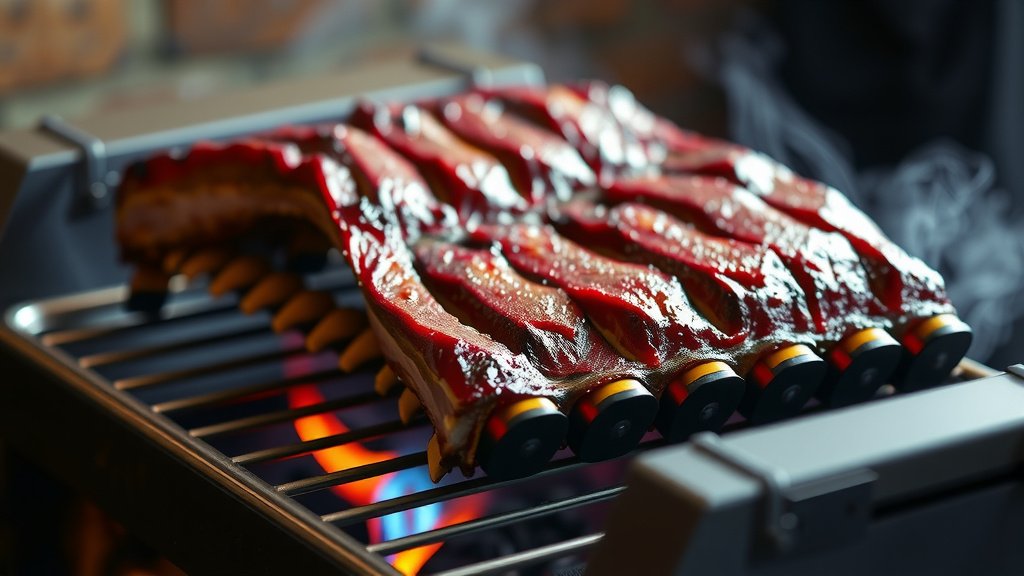
Cooking pork ribs on a charcoal grill generally takes about 3 to 6 hours for most racks, depending on the rib type and your grill’s temperature stability.
The key to tender, flavorful pork ribs on a charcoal grill is maintaining a consistent low temperature, typically around 225-275°F (107-135°C), and cooking them indirectly.
- Time Varies by Rib Type: Baby back ribs usually cook faster (3-4 hours) than larger spare ribs (4-6 hours).
- Low and Slow is Key: Keep your grill temperature between 225-275°F for optimal tenderness.
- Indirect Heat Method: Always set up your charcoal grill for indirect cooking to prevent burning.
- Doneness Tests: Ribs are ready when they bend easily, the meat pulls back from the bone, or a toothpick slides in with little resistance.
- Resting Time: Let your ribs rest for 15-20 minutes after cooking for juicy results.
How Long To Cook Pork Ribs On Charcoal Grill?
Cooking pork ribs on a charcoal grill is a journey, not a race. You are aiming for incredibly tender, fall-off-the-bone meat that sings with smoky flavor. We found that cooking times range from 3 to 6 hours, primarily depending on the cut of ribs you choose.
Understanding Rib Types and Their Cook Times
Not all ribs are created equal. You will find different cuts at the butcher, each requiring a slightly different approach and cooking duration. Knowing your ribs is the first step toward grilling success.
Baby Back Ribs vs. Spare Ribs
Baby back ribs come from the top of the rib cage, near the loin. They are shorter and leaner. We found these generally cook faster, often within 3 to 4 hours. Spare ribs are from the belly section, below the baby backs. They are larger, meatier, and have more fat. These can take 4 to 6 hours or even longer to become perfectly tender (USDA guidelines).
The Importance of Grill Temperature for Ribs
Think of your charcoal grill as a low-temperature oven for ribs. Consistency is your friend here. Fluctuating temperatures can dry out your meat or leave it tough.
Low and Slow: The Only Approach
Many experts agree that the ideal temperature range for smoking or grilling ribs indirectly is 225-275°F (107-135°C). This low and slow method breaks down tough connective tissues. This process gives you that signature melt-in-your-mouth texture.
Prep Work Before Grilling Pork Ribs
A little preparation goes a long way. Spending some time upfront ensures your ribs will be delicious and cook evenly. It is like setting the stage for a great performance.
Removing the Membrane
Have you ever had tough, chewy ribs? The membrane on the bone side might be the culprit. We found that removing this thin, silver skin helps your seasonings penetrate better. It also makes for a more pleasant eating experience. Just use a butter knife to lift an edge, then peel it off with a paper towel for grip.
Seasoning Your Ribs
Once the membrane is gone, it is time to flavor those ribs. A good rub creates that beautiful bark. You can use your favorite store-bought rub or mix your own. We suggest a generous coating on all sides.
- Apply rub evenly across the entire surface.
- Pat the rub gently into the meat.
- Consider letting ribs sit with rub for 30 minutes to an hour.
- Some prefer an overnight rest for deeper flavor.
Setting Up Your Charcoal Grill for Ribs
Proper grill setup is essential for achieving that consistent low temperature. You want indirect heat, meaning the ribs are not directly over the hot coals. This prevents burning and allows for slow cooking.
Two-Zone Fire Setup
Creating a two-zone fire is quite simple. Pile your lit charcoal briquettes to one side of the grill. Leave the other side empty. Your ribs will cook on the empty side, away from the direct flames. This method ensures even, gentle cooking. We recommend using a drip pan filled with water on the empty side to help maintain moisture.
The 3-2-1 Method for Ribs
The 3-2-1 method is a popular technique for spare ribs. It is a guideline, not a strict rule, but it yields consistently tender results. This method is like a roadmap for perfect ribs.
What is the 3-2-1 Method?
This technique breaks down the cooking process into three stages. Each stage aims for a different texture. This is a general guide, and you might adjust timings based on your specific grill and ribs.
| Stage | Time | Description |
|---|---|---|
| Stage 1 (Smoke) | 3 hours | Smoke ribs uncovered on indirect heat. |
| Stage 2 (Wrap) | 2 hours | Wrap ribs tightly in foil with liquid (e.g., apple juice). |
| Stage 3 (Sauce/Set) | 1 hour | Unwrap, apply sauce if desired, cook until sauce sets. |
For baby back ribs, you might try a “2-2-1” or “2-1-1” variation, simply reducing the initial smoking and wrapping times. The principle remains the same: smoke, wrap, and then finish.
Knowing When Your Ribs Are Done
How do you know when your ribs are truly ready? You are looking for a specific texture and appearance. A thermometer is good for grill temperature, but visual and feel tests are best for doneness.
The Bend Test
Gently pick up one end of a rib rack with tongs. If the rack bends significantly and cracks appear on the surface of the meat, it is a good sign they are done. They should feel very flexible.
The Toothpick Test
Insert a toothpick or thin skewer between the bones. It should slide in with very little resistance, like pushing it through soft butter. This indicates the connective tissues have broken down completely.
The Pullback Test
Observe the meat around the bones. If it has shrunk back, exposing about a quarter to a half-inch of bone, your ribs are likely ready. This is a classic visual cue.
Resting Your Ribs After Cooking
Do not cut into your perfectly cooked ribs right away. Just like a steak, ribs benefit from a rest. This step is often overlooked but truly makes a difference.
Resting allows the juices to redistribute throughout the meat. Cover them loosely with foil and let them sit for 15-20 minutes. This ensures every bite is as juicy and flavorful as possible.
Common Mistakes to Avoid When Grilling Ribs
Even experienced grillers can make errors. Watch out for these common pitfalls to ensure your ribs are always a hit.
- High Heat: Cooking ribs too fast at high temperatures will make them tough and dry.
- Lack of Moisture: Not using a drip pan or liquid during wrapping can lead to dry ribs.
- Checking Too Often: Every time you open the grill, you lose heat, extending cooking time.
- Over-Saucing Early: Sugary sauces can burn if applied too early in the cooking process.
Conclusion
Grilling pork ribs on a charcoal grill is a rewarding experience. It takes patience, a good understanding of your grill, and a commitment to the “low and slow” approach. By following these steps – from choosing the right ribs to proper prep, consistent temperatures, and knowing when they are done – you are well on your way to serving up tender, smoky, and absolutely delicious ribs every time. So fire up that charcoal, grab your tongs, and enjoy the process. Your taste buds will thank you.
How do I maintain a consistent low temperature on a charcoal grill for ribs?
To keep a steady low temperature, use the two-zone setup with coals on one side. Adjust the bottom and top vents to control airflow. Fewer open vents mean lower temperatures. Adding a water pan also helps stabilize heat and add moisture.
Should I use wood chunks or chips for smoking ribs on a charcoal grill?
Many experts suggest using wood chunks for longer cooks like ribs. Chunks burn slower and produce smoke for a longer period. Chips can burn out too quickly, requiring more frequent replenishment.
Can I flip the ribs during cooking on a charcoal grill?
Yes, you can flip the ribs, especially during the initial smoking stage, to promote even cooking. However, avoid flipping too often, as this releases heat and lengthens the overall cooking time. Stick to a few turns throughout the process.
What kind of liquid should I use when wrapping ribs in foil?
When wrapping ribs, many grillers use a splash of apple juice, cider vinegar, or even beer. These liquids help steam the ribs, keeping them moist and adding a little extra flavor. About a quarter cup per rack is usually enough.
My ribs look done but are still tough. What went wrong?
If your ribs are tough, they likely did not cook long enough at a low temperature. Toughness means the connective tissues have not fully broken down. Next time, aim for a slightly lower grill temperature and extend the cooking time until they pass the bend and toothpick tests for tenderness.
