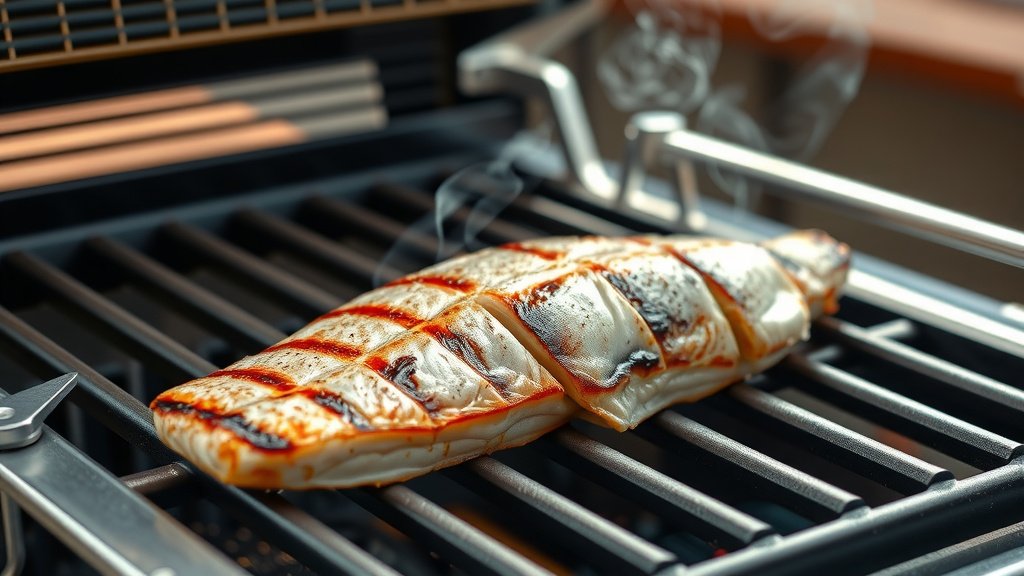
To grill swordfish on a gas grill, preheat your grill to medium-high (400-450°F), lightly oil your clean grates, season your swordfish steaks well, and cook for 4-6 minutes per side until opaque and flaky, reaching an internal temperature of 145°F.
Success largely depends on proper grill temperature and not overcooking the fish, ensuring a firm yet moist texture that’s simply delicious.
- Get your gas grill hot, around 400-450°F, before anything else.
- Always clean and oil your grill grates to prevent the swordfish from sticking.
- Season your swordfish steaks generously; salt, pepper, and a touch of olive oil are key.
- Grill for about 4-6 minutes per side, looking for a flaky texture and an internal temperature of 145°F.
- Don’t overcook it! Swordfish can dry out quickly, so keep a close eye on it.
How To Grill Swordfish On A Gas Grill?
Grilling swordfish on a gas grill is simpler than you might think, yielding a firm, flavorful steak that’s perfect for any meal. The trick is precise temperature control and knowing when it’s done, which we’ll help you master.
Choosing the Perfect Swordfish Steak
Before you even light the grill, picking the right swordfish is essential. Look for steaks that are thick, firm, and moist, without any fishy odor. A thickness of about 1 inch to 1.5 inches works best for grilling, ensuring it cooks evenly and stays juicy.
Many experts say that fresh swordfish should have bright, clear flesh, almost like a piece of raw chicken. Avoid any pieces that look dull, discolored, or have soft spots. Freshness makes a huge difference in the final taste.
Prepping Your Grill for Success
Think of your grill as a blank canvas; you need to prepare it properly. First, turn on your gas grill and preheat it to medium-high heat, aiming for a temperature between 400-450°F. This usually takes about 10-15 minutes.
Once hot, it’s time to clean. Use a sturdy wire brush to scrape off any old food bits from the grates. Research often connects a clean grilling surface with less sticking and better sear marks (Food Safety & Quality Assurance studies). After cleaning, lightly oil the grates. You can use a paper towel dipped in high-smoke-point oil, like canola or grapeseed oil, held with tongs.
Patting Dry: A Crucial Step
Before seasoning, always pat your swordfish steaks completely dry with paper towels. Why do we do this? Moisture on the surface will steam the fish instead of searing it, preventing that beautiful, flavorful crust you want. A dry surface means a better sear and more flavor.
Seasoning Your Swordfish Just Right
Swordfish has a naturally mild, slightly sweet flavor, so you don’t need to go overboard with seasoning. A simple approach often yields the best results. Many culinary experts recommend focusing on ingredients that enhance, rather than mask, its natural taste.
- Salt and Black Pepper: A generous sprinkle of coarse salt and freshly ground black pepper is often all you need.
- Olive Oil: A light brush of olive oil helps with seasoning adhesion and prevents sticking, plus it adds richness.
- Lemon Zest: A little lemon zest before grilling can brighten the flavor without adding too much moisture.
- Garlic Powder: A dash of garlic powder can add a subtle savory note.
- Dried Herbs: Consider a tiny sprinkle of dried oregano or thyme for an aromatic touch.
Mastering Grill Temperature
The right temperature is your secret weapon. For swordfish, you want a consistent medium-high heat. Too low, and your fish might stick; too high, and you risk burning the outside before the inside cooks through. Keep that grill thermometer around 400-450°F.
The Art of Direct Grilling
Place your seasoned swordfish steaks directly over the hottest part of your grill. Close the lid to help maintain an even temperature and cook the fish from all sides. Don’t touch the fish for the first few minutes; let it develop a nice crust.
When to Flip Your Fish
You’ll typically grill swordfish for 4-6 minutes per side. You’ll know it’s time to flip when you see grill marks and the fish easily releases from the grates. If it sticks, it probably needs a little more time to form its crust. Resist the urge to force it.
Checking for Doneness
Overcooked swordfish is tough and dry – a common mistake. The best way to check for doneness is with an instant-read thermometer. Insert it into the thickest part of the steak. You’re aiming for an internal temperature of 145°F (63°C), as recommended by food safety guidelines.
Another way to check is with a fork. The fish should flake easily at its thickest point. It will still look slightly translucent in the very center, but it will continue to cook a little (carryover cooking) once removed from the grill. It’s better to pull it off a little early than too late.
Resting Your Swordfish Steaks
Just like with beef or chicken, resting your grilled swordfish is important. Transfer the cooked steaks to a clean plate, tent them loosely with foil, and let them rest for 5 minutes. This allows the juices to redistribute, ensuring a moist and tender result.
Pairing Suggestions: What to Serve?
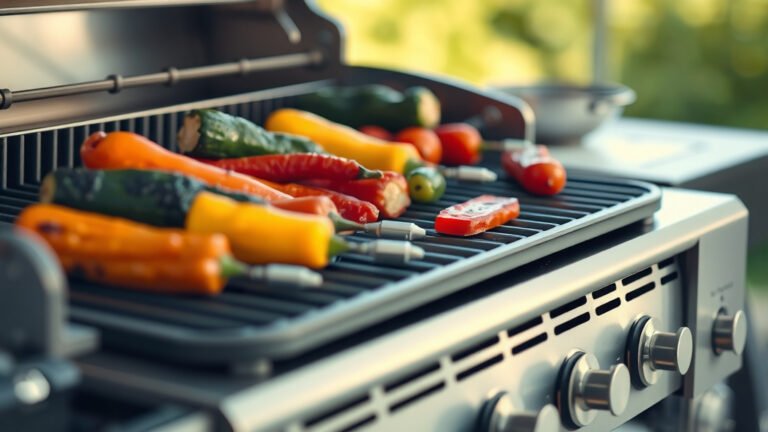
Grilled swordfish pairs wonderfully with a variety of sides. Think fresh and light: a simple lemon butter sauce, a vibrant salsa, or a squeeze of fresh lemon juice are perfect. We found that grilled vegetables like asparagus, zucchini, or bell peppers make fantastic companions. A fresh green salad or couscous also complements the fish beautifully.
Troubleshooting Common Grilling Issues
Even seasoned grillers face challenges. If your fish is sticking, remember to oil those grates thoroughly and ensure the grill is hot enough. If it’s drying out, you might be overcooking it or using too thin a steak. Thicker cuts are more forgiving. Practice makes perfect, and soon you’ll be grilling like a pro.
Quick Checklist for Grilling Swordfish
Here’s a quick guide to make sure you hit all the key points for a perfect grilled swordfish:
- Choose 1-1.5 inch thick swordfish steaks.
- Preheat gas grill to 400-450°F.
- Clean and oil grill grates well.
- Pat swordfish dry before seasoning.
- Season generously with salt, pepper, and olive oil.
- Grill 4-6 minutes per side, flipping once.
- Check internal temperature for 145°F.
- Rest steaks for 5 minutes before serving.
Comparing Grilling Methods for Fish
While we’re focusing on gas grills, it’s worth a quick glance at how different methods compare for fish, especially with a sturdy fish like swordfish. Each has its charm, but for ease and consistent temperature, gas grills often win for beginners.
| Method | Pros | Cons | Best For |
|---|---|---|---|
| Gas Grill | Easy temperature control, quick preheat, even cooking. | Less smoky flavor than charcoal. | Consistent, quick grilling; beginners. |
| Charcoal Grill | Rich smoky flavor, high heat possible. | Temperature control can be challenging, longer setup. | Smoky flavor enthusiasts, experienced grillers. |
| Broiler (Oven) | Indoor option, easy cleanup. | Less char, no authentic grill marks. | Bad weather alternative, quick cooking. |
Conclusion
Grilling swordfish on your gas grill is a fantastic way to enjoy this delicious firm fish. By following these steps—from selecting a great steak to perfecting your grill temperature and knowing when it’s done—you’ll create a meal that’s both impressive and satisfying. Remember, a little preparation and attention to detail go a long way in achieving those beautiful grill marks and that perfectly cooked, juicy texture. So go ahead, fire up that grill and enjoy your culinary creation!
FAQs About Grilling Swordfish
How do I prevent swordfish from sticking to the grill?
The best way to prevent sticking is to ensure your grill grates are immaculately clean and well-oiled before placing the fish. Preheat your grill sufficiently (400-450°F); a hot grill helps create a non-stick surface. Also, don’t try to move the fish too soon; let it form a crust for a few minutes before flipping.
Can I marinate swordfish before grilling?
Absolutely! Marinating swordfish for 30 minutes to an hour can add wonderful flavor, but avoid marinades with too much acid (like lemon juice) for longer periods, as they can start to “cook” the fish or make it mushy. A simple marinade with olive oil, herbs, garlic, and a splash of lemon works great.
What if my swordfish steaks are thicker or thinner than 1.5 inches?
If your steaks are thicker, you’ll need to increase your cooking time slightly, perhaps by 1-2 minutes per side, always checking with a thermometer. For thinner steaks, reduce the cooking time accordingly, maybe 3-4 minutes per side, to prevent overcooking. Always aim for that 145°F internal temperature.
Is it okay if my swordfish is still a little pink in the middle?
When cooked to 145°F, swordfish should be opaque and flake easily. While it will still be moist, it shouldn’t be truly “pink” like a medium-rare steak. If you see significant pinkness, it may need another minute or two on the grill to reach safe and desired doneness. Many experts recommend fully cooking fish to ensure food safety.
Can I use aluminum foil to grill swordfish?
Yes, you can grill swordfish in aluminum foil, especially if you prefer a less direct char or are cooking with delicate marinades. Place the fish and any desired additions (like lemon slices or herbs) in a foil packet, seal it, and place it on the grill. This method creates a steamed effect, keeping the fish very moist, but you won’t get those classic grill marks.