
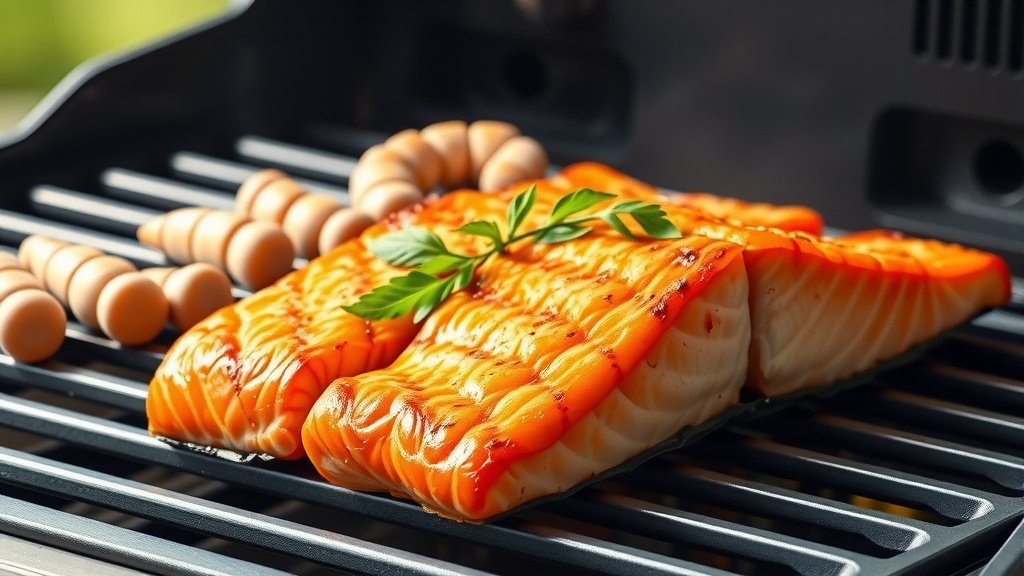
To grill salmon on a gas grill, preheat your grill to medium-high heat (about 400-450°F), ensure the grates are clean and oiled, then place seasoned salmon skin-side down.
Cook for 6-8 minutes per inch of thickness, flipping once, until the internal temperature reaches 145°F and the flesh flakes easily with a fork for perfectly grilled salmon.
TL;DR:
- Always choose fresh, firm salmon fillets, ideally with the skin on for best results.
- Pat the salmon thoroughly dry and then coat it lightly with olive oil and your chosen seasonings.
- Preheat your gas grill to a consistent medium-high temperature, around 400-450°F, and clean the grates.
- Grill the salmon skin-side down first for about 6-8 minutes, then carefully flip and cook until it reaches 145°F.
- You’ll know it’s done when the salmon easily flakes apart with a fork, showing its beautiful cooked texture.
How To Grill Salmon On Gas Grill?
Grilling salmon on a gas grill involves setting the right temperature, carefully preparing the fish, and using clean, oiled grates for consistently delicious results.
It’s about balancing heat and timing to achieve that beautiful sear and perfectly tender, flaky texture that makes everyone ask for more.
Why Grill Salmon on Your Gas Grill?
Gas grills offer fantastic control over heat, making them a top choice for delicate fish like salmon. You can dial in the exact temperature needed.
This precision helps you avoid overcooking, which is a common concern when grilling fish (National Fisheries Institute).
The Benefits of Gas Grilling Salmon
Many home cooks find gas grilling simpler than charcoal for fish. You get consistent heat without the smoke or ash of charcoal.
We found that gas grills allow for quick preheating, letting you get dinner on the table faster without much fuss.
Choosing the Right Salmon Fillet
Start with high-quality salmon fillets for the best experience. Look for vibrant color and a firm texture.
Fillets with the skin on are often preferred for grilling. The skin acts like a natural barrier, helping to keep the fish moist and preventing it from sticking to the grates.
Skin-On vs. Skinless Salmon
While skinless salmon works, it requires more vigilance to prevent sticking. The skin provides a protective layer and gets delightfully crispy.
Many experts say the skin also adds flavor and helps hold the fillet together during cooking, making flips much easier.
Preparing Your Salmon for the Grill
Before any seasoning, always **pat your salmon fillets very dry** with paper towels. Excess moisture can steam the fish instead of searing it.
Drying the surface helps achieve that beautiful crispy exterior we all love, preventing a dull, grey finish.
To Oil or Not to Oil the Fish?
Lightly brushing your salmon with olive oil or another high-smoke-point oil is a smart move. This layer helps **prevent sticking and promotes browning**.
It’s like giving your fish a little non-stick coating before it even touches the grates, a tiny shield against sticking woes.
The Magic of Seasoning
Salmon is wonderful because it takes on flavors so well. Simple salt, black pepper, and a squeeze of lemon are often enough to make it shine.
Consider a sprinkle of garlic powder, dried dill, or paprika for extra depth. Don’t be afraid to **experiment with your favorite blends**.
Getting Your Gas Grill Ready
Always preheat your gas grill to a medium-high temperature. You’re aiming for about 400-450°F (USDA).
This hot start is **crucial for preventing sticking** and getting those attractive grill marks on your salmon.
Clean Grates are Happy Grates
Once preheated, use a sturdy wire brush to clean your grates thoroughly. Any lingering food bits will make your salmon stick.
Think of it like preparing a canvas for a masterpiece; you want a clean, smooth surface for the best outcome.
Oiling Your Grill Grates
After cleaning, lightly oil your hot grates. Fold a paper towel, dip it in oil, and use tongs to rub it over the grates.
This step, combined with oiling the fish, creates a **double layer of non-stick protection**. It’s your secret weapon against flakes left behind.
Placing Salmon on the Grill (Skin Side Down First!)
Always place your salmon **skin-side down first** on the hot, oiled grates. This allows the skin to crisp up and protect the delicate flesh from direct heat.
It also gives you a firm base for the initial cooking phase, making the fish easier to handle.
Mastering the Flip
Wait until the salmon is about 75-80% cooked through before attempting to flip. You’ll see the color change and the edges turn opaque.
Use a **wide, thin spatula** or two spatulas for support. Be confident and swift with your flip to keep the fillet intact.
Knowing When Your Salmon Is Done
Salmon is generally cooked when its internal temperature reaches 145°F (FDA).
Visually, the flesh should be opaque throughout and **flake easily with a fork** at its thickest part.
Grilling Times at a Glance
Cooking times can vary based on your grill and salmon thickness. This table gives you a general guide:
| Salmon Thickness | Approximate Total Grill Time | Internal Temperature |
|---|---|---|
| 1 inch | 10-12 minutes | 145°F |
| 1.5 inches | 12-15 minutes | 145°F |
| 2 inches | 15-18 minutes | 145°F |
Avoiding Common Grilling Mistakes
One common issue is rushing the flip; if it’s sticking, it’s **not ready to be flipped**. Give it another minute or two.
Another mistake is overcrowding the grill. Give each piece of salmon its own space for even cooking and easier turning.
Troubleshooting: What If It Sticks?
If your salmon is sticking, it often means the grill wasn’t hot enough, the grates weren’t clean, or the fish wasn’t properly oiled.
Don’t force it. Let it cook a little longer; the fish will naturally release from the grates when it’s ready, almost like a magic trick!
Marinade Ideas for Flavorful Salmon
A quick marinade can add fantastic flavor. Here are a few simple ideas:
- **Lemon-Dill:** Fresh lemon juice, chopped dill, a touch of olive oil, salt, and pepper.
- **Teriyaki:** Store-bought teriyaki sauce (low sodium if possible), a dash of ginger, and minced garlic.
- **Honey-Soy:** Soy sauce, honey, a splash of rice vinegar, and a pinch of red pepper flakes for warmth.
- **Garlic-Herb:** Olive oil, minced garlic, finely chopped parsley, thyme, and rosemary.
Quick Checklist for Grilling Salmon
Here’s a fast reminder to ensure your grilling success:
- Salmon patted dry
- Fish lightly oiled
- Grill preheated to 400-450°F
- Grates clean and oiled
- Skin-side down first
- Flipped once with care
- Cooked to 145°F
Conclusion
Grilling salmon on a gas grill is a straightforward process when you know the key steps. From choosing your fish to checking its doneness, each part matters.
You now have the tools and knowledge to consistently achieve perfectly cooked, flaky, and flavorful grilled salmon. So, fire up that grill and enjoy your next delicious meal!
FAQs About Grilling Salmon on a Gas Grill
What is the best temperature for grilling salmon on a gas grill?
The ideal temperature for grilling salmon on a gas grill is medium-high heat, typically between 400-450°F. This range allows for a good sear while ensuring the interior cooks thoroughly without drying out.
Should I put aluminum foil on the grill when cooking salmon?
While you can use aluminum foil for easier cleanup or if you’re worried about sticking, it often prevents the salmon from developing a crispy skin and good grill marks. For the best texture, grill directly on clean, oiled grates.
How do I prevent salmon from sticking to the gas grill?
To prevent sticking, ensure your grill grates are very clean, preheated to the correct temperature, and lightly oiled. Additionally, lightly brush the salmon fillets themselves with oil before placing them on the grill. Do not try to flip the salmon too early.
Can I grill salmon without the skin on a gas grill?
Yes, you can grill salmon without the skin. However, it requires extra care. Make sure the grill grates are impeccably clean and well-oiled, and consider brushing the fish with a little more oil to help prevent it from falling apart or sticking.
How do I know when to flip the salmon on the grill?
Wait to flip the salmon until it has cooked about 75-80% of the way through on the first side. You’ll observe the edges turning opaque and perhaps some browning. The fish will naturally release from the grates when it’s ready, usually after 6-8 minutes for a 1-inch thick fillet.
