
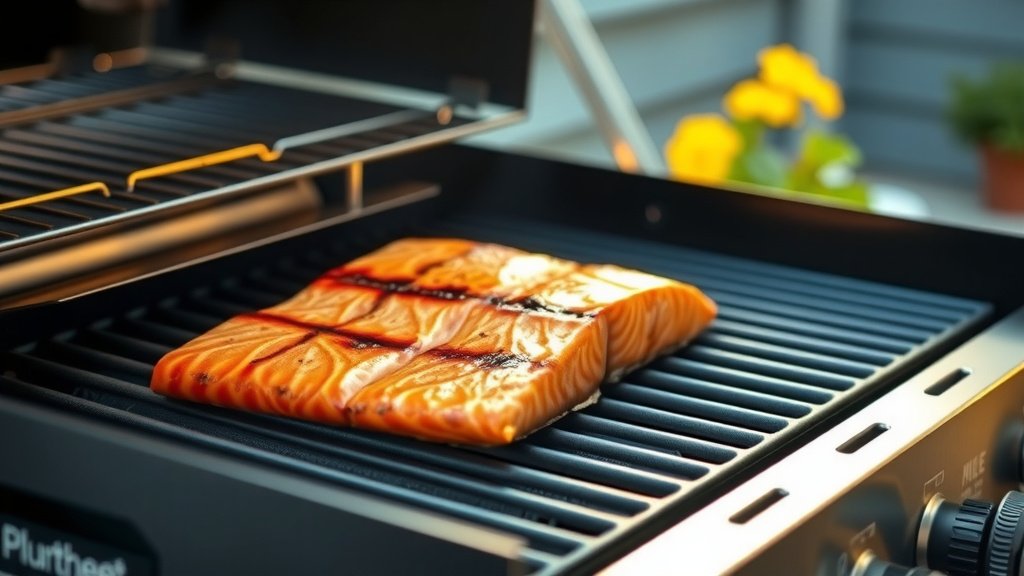
To charcoal grill salmon beautifully, set up a two-zone fire with medium-high heat. Place the salmon skin-side down over indirect heat initially, then move it to direct heat for a crispy finish, using a meat thermometer to ensure it reaches 145°F.
You can achieve wonderfully flaky, moist charcoal-grilled salmon by starting with a well-oiled grill grate and seasoned fillets, cooking until the internal temperature is just right, and letting it rest briefly.
- Charcoal grilling salmon gives a delightful smoky taste.
- Always choose fresh, firm salmon fillets, ideally with the skin on.
- A two-zone fire setup is key for even cooking and preventing burns.
- Use a reliable meat thermometer to ensure your salmon is perfectly done.
- Resting the salmon after grilling helps keep it juicy and tender.
How To Charcoal Grill Salmon?
Grilling salmon over charcoal creates a depth of flavor that’s hard to beat. You’re not just cooking; you’re infusing a rich, smoky essence into every bite, making a simple meal extraordinary.
Why Charcoal for Your Salmon?
Ever wonder why charcoal grilling makes such a difference? It’s all about the flavor. When fat from your salmon drips onto hot coals, it creates savory smoke that surrounds your fish, adding a taste you simply cannot get from other methods. Many experts say this process delivers an unmatched, complex profile.
The Irresistible Smokey Flavor
Imagine the aroma: a gentle wisp of wood smoke mingling with the richness of grilling fish. This is the magic of charcoal. It brings a rustic, outdoor element to your meal that really enhances the natural taste of salmon, offering a truly gourmet experience right in your backyard.
Choosing the Perfect Salmon Fillet
Starting with the right salmon makes all the difference. Look for fillets that are bright orange or pink, with no discoloration. The flesh should be firm to the touch and smell fresh, like the ocean, not fishy. Research shows that good quality fish holds up better to grilling (NOAA Fisheries).
Skin-On or Skin-Off: What’s Best?
For charcoal grilling, we found that skin-on salmon is often better. The skin acts as a natural protective layer, preventing the delicate flesh from sticking to the grates and helping it stay moist. Plus, you can crisp up the skin for a delightful texture!
Essential Grilling Tools You’ll Need
Before you even light a match, gather your tools. Having everything ready means a smoother grilling experience and better results. You will want to have a good pair of tongs and a sturdy fish spatula.
Your Pre-Grill Checklist
- A charcoal grill, clean and ready
- Quality charcoal (lump charcoal burns hotter and cleaner)
- Chimney starter (for easy lighting)
- Long-handled tongs
- Sturdy fish spatula
- Meat thermometer
- Vegetable oil or non-stick spray
- Your chosen salmon fillets
- Seasonings
Preparing Your Salmon for Success
Proper preparation is key to a fantastic grilled salmon. Don’t skip these simple steps. A little attention now pays off big time when you take that first bite.
Seasoning Your Salmon Like a Pro
First, pat your salmon fillets dry with paper towels. This helps achieve that beautiful sear. Next, brush both sides lightly with a high-smoke-point oil like avocado or grapeseed oil. Then, season generously. A simple mix of salt, black pepper, and garlic powder is always a winner. Some people add a dash of paprika or lemon zest for extra zest. We found that oiling the fish, not the grate, helps prevent sticking for delicate items like fish.
Setting Up Your Charcoal Grill
Getting your grill temperature right is crucial for perfectly cooked salmon. You’re aiming for medium-high heat, which means around 375-400°F. This typically happens 15-20 minutes after lighting your charcoal.
Mastering Two-Zone Cooking
Many experts say the best way to grill salmon is using a two-zone fire. This means piling most of your hot coals to one side of the grill, creating a direct heat zone, and leaving the other side with fewer or no coals for indirect heat. This allows you to cook gently and then finish with a sear, or move fish if flare-ups occur.
Grilling Your Salmon: The Steps
With your grill ready and your salmon seasoned, it’s showtime! Remember, salmon cooks relatively fast, so stay near the grill.
Timing Your Cook for Perfection
Place your oiled and seasoned salmon fillets, skin-side down, over the indirect heat zone first. Close the lid and let it cook for about 5-7 minutes. Then, if you want crispy skin, carefully move the salmon to the direct heat zone for another 2-4 minutes, watching carefully for any charring. Many guidelines point to an internal temperature of 145°F as a good doneness target (USDA).
| Salmon Thickness | Indirect Cook Time (Skin-Side Down) | Direct Cook Time (Crispy Skin) | Target Internal Temp |
|---|---|---|---|
| 1 inch | 5-7 minutes | 2-4 minutes | 145°F |
| 1.5 inches | 7-9 minutes | 3-5 minutes | 145°F |
Always use your meat thermometer inserted into the thickest part of the fillet to confirm doneness.
Tips to Prevent Salmon from Sticking
Sticky salmon is a griller’s nightmare. Here are some simple tricks to avoid it. Make sure your grill grates are clean. Scrubbing the grates well before heating removes old food particles that cause sticking. Then, oil your grates when they are hot, just before placing the fish. A paper towel soaked in oil and held with tongs works well. And remember, don’t move the fish too soon!
Letting Your Salmon Rest
Just like steak, salmon benefits from a little rest after cooking. Once you remove it from the grill, place it on a clean plate and loosely tent it with foil for 5-10 minutes. This allows the juices to redistribute throughout the fillet, making it even more moist and flavorful. You will notice a big difference in the texture.
Common Mistakes to Sidestep
Even seasoned grillers can make errors. Learning to avoid common pitfalls will elevate your salmon game. One big mistake is under-oiling the fish or the grates, which leads to tearing when you try to flip it.
Overcooking is the Enemy
The most frequent mistake when grilling salmon is overcooking. Salmon is lean and cooks quickly. If you cook it too long, it dries out and becomes chalky. We found that using a meat thermometer consistently helps you avoid this. Pull your salmon off the grill when it hits 140-143°F; carryover cooking will take it to 145°F.
Conclusion
Charcoal grilling salmon might seem tricky at first, but with a bit of practice and these simple tips, you’ll be making incredible meals. From choosing the right fillet to mastering the two-zone fire, each step contributes to a delicious, smoky, and perfectly cooked piece of fish. Remember to be patient, trust your thermometer, and enjoy the wonderful flavors you create right at home. Happy grilling!
Can I grill frozen salmon on a charcoal grill?
You can grill salmon from frozen, but it’s often better to thaw it first. Thawing ensures more even cooking and helps achieve a better sear. If grilling from frozen, plan for a longer cook time and keep the heat lower to prevent the outside from burning before the inside cooks.
What kind of charcoal is best for salmon?
Lump charcoal is generally preferred for grilling salmon. It burns hotter, cleaner, and imparts a more natural, subtle smoky flavor compared to briquettes. Briquettes can sometimes have additives that might alter the delicate taste of salmon.
How do I know when my salmon is done without a thermometer?
Without a thermometer, you can check for doneness by gently flaking the salmon with a fork at its thickest part. If it flakes easily and looks opaque throughout, it’s ready. However, for accuracy and to prevent overcooking, a meat thermometer is always recommended.
Should I flip salmon multiple times on the charcoal grill?
Generally, no. For best results, flip salmon only once. Place it skin-side down first, then flip once to finish cooking on the flesh side if needed, or to crisp the skin over direct heat. Too much flipping can cause the delicate fish to fall apart.
What are some good seasonings for charcoal grilled salmon?
Simple seasonings truly shine with charcoal-grilled salmon. A mix of salt, black pepper, garlic powder, and a touch of smoked paprika works beautifully. Fresh herbs like dill or parsley, or a squeeze of lemon juice after grilling, also add a delightful finish. Keep it minimal to let the smoky flavor come through.
