
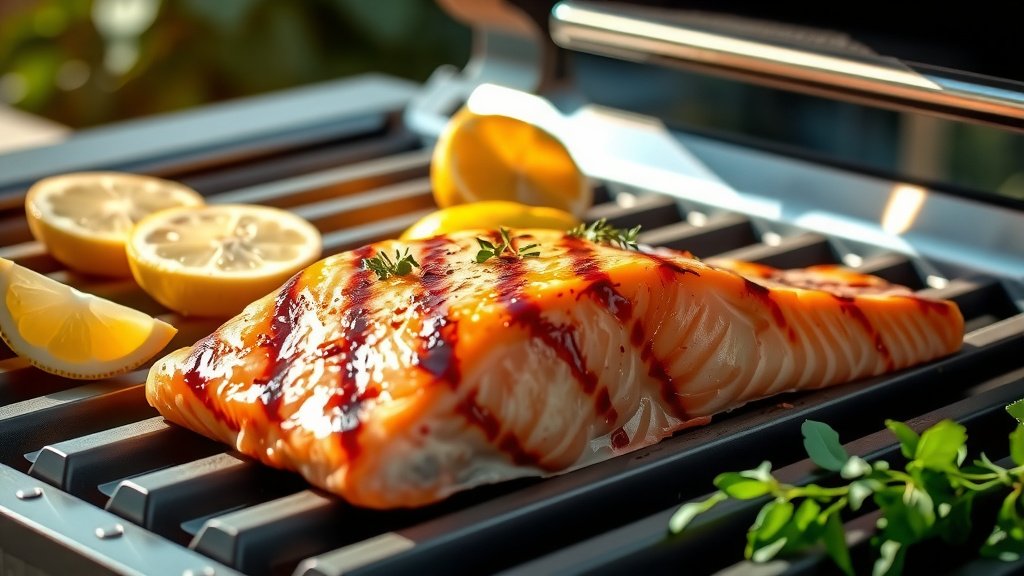
Grilling salmon fillet on a gas grill typically takes 12-15 minutes for a 1-inch thick piece. Always cook until the internal temperature reaches 145°F using a reliable meat thermometer for food safety and deliciousness.
You can achieve perfectly cooked, flaky salmon by managing your grill’s heat and knowing the right signs. Don’t rush it, and keep that thermometer handy.
- A 1-inch salmon fillet usually cooks in 12-15 minutes on a gas grill.
- The target internal temperature for safe and flaky salmon is 145°F.
- Start grilling skin-side down, if present, for about 6-8 minutes, then flip.
- Medium-high heat (around 400-450°F) is ideal for gas grilling salmon.
- Use a meat thermometer to ensure accurate doneness and avoid guesswork.
How Long To Grill Salmon Fillet On Gas Grill?
Most sources agree that a 1-inch thick salmon fillet needs about 12-15 minutes of grilling time over medium-high heat. Always check for an internal temperature of 145°F with a meat thermometer for the best results.
Prepping Your Salmon: The First Step
Before any heat hits your fish, a little preparation goes a long way. You want your salmon to cook evenly and not stick to the grates. Think of it as laying the groundwork for a fantastic meal.
First, pat your salmon fillets dry with paper towels. This helps achieve a nice sear. Then, brush them lightly with olive oil or another high-smoke-point oil. Don’t forget seasoning! A simple salt and pepper mix is often all you need.
Choosing the Right Fillet Thickness
The thickness of your salmon fillet matters a lot for cooking time. A thick piece will naturally take longer than a thin one. We often find that fillets between 1 to 1.5 inches thick are the easiest to manage on a grill.
Thinner cuts might cook too quickly, risking dryness. Thicker cuts, on the other hand, need more time and careful heat management to cook through without burning the outside. Keep uniformity in mind when buying.
Setting Up Your Gas Grill for Salmon Success
Getting your grill ready is just as important as prepping the fish. You need the right heat and a clean surface. This helps prevent sticking and ensures even cooking throughout.
Preheat your gas grill to medium-high heat, aiming for a temperature around 400-450°F. Always clean your grill grates thoroughly with a wire brush. Many experts say that clean grates are key to preventing sticking (USDA).
After cleaning, lightly oil the grates with a paper towel dipped in oil. This creates a non-stick surface. Think of it like seasoning a cast-iron pan; it’s a small step that makes a big difference.
The Grilling Process: Skin-On or Skin-Off?
Grilling salmon with the skin on offers some benefits. The skin acts as a protective barrier, helping the fish retain moisture and preventing it from falling apart. It’s like a natural cooking sheet.
If your fillets have skin, always start them skin-side down. This allows the skin to crisp up beautifully. It also protects the delicate flesh from the direct heat of the grill. This is a common grilling tip.
Here’s a general guide for grilling times based on fillet thickness:
| Fillet Thickness | Estimated Grilling Time (Total) | Skin-Side Down (First Half) | Flipped (Second Half) |
|---|---|---|---|
| 0.75 inches | 8-10 minutes | 4-5 minutes | 4-5 minutes |
| 1 inch | 12-15 minutes | 6-8 minutes | 6-7 minutes |
| 1.5 inches | 15-20 minutes | 8-10 minutes | 7-10 minutes |
Mastering the Flip
When do you flip the salmon? If you start skin-side down, wait until the fish naturally releases from the grates. This usually happens when the skin is crispy and the flesh has cooked about halfway up the fillet. Don’t force it if it’s sticking; it’s not ready yet. A good spatula is your best friend here.
Once you flip, the second side usually cooks faster. This is because the heat is already doing its work from the bottom. Continue grilling until the internal temperature reaches 145°F. This is the safety benchmark (FDA).
Checking for Doneness: No More Guessing!
The absolute best way to check if your salmon is done is by using a meat thermometer. Insert it into the thickest part of the fillet. You’re looking for that magic number: 145°F.
Visually, cooked salmon will flake easily with a fork. It will also change from translucent to opaque. You don’t want it raw in the middle, but you also don’t want it dry. It’s a delicate balance.
Signs of Perfectly Cooked Salmon
When salmon hits that 145°F mark, its flesh will look beautifully opaque pink throughout. It should separate into flakes with little effort from a fork. Avoid overcooking, which makes it dry and tough. A little patience yields the best reward.
Common Grilling Mistakes to Avoid
We all make mistakes, but some are easily preventable when grilling salmon. Learning from others can save your dinner. Don’t let a small oversight ruin your culinary efforts.
- Not preheating the grill enough.
- Forgetting to clean and oil the grates.
- Flipping the fish too early.
- Overcrowding the grill.
- Not using a meat thermometer for accuracy.
- Overcooking and drying out the fish.
Dealing with Flare-Ups
Gas grills can sometimes have flare-ups, especially with fatty fish like salmon. Keep a spray bottle of water nearby. A quick spritz can calm down any flames without losing too much heat. This helps protect your food from unwanted charring.
Resting Your Salmon Fillets
Just like a good steak, salmon benefits from resting after it comes off the grill. Transfer the fillets to a plate or cutting board. Cover them loosely with foil and let them rest for 5 minutes. This allows the juices to redistribute, resulting in more tender and flavorful fish.
This resting period is crucial for the texture. You’ve worked hard to cook it just right, so give it this final touch. Your taste buds will certainly thank you. It’s a simple, yet powerful step.
A Quick Checklist for Grilling Salmon
Before you light up that grill, run through this quick list. It helps make sure you have everything covered. Being prepared makes the whole grilling experience much more enjoyable and successful.
- Salmon patted dry and oiled.
- Seasoning applied evenly.
- Gas grill preheated to 400-450°F.
- Grates cleaned and oiled.
- Meat thermometer ready.
- Spatula and tongs within reach.
Conclusion
Grilling salmon on a gas grill is a straightforward process when you know the key steps. Remember that 12-15 minute rule for 1-inch fillets, but always rely on your meat thermometer to hit that 145°F internal temperature. Preparation, proper heat, and patience are your best tools.
With these tips, you’re set to create wonderfully flaky, flavorful salmon every time. So go ahead, fire up that grill and enjoy a delicious, healthy meal. Happy grilling!
How do I prevent salmon from sticking to the grill?
To prevent sticking, ensure your grill grates are thoroughly clean and preheated to the correct temperature. Then, oil the grates well before placing the salmon. Brushing the salmon itself with oil also creates a barrier.
Should I grill salmon with the skin on or off?
Many experts recommend grilling salmon with the skin on. The skin helps protect the delicate flesh from direct heat, prevents it from falling apart, and can crisp up nicely for added texture. You can always remove it after cooking if you prefer not to eat it.
What temperature should a gas grill be for salmon?
You should preheat your gas grill to a medium-high temperature, aiming for around 400-450°F (about 200-230°C). This heat range allows for a good sear while cooking the interior evenly.
How can I tell if salmon is cooked without a thermometer?
While a thermometer is best, you can check for doneness by observing the fish. Cooked salmon will turn opaque pink throughout and flake easily when gently prodded with a fork in the thickest part. If it looks raw or translucent in the center, it needs more time.
Is it better to grill salmon directly over the flame or indirect heat?
For most salmon fillets, direct grilling over medium-high heat is preferred to achieve a nice sear and even cooking. However, for very thick fillets (over 1.5 inches) or if you notice excessive charring, you might finish cooking it over indirect heat to prevent burning while ensuring it cooks through.
