
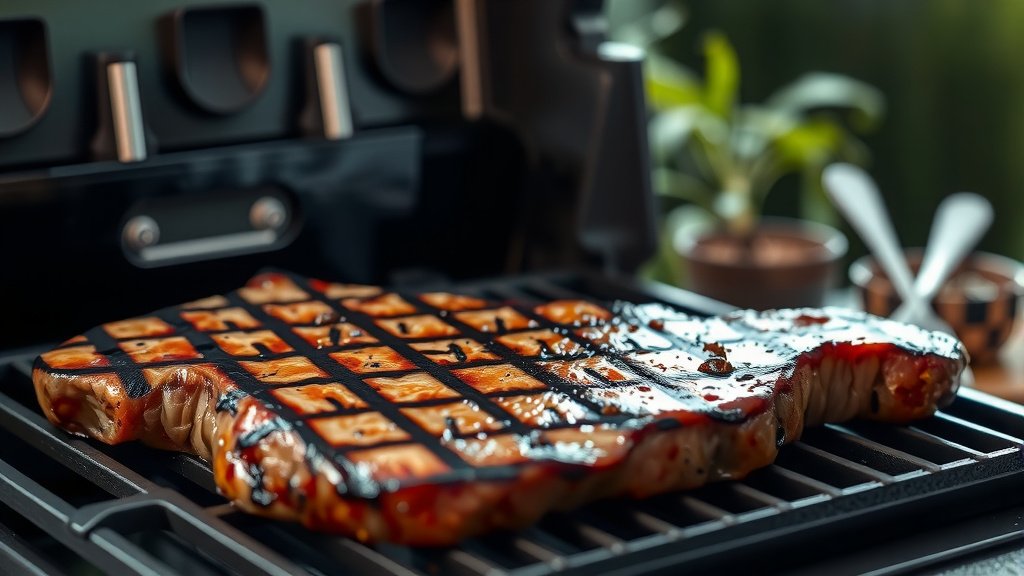
To grill steaks on a gas grill, aim for high heat, typically between 450°F and 500°F.
This temperature range helps you achieve that perfect sear and juicy interior, especially for thicker cuts of steak, ensuring a delicious result.
TL;DR: Here’s the quick scoop on grilling steaks:
- Grill steaks at a **high temperature**, 450-500°F, for a great sear.
- Use a **two-zone cooking** method for control over doneness.
- **Thicker steaks** benefit from initial high heat, then indirect cooking.
- Always use a **meat thermometer** for accuracy; internal temp is key.
- **Rest your steak** after grilling for juicier results.
What Temperature To Grill Steaks On Gas Grill?
You’ll want to grill steaks on a gas grill at a high heat, around **450°F to 500°F**, to get that beautiful crust and juicy center.
This intense heat is what creates the perfect crust, locking in all those delicious juices.
Why High Heat is Your Steak’s Best Friend
Think of it like this: high heat quickly browns the surface of your steak. This is called the Maillard reaction.
This reaction creates hundreds of new flavors and gives your steak that amazing crust and rich aroma. It’s a flavor powerhouse!
Understanding Grill Temperature Zones
Your gas grill has different heat zones, even if you don’t set them intentionally. Some spots naturally run hotter.
Learning these zones helps you move your steak around for more even cooking or to slow down the process if needed.
Setting Up Your Gas Grill for Steaks
Getting your grill ready is half the battle for a perfectly cooked steak. It’s not just about turning it on.
A little preparation makes a big difference in the final taste and texture.
Preheating is Absolutely Key
Always preheat your gas grill for at least **10 to 15 minutes** with the lid closed.
This ensures the grates are hot enough to create those beautiful sear marks and prevent sticking.
Two-Zone Setup for Ultimate Control
Many grill masters swear by a two-zone setup. This means one side of your grill is hot, and the other is cooler.
You do this by turning one or two burners to high and leaving others on low or off. This setup offers flexibility.
You can sear on the hot side and then move your steak to the cooler side to finish cooking gently, avoiding overcooking.
Grilling Times for Different Steak Thicknesses
Steak thickness is a huge factor in cooking time. A thin steak will cook much faster than a thick one.
Adjusting your timing is key to getting the doneness you want without guessing.
Thin Steaks (Under 1 Inch)
For thinner cuts like skirt or flank steak, you’ll need only **2-3 minutes per side** on high heat for medium-rare.
They cook quickly, so stay attentive! These cuts don’t usually need indirect cooking.
Thick Steaks (1 to 1.5 Inches)
Most common steaks, like ribeye or strip, fall into this category. They benefit from the two-zone method.
Sear for **2-3 minutes per side** on direct high heat, then move to indirect heat for another 5-10 minutes, depending on your desired doneness.
Very Thick Steaks (Over 1.5 Inches)
For a thick porterhouse or T-bone, the reverse sear method works wonderfully. Sear the steak first on high heat.
Then, move it to the indirect zone and cook slowly until it reaches about **5°F below** your target internal temperature.
Internal Temperatures for Perfect Doneness
Knowing the right internal temperature is the only true way to get your steak cooked exactly how you like it.
Forget the guesswork and grab a reliable meat thermometer. It’s your secret weapon for success (USDA).
| Doneness | Internal Temperature | Texture |
|---|---|---|
| Rare | 125-130°F (52-54°C) | Cool red center |
| Medium-Rare | 130-135°F (54-57°C) | Warm red center |
| Medium | 135-140°F (57-60°C) | Warm pink center |
| Medium-Well | 140-145°F (60-63°C) | Slightly pink center |
| Well-Done | 145°F+ (63°C+) | Little to no pink |
Why a Meat Thermometer is Your Best Friend
A good instant-read meat thermometer takes all the mystery out of grilling. Simply insert it into the thickest part of the steak.
Avoid touching bone, as this can give a false reading. Pull your steak off the grill when it’s about **5 degrees below** your target temperature.
It will continue to cook a bit while resting, a process called carryover cooking.
The Sear and Indirect Method: A Winning Combo
This technique is a favorite among grilling experts because it delivers both a beautiful crust and a tender, juicy inside.
It lets you control the cooking process better, ensuring consistent results every time you grill.
Achieving the Perfect Crust
Start your steak on the hottest part of the grill. You should hear a satisfying sizzle as it hits the grates.
Resist the urge to move it constantly. Let it sit for a few minutes to form that rich, dark crust before flipping.
Finishing with Indirect Heat
Once you’ve achieved a good sear on both sides, move your steak to the cooler, indirect side of the grill.
Close the lid and let it cook gently until it reaches your desired internal temperature. This gentle finish keeps it moist.
Don’t Forget to Rest Your Steak!
After all that careful grilling, don’t rush to cut into your masterpiece. Resting is a vital final step.
Many experts agree that resting allows the juices, which have gathered at the center, to redistribute throughout the steak, making every bite incredibly tender and juicy.
Cover it loosely with foil for **5-10 minutes** before slicing. You’ll thank yourself later!
Common Grilling Mistakes to Avoid
Even seasoned grillers can make simple errors. Avoiding these common pitfalls will take your steak grilling to the next level.
Here’s a quick checklist to help you grill like a pro:
- Not preheating the grill thoroughly before putting the steak on.
- Flipping the steak too often, which prevents a good sear from forming.
- Cutting into the steak immediately after removing it from the grill.
- Guessing the doneness instead of using a reliable meat thermometer.
- Overcrowding the grill, which lowers the temperature and steams the meat.
- Forgetting to pat the steak dry before grilling, which hinders searing.
Conclusion
Grilling steaks on a gas grill at the right temperature, typically between 450°F and 500°F, is a game-changer. By mastering high heat for searing and using a two-zone method for controlled cooking, you’ll consistently achieve restaurant-quality results at home.
Remember the critical steps: proper preheating, monitoring internal temperatures with a thermometer, and giving your steak that essential resting period. These techniques are simple but powerful, turning every grilling session into a successful one.
What’s the best way to clean my gas grill grates after grilling steaks?
The best way to clean your grill grates is immediately after you remove your steaks. Turn the heat to high for 5-10 minutes to burn off any leftover bits. Then, use a stiff wire brush to scrape them clean. This makes future grilling much easier.
Can I use this temperature advice for frozen steaks?
No, this temperature advice is for thawed steaks. Grilling frozen steaks requires a different approach. You’d need a much longer cooking time and a lower, more consistent temperature to ensure it cooks evenly without burning the outside.
My steak always comes out dry. What am I doing wrong?
If your steak is consistently dry, you’re likely overcooking it. Use a meat thermometer to pull the steak off the grill when it reaches your desired internal temperature. Also, make sure you let it rest adequately after grilling, as this keeps the juices inside.
How do I prevent my steak from sticking to the grill?
To prevent sticking, make sure your grill grates are thoroughly preheated and clean. You can also lightly oil the grates right before placing the steak on them. Some people also lightly oil the steak itself, ensuring a good release.
Should I close the lid when grilling steaks on high heat?
When searing your steak on high, direct heat, you usually keep the lid open for the short period. However, if you move the steak to the indirect heat zone to finish cooking, closing the lid helps to retain heat and cook the steak more evenly through convection.
