
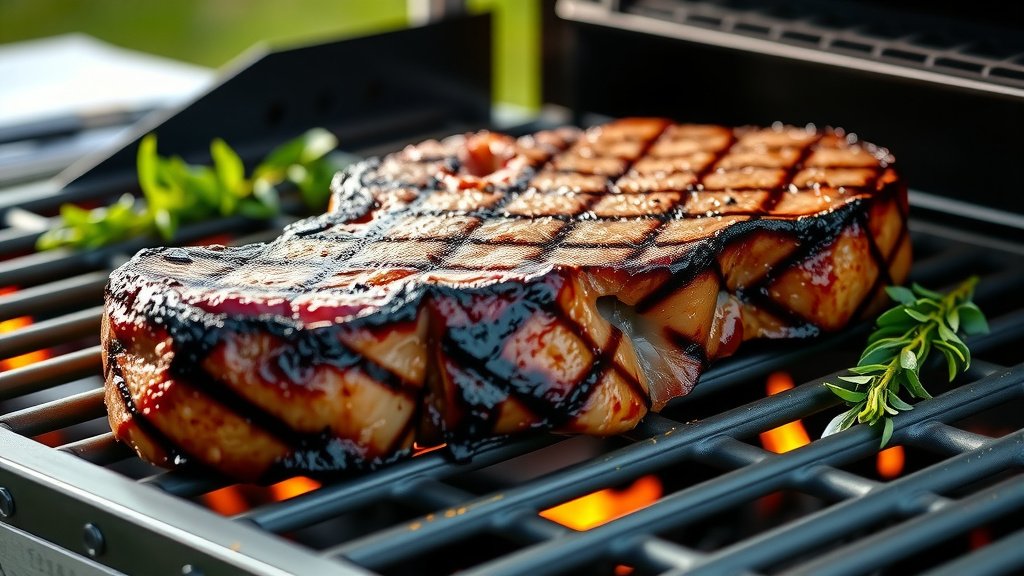
To grill steak on a gas grill, you generally start with a high heat of 450-500°F (232-260°C) to get a beautiful sear. After searing, reduce the temperature to a more moderate 375-400°F (190-204°C) for the rest of the cooking time, ensuring even doneness inside.
This two-zone temperature approach helps create that coveted crust while letting the interior cook gently to your desired doneness.
Here’s a quick overview of what you’ll find in this guide:
- Discover the ideal gas grill temperatures for a perfect steak every time.
- Understand why starting hot then finishing lower is your secret weapon.
- Learn how to achieve different levels of steak doneness with confidence.
- Find out the essential tools that make grilling easier and more precise.
- Get tips on resting your steak for maximum juiciness and flavor.
What Temp To Grill Steak On Gas Grill?
When grilling steak on a gas grill, begin with a grill temperature between 450-500°F (232-260°C) for an initial sear. Then, aim for 375-400°F (190-204°C) for the remaining cook time.
Why Temperature Control Matters for Steak
Imagine trying to bake a cake without knowing the oven temperature. It would be a guessing game, right? The same goes for steak. Temperature control is your grilling superpower, dictating everything from that delicious crust to the juicy interior. Too low, and your steak boils; too high, and it burns outside before cooking through.
The Science of Searing
That beautiful brown crust you crave? That’s the Maillard reaction at work. It requires high heat, around 450-500°F. This quick, intense blast on the grill grates locks in flavor and creates a texture that many experts say is essential to a great steak experience.
Cooking to Perfection: Beyond the Sear
After searing, you need to lower the heat. Why? Because you want the inside of your steak to cook evenly without burning the outside. A moderate temperature, typically 375-400°F, allows the heat to penetrate slowly, bringing the steak to your desired doneness. It’s a delicate balance, much like a chef perfecting a sauce.
Setting Up Your Gas Grill for Steak Success
Gas grills are fantastic for their control. You can easily create different heat zones. This setup is crucial for the perfect steak. We found that most grill masters use a two-zone approach.
Creating a Two-Zone Grill
To create a two-zone setup, simply turn one or two burners on high for direct heat. Leave the other burners off or on low for indirect heat. This gives you a hot zone for searing and a cooler zone for finishing. It’s like having two kitchens in one!
Preheating is Not Optional
Don’t just light the grill and throw on the steak. You need to preheat thoroughly. Many guidelines point to preheating for 10-15 minutes with the lid closed (Weber Grilling Guide). This ensures the grates are hot enough for a good sear and helps maintain a consistent temperature when you add the meat.
How to Measure Steak Doneness Accurately
Forget pressing your finger into the steak; that’s old school. The best way to know if your steak is ready is with a meat thermometer. It’s an inexpensive tool that removes all the guesswork, ensuring perfectly cooked steak every time. Research often connects internal temperature with food safety and quality (USDA).
Steak Doneness Temperature Chart
Here’s a quick guide to internal temperatures for different steak doneness levels:
| Doneness | Internal Temp (F) | Internal Temp (C) |
|---|---|---|
| Rare | 125-130°F | 52-54°C |
| Medium-Rare | 130-135°F | 54-57°C |
| Medium | 135-140°F | 57-60°C |
| Medium-Well | 140-150°F | 60-66°C |
| Well-Done | 150-160°F+ | 66-71°C+ |
Grilling Process: Step-by-Step for Steak
Let’s walk through the actual grilling process. It’s simpler than you might think, but each step plays a vital role. Think of it as a recipe for success.
Before the Grill Checklist:
- Bring steak to room temperature for 30 minutes.
- Pat the steak dry with paper towels.
- Season generously with salt and pepper.
- Clean and oil your grill grates.
- Preheat your gas grill to 450-500°F.
Searing Your Steak
Place your seasoned steak over the direct, high-heat zone. Sear for 2-3 minutes per side until a beautiful brown crust forms. This step is about building flavor and texture on the outside. You’ll hear that wonderful sizzle!
Finishing on Indirect Heat
Once seared, move the steak to the indirect, lower-heat zone. Close the lid and let it cook, turning occasionally. Use your meat thermometer to check the internal temperature. Remove the steak 5 degrees F below your target doneness.
The Importance of Resting Your Steak
This step is often overlooked, but it’s perhaps the most important. After all that work, you don’t want to lose those precious juices. Resting allows the steak’s internal temperature to equalize. We found that a 5-10 minute rest makes all the difference.
Why Rest?
When you cook a steak, the muscle fibers contract, pushing the juices to the center. Cutting it immediately lets those juices run out onto your cutting board. Resting allows those juices to redistribute throughout the meat, making every bite incredibly tender and moist. It’s like giving your steak a little spa treatment.
Common Steak Grilling Mistakes to Avoid
Even seasoned grillers can make mistakes. Knowing what to watch out for can save your steak and your sanity. We often see these issues come up. Are you guilty of any of these?
Overcrowding the Grill
Don’t pile too many steaks on at once. This drops the grill temperature significantly and leads to steaming instead of searing. Give your steaks space to breathe and brown properly. Cook in batches if you need to.
Flipping Too Often
Resist the urge to constantly flip your steak. Each flip breaks the connection with the hot grates, preventing a good crust from forming. Two flips – one to sear each side – is usually all you need.
Skipping the Thermometer
As we mentioned, a thermometer is your best friend. Relying on guesswork often leads to undercooked or overcooked steak. Invest in a good instant-read thermometer; it will pay for itself in perfect steaks.
Conclusion
Grilling steak on a gas grill truly is an art, but it’s an art anyone can master with the right knowledge. Remember the two key temperature zones: a high initial sear at 450-500°F, followed by a finish at 375-400°F. Combine this with a reliable meat thermometer and that all-important resting period, and you’re well on your way to a steakhouse-quality meal right in your backyard. Enjoy the process, experiment a little, and most importantly, savor every delicious bite of your perfectly grilled steak!
What kind of steak is best for grilling on a gas grill?
Thicker cuts like ribeye, New York strip, and sirloin steaks are fantastic for grilling on a gas grill. Their marbling provides flavor and helps them stay juicy under high heat. Thinner cuts like flank or skirt steak also work well but cook much faster.
How long should I sear a steak on a gas grill?
For a good crust, sear your steak for about 2-3 minutes per side over direct high heat. This creates the desirable browning and locks in flavor before you move it to a lower temperature zone for the remainder of the cooking.
Should I oil the steak or the grill grates?
It’s generally better to oil the grill grates rather than the steak itself. Lightly oiling hot grates helps prevent sticking and promotes better searing. If you oil the steak, excess oil can drip and cause flare-ups on a gas grill.
Can I achieve rare steak on a gas grill?
Yes, absolutely! To achieve a rare steak, you’ll still use the high-heat sear, but you’ll cook it for a shorter duration on the indirect heat. Aim to pull the steak off the grill when its internal temperature reaches 120-125°F, allowing it to rise to 125-130°F during the rest.
How do I prevent my steak from drying out on a gas grill?
The best ways to prevent drying out are using a two-zone cooking method (sear then finish low), not overcooking past your desired internal temperature, and always allowing the steak to rest for 5-10 minutes after grilling. These steps help retain the natural juices.
