
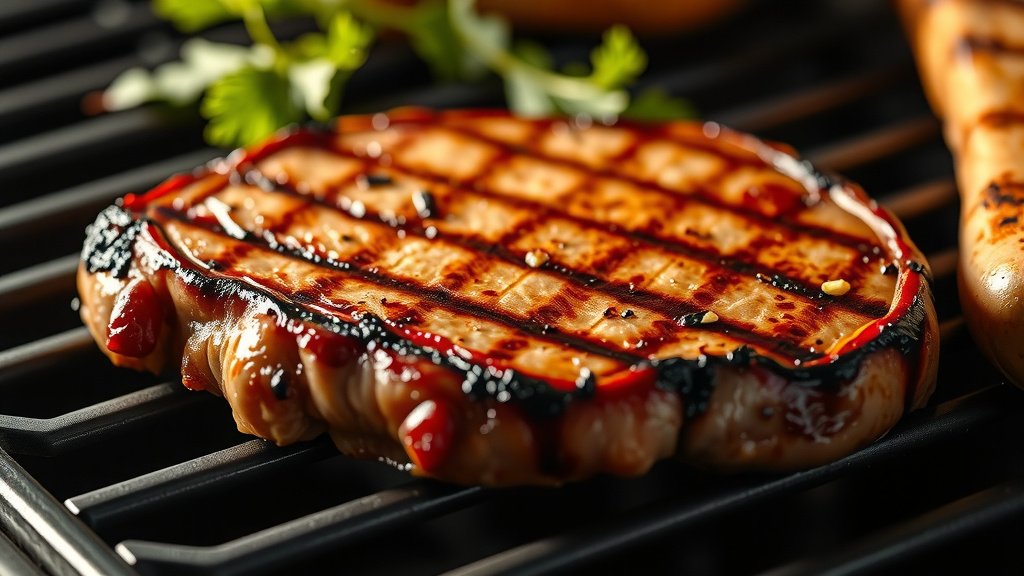
To grill ribeye steaks on a gas grill, preheat your grill to high, sear the steak for 2-3 minutes per side over direct heat, then move it to indirect heat to finish cooking until it reaches your desired internal temperature.
Always use a meat thermometer for accuracy and allow the ribeye to rest before slicing to keep its juices locked in and ensure a tender result.
Here’s a quick overview of grilling ribeye steaks:
- Choose a 1 to 1.5-inch thick, well-marbled ribeye for the best results.
- Pat your steak thoroughly dry and season it generously with salt and fresh cracked pepper.
- Set up your gas grill for two-zone cooking: establish one high heat area and one low heat zone.
- Sear the steak over high heat initially, then transfer it to indirect heat to complete the cooking process.
- Always use a meat thermometer to check internal doneness and let the steak rest after grilling.
How To Grill Ribeye Steaks On Gas Grill?
Grilling ribeye steaks on a gas grill involves mastering direct and indirect heat zones to achieve a perfect crust and a juicy, tender interior. You’ll start with a hot sear, then move your steak to a gentler heat.
It’s all about control and timing. Let’s make your next steak night a success, shall we?
Picking the Perfect Ribeye
Your steak journey begins at the butcher shop. The quality of your ribeye makes a huge difference in the final taste.
Look for fresh, red meat with bright white fat. What a sight!
Thickness Matters
We found that a ribeye steak between 1 and 1.5 inches thick works best for grilling. Thinner steaks cook too fast, making it hard to get a good sear without overcooking the inside.
Thicker cuts allow more time for that beautiful crust to form while keeping the center juicy.
Marbling Magic
Marbling refers to the small flecks of fat running through the meat. This fat melts during cooking, adding incredible flavor and tenderness.
Many experts say good marbling is key to a truly delicious ribeye (USDA).
Essential Prep Steps
Prepping your steak correctly sets the stage for success. It’s not just about throwing it on the grill!
These simple steps genuinely make a difference. Trust us on this one.
Pat Dry for Searing
Before seasoning, always pat your ribeye steaks very dry with paper towels. Research shows that a dry surface promotes better browning and a superior crust, thanks to the Maillard reaction.
Moisture on the surface can steam the meat instead of searing it. Nobody wants a steamed steak, right?
Seasoning Simply
A good ribeye doesn’t need much. Coarse salt and freshly cracked black pepper are often all you need to enhance its natural flavor.
Some people like to add garlic powder or a touch of onion powder. Season generously, as much will fall off during grilling.
Setting Up Your Gas Grill
Think of your grill as having different cooking zones. This method gives you the flexibility you need for perfect steaks.
It’s about control, not just raw heat. You’re a maestro, after all.
Two-Zone Grilling is Key
For ribeye, you want a two-zone setup. Turn half of your burners to high for direct heat searing, and leave the other half off or on low for indirect cooking.
This allows you to move the steak off the intense heat to finish gently.
Preheat Power
Always preheat your gas grill. Turn all burners on high, close the lid, and let it heat for 10-15 minutes.
You want your grill grates screaming hot for that initial sear. A hot grill helps prevent sticking too.
The Grilling Process
This is where the magic happens! Don’t rush it. Enjoy the sizzle and the aromas.
Grilling is a patient art, after all.
Sear First, Then Move
Place your seasoned, dry ribeye directly over the high heat burners. Sear for 2-3 minutes per side until a beautiful, dark crust forms.
You are building flavor here, so don’t be shy with the heat!
How Long to Grill?
After searing, move your steak to the indirect heat side of the grill. Close the lid and continue cooking, flipping occasionally, until it reaches your desired internal temperature.
Cooking times vary based on thickness and grill temperature. Here’s a general guide:
| Doneness | Internal Temperature (USDA) | Approx. Total Grill Time (1-inch steak) |
|---|---|---|
| Rare | 125°F (52°C) | 6-8 minutes |
| Medium-Rare | 130-135°F (54-57°C) | 8-10 minutes |
| Medium | 135-140°F (57-60°C) | 10-12 minutes |
| Well-Done | 150°F+ (65°C+) | 14+ minutes |
Don’t Forget the Thermometer
A good instant-read meat thermometer is your best friend. Guessing doneness often leads to disappointment. Insert the thermometer into the thickest part of the steak, avoiding any bone.
Always pull your steak about 5 degrees below your target temperature, as it will continue to cook while resting.
Resting Your Steak
This step is non-negotiable! After taking your ribeye off the grill, transfer it to a cutting board and loosely tent it with foil.
Allow it to rest for at least 5-10 minutes. Why? Research shows this allows the juices, which have been pushed to the center by the heat, to redistribute evenly throughout the steak, making every bite incredibly tender and juicy.
Slicing Your Masterpiece
Once rested, it’s time to slice. Always slice your ribeye against the grain. The “grain” refers to the direction of the muscle fibers.
Slicing against them shortens these fibers, making the meat much more tender and easier to chew.
Common Grilling Mistakes to Avoid
Even seasoned grillers can make simple errors. Keep these in mind to ensure your steak is perfect every time:
- Not Preheating Enough: Cold grates lead to sticking and poor searing.
- Flipping Too Often: Let the crust build. Flip only once or twice.
- Overcooking: Always use a thermometer. Pull the steak early.
- Not Resting the Steak: Skipping this step means dry, less flavorful meat.
- Starting with a Cold Steak: Let your steak sit out for 20-30 minutes before grilling.
- Dirty Grill Grates: Clean grates prevent sticking and unwanted flavors.
Conclusion
Grilling a perfect ribeye steak on a gas grill is genuinely within your reach. It combines simple techniques with a bit of patience.
By choosing the right steak, preparing it well, managing your grill heat, and always using a thermometer, you’ll consistently create a mouth-watering meal.
Enjoy the process, savor the flavor, and share your fantastic results! Happy grilling!
FAQs About Grilling Ribeye Steaks
What is the best thickness for a ribeye steak on a gas grill?
Many grill masters suggest a ribeye steak between 1 and 1.5 inches thick. This thickness allows for a beautiful sear on the outside while giving you enough time to cook the inside to your preferred doneness without rushing.
Should I bring my ribeye to room temperature before grilling?
Yes, we found that letting your ribeye sit out at room temperature for about 20-30 minutes before grilling can help. This slightly warmer starting point allows for more even cooking throughout the steak.
How do I prevent my ribeye from sticking to the grill grates?
To prevent sticking, make sure your grill grates are clean and hot. After preheating, you can lightly oil the grates with a high smoke point oil, like canola or grapeseed oil, using a paper towel held with tongs.
Can I use foil to wrap my ribeye while it rests?
Yes, loosely tenting your grilled ribeye with aluminum foil while it rests is a good idea. This helps to keep the steak warm and allows the juices to redistribute without steaming the crust you worked so hard to create.
What internal temperature is considered safe for medium-rare ribeye?
For a medium-rare ribeye, the USDA suggests an internal temperature of 130-135°F (54-57°C). Remember to pull your steak off the grill when it’s about 5 degrees below your target, as it will continue to cook as it rests.
