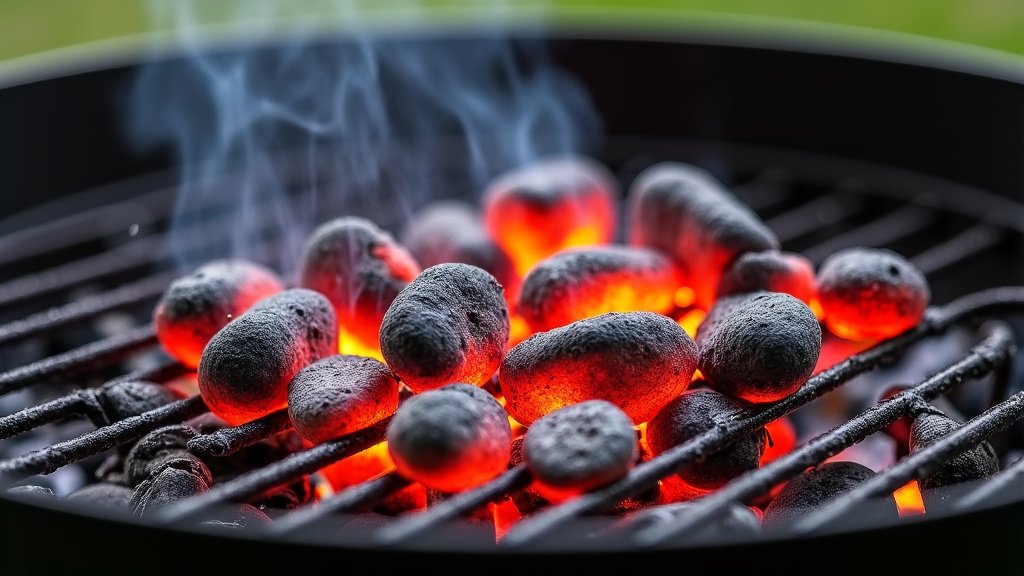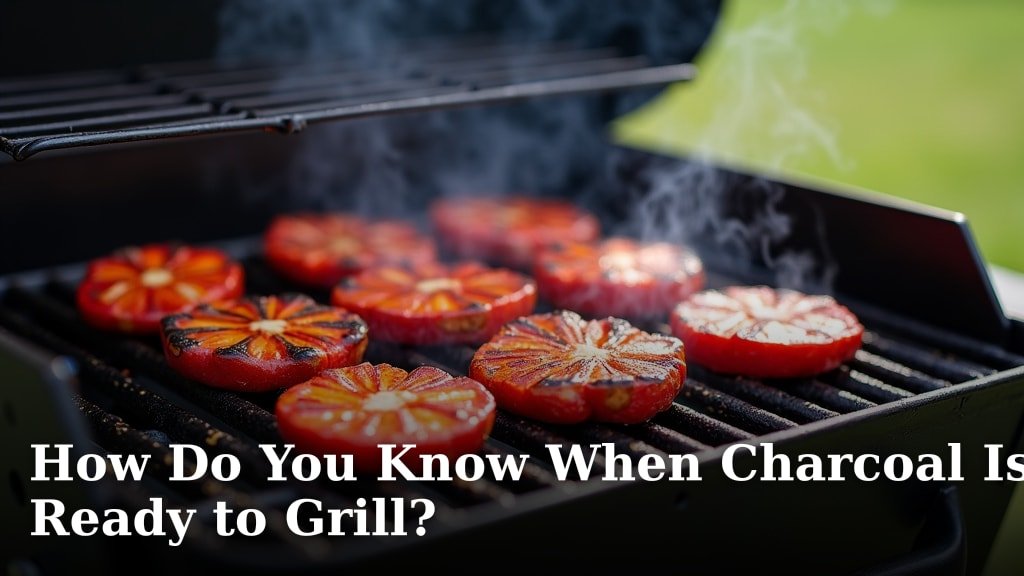
You know charcoal is ready to grill when it’s covered in a fine, gray ash. This usually takes about 15-20 minutes after lighting. Don’t rush it; waiting for that perfect ash coating ensures even heat and a better cook for your food. We’ve all been there, eager to get grilling, but patience is key for charcoal.
This gray ash means the charcoal briquettes or lumps have reached the ideal temperature for cooking. You’re looking for a bed of glowing embers underneath. This consistent heat is what chefs and grill masters talk about. It’s the secret to getting those beautiful grill marks and perfectly cooked burgers or veggies. It’s about more than just heat; it’s about controlled, even heat.
- Look for a coating of fine, gray ash.
- Wait for about 15-20 minutes.
- You should see glowing embers underneath.
- Avoid cooking before the ash forms.
Ready to make sure your next barbecue is a success? Below, we’ll walk you through exactly how to tell when your charcoal is perfectly ready for grilling.
Knowing When Your Charcoal Is Primed for Grilling
So, you’ve lit the charcoal, and the flames are doing their fiery dance. But when do you actually start cooking? The big secret isn’t in the flames themselves, but what happens after they settle down. You’re looking for a specific visual cue that tells you the charcoal is ready to provide the steady, even heat you need for a successful barbecue. It’s not just about having hot coals; it’s about having perfectly prepared hot coals. If you’re new to grilling, our guide on how to start a BBQ grill can help.
The Magic of the Ash Coating
The tell-tale sign of readiness is a coating of fine, gray ash. This ash forms as the charcoal burns and oxidizes. Think of it like a cozy blanket for the glowing embers. This gray layer is your indicator that the briquettes or lumps have reached their optimal cooking temperature. It means the intense heat is now stabilized and ready for your food. This process usually takes about 15 to 20 minutes after you first light the charcoal. Patience here is a virtue that pays off in delicious results.
What the Ash Actually Means
This ash coating signals that the charcoal is no longer burning with visible flames. Flames are great for starting, but they can lead to uneven cooking and flare-ups. When flames die down and the ash appears, the charcoal has transformed into a bed of glowing, red-hot embers. These embers provide a consistent and controllable heat source. This is the kind of heat that gives you those beautiful sear marks on your steak and cooks your food evenly through. Many grill masters swear by this visual cue for a reason; it’s reliable.
The Role of Glowing Embers
Beneath that layer of gray ash, you should see a deep, satisfying glow. These are your embers, the heart of your grill’s heat. They radiate consistent, controllable warmth. If you still see a lot of black charcoal or very little glow, it’s not quite time. You want a solid bed of these glowing coals. This ensures that the entire cooking surface will have a uniform temperature. Imagine trying to cook on a spotty stovetop; that’s what happens if your charcoal isn’t ready.
Visualizing the Perfect State
Picture a volcano’s inner fire, but contained. That’s the image you’re aiming for. The coals should be mostly covered in that soft, dusty gray ash. If parts are still black, give them a little more time. If the flames are still leaping, they’re too eager. You want to see that persistent, warm glow peeking through the ash. This visual confirmation is your green light.
Timing Is Everything: The 15-20 Minute Rule
While it’s not an exact science, a good rule of thumb is to wait about 15 to 20 minutes after lighting your charcoal. This timeframe generally allows enough time for the briquettes to ignite fully and develop that critical ash coating. Of course, this can vary depending on the type of charcoal you’re using, the amount, and even the weather conditions. A windy day might speed things up, while a damp day could slow them down. So, use the time as a guideline, but always rely on the visual cues.
Factors Influencing Burn Time
Several things can affect how quickly your charcoal is ready. The type of charcoal matters. Lump charcoal often burns hotter and faster than briquettes, and may ash over a bit quicker. The amount of charcoal you use also plays a role. More charcoal means more heat and potentially a longer time to ash over. Ventilation is another key factor. Too much airflow can cause flames to flare up and burn unevenly. Too little might make it take longer to get to that ideal glowing stage. Finding the right balance is part of the grilling art. The type of charcoal you use can affect how quickly it’s ready.
What to Do if Flames Linger
If you see flames still dancing after the 20-minute mark, don’t despair. It simply means the charcoal isn’t quite ready. Resist the temptation to cook over flames. This can char the outside of your food while leaving the inside undercooked. It also leads to an unpleasant, bitter taste. If flames are persistent, you can try to gently spread out the coals. This can help them cool down slightly and encourage the ash to form. Sometimes, just a few more minutes of waiting is all it takes.
The Danger of Under-Ready Charcoal
Cooking too early is a common beginner mistake. When charcoal isn’t fully ashed over, it burns inconsistently. You might have pockets of intense heat and cooler spots. This makes it incredibly difficult to cook your food evenly. Burgers might be burnt on one side and raw on the other. Vegetables could be scorched before they’re tender. Furthermore, uncooked charcoal can produce a chemical taste that spoils the flavor of your meal. It’s a disservice to your ingredients and your guests.
Achieving Consistent Heat for Better Results
The goal of waiting for the ash is to achieve stable, predictable heat. This is what allows you to control the cooking process. You can place your food on the grill knowing that the temperature will remain relatively constant. This consistency is key for achieving perfect doneness, whether you’re aiming for a medium-rare steak or tender, grilled asparagus. It’s the foundation of good grilling technique. Research into food science often highlights temperature control as a primary factor in successful cooking outcomes (National Institutes of Health).
Different Types of Charcoal: Lump vs. Briquettes
While the ash cue is universal, understanding your charcoal type can fine-tune your expectations. Lump charcoal is made from 100% natural hardwood. It burns hotter and faster, often lighting quicker. You might see it ash over in closer to 10-15 minutes. Briquettes are made from charcoal dust and binders, pressed into uniform shapes. They tend to burn longer and more evenly but might take the full 15-20 minutes, or even a bit longer, to reach the ideal ashed-over state. Knowing your fuel helps you gauge readiness.
A Quick Comparison Table
| Feature | Lump Charcoal | Briquettes |
|---|---|---|
| Composition | 100% natural hardwood | Charcoal dust + binders |
| Burn Temperature | Hotter, less predictable | More consistent, longer burn |