
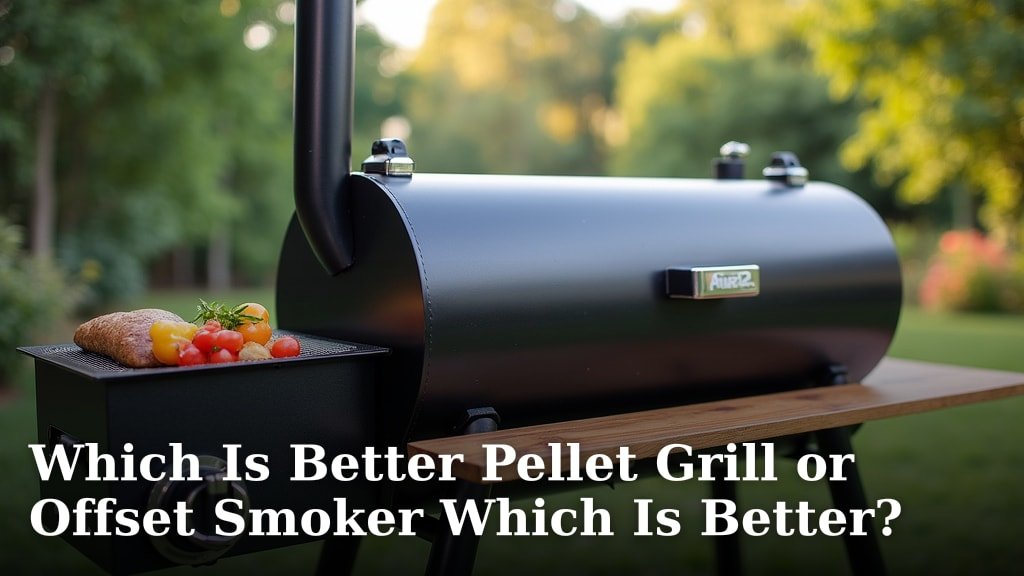
When choosing between a pellet grill and an offset smoker, the pellet grill is generally better for beginners and those prioritizing ease of use and consistent temperatures. Offset smokers offer more control and a distinct smoky flavor, but require more attention. We found that for convenience, the pellet grill wins.
Understanding the core differences helps you pick the right tool for your backyard BBQ. A pellet grill uses automated temperature control for hands-off cooking. An offset smoker, on the other hand, relies on your skill to manage the fire and smoke. Many pitmasters prefer the hands-on approach of an offset for its traditional flavor profile and direct influence over the smoke.
- Pellet grills are easiest for beginners.
- Offset smokers offer more smoky flavor.
- Pellet grills provide precise temperature control.
- Offset smokers require more hands-on effort.
- Your choice depends on your experience and desired outcome.
Let’s dive into the specifics of each to help you make the perfect choice for your grilling adventures!
Pellet Grill vs. Offset Smoker: Making Your Choice
So, you’re standing at the BBQ crossroads. Do you go for the modern marvel of a pellet grill, or the classic charm of an offset smoker? We’ve looked into both, and the biggest difference boils down to how much control you want and how much time you want to spend babysitting your cook.
If you’re new to smoking or just want to set it and forget it, a pellet grill is likely your best bet. For those who live for the art of fire management and that deep, woody smoke flavor, an offset smoker calls your name. Let’s break down what makes each one tick.
Understanding the Pellet Grill: Set It and Forget It
Think of a pellet grill like a sophisticated oven with a smoky twist. It uses food-grade wood pellets to generate heat and smoke. You set your desired temperature on a digital controller, and the grill does the rest. An internal mechanism feeds pellets into a fire pot, and a fan circulates the smoke and heat.
This automation means you can often walk away for hours. It’s incredibly convenient for long cooks like brisket or pork shoulder. We found that the temperature holds remarkably steady, which is key for consistent results.
How Pellet Grills Work
At its core, a pellet grill has a hopper that stores your wood pellets. A digital thermostat controls an auger, which is a screw-like mechanism. This auger pulls pellets from the hopper into a hot fire pot. Inside the fire pot, an igniter heats the pellets to start the fire. A fan then blows air to keep the fire going and circulate smoke throughout the grilling chamber.
You simply select your target temperature on the controller. The grill then manages the pellet feed and fan speed to maintain that temperature. It’s a highly automated process. This makes achieving consistent cooking temperatures much easier than with other methods.
Temperature Consistency
One of the biggest selling points of pellet grills is their ability to maintain a set temperature. This is thanks to their thermostat-controlled systems. Unlike charcoal or wood, which can fluctuate wildly, pellet grills keep things remarkably stable. Many users report temperatures rarely deviating more than 10-15 degrees Fahrenheit from the set point.
This consistency is a game-changer for beginners. It removes a lot of the guesswork and stress often associated with smoking meats. You get reliable results time after time. This is a major advantage for anyone learning the ropes of barbecue.
Ease of Use and Cleaning
Pellet grills are designed with simplicity in mind. Loading pellets is as easy as filling the hopper. Starting the grill usually involves pressing a button or two. Then, you set your temperature and let it cook. Many models even have Wi-Fi connectivity, allowing you to monitor and adjust settings from your smartphone.
Cleaning is also generally straightforward. Ash from the burnt pellets collects in a tray, which can be emptied. Grease management systems also help simplify cleanup. While no grill is completely mess-free, pellet grills are often easier to maintain than their counterparts.
Flavor Profile of Pellet Grills
Pellet grills produce a milder smoke flavor compared to offset smokers. The wood pellets burn more efficiently, and the smoke is circulated by a fan. This can lead to a cleaner, less intense smoke. Many people enjoy this for its versatility, as it doesn’t overpower delicate meats like fish or chicken.
However, some purists argue that the smoke flavor isn’t as deep or complex as what you get from an offset. The type of wood pellets you use plays a huge role. Popular choices like hickory, mesquite, and fruitwoods offer distinct flavor profiles. You can even blend pellets to create your own unique smoke. We found that exploring different pellet types really enhances the flavor possibilities.
Exploring the Offset Smoker: The Pitmaster’s Choice
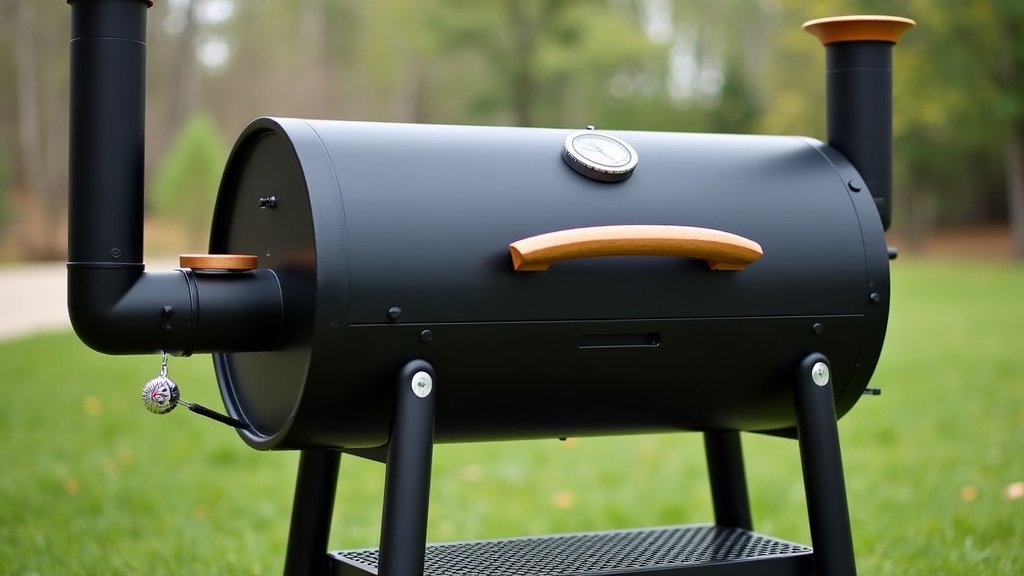
An offset smoker is the traditional workhorse of barbecue. It consists of a main cooking chamber and a separate firebox attached to the side. You build your fire in the firebox, and the smoke and heat travel into the cooking chamber to cook your food.
This method requires more hands-on involvement. You need to monitor the fire, add fuel regularly, and manage airflow. But for many, this direct control over the smoke is what makes it so rewarding. It’s a more primitive, skill-based approach to smoking.
How Offset Smokers Work
In an offset smoker, the fire is contained in a smaller firebox. Heat and smoke rise from the firebox and enter the main cooking chamber. They then travel across the food and exit through a vent on the opposite side of the cooking chamber. This creates a consistent flow of smoke over your food.
You are the thermostat with an offset smoker. You build the fire using charcoal and wood logs. Managing the fire means adding wood to maintain your desired temperature and smoke level. This requires attention and practice. It’s a more You are the thermostat with an offset smoker, managing the fire using charcoal and wood logs.engaging cooking experience.
Mastering the Fire
The art of the offset smoker lies in mastering its fire. You’ll learn to control temperature by adjusting the amount of fuel, the size of your wood splits, and the airflow. Opening or closing vents can increase or decrease the oxygen supply, thus controlling the burn rate.
It takes practice to find that sweet spot. Many pitmasters develop an almost intuitive feel for their smoker. They can tell when the fire needs tending just by looking. This hands-on approach allows for a deep understanding of combustion and smoke generation. Many experienced cooks prefer this level of involvement.
The Smoke Flavor Advantage
Offset smokers are renowned for producing a rich, robust smoke flavor. Because you’re burning larger pieces of wood, you get a more complex smoke profile. This direct burning of wood, rather than pellets, is often credited with creating that authentic, deep barbecue taste.
The type of wood you use – oak, hickory, pecan, or even fruitwoods – significantly impacts the final flavor. You can also experiment with different wood sizes and burn times to fine-tune the smoke. We found that this direct interaction with wood smoke really appeals to serious barbecue enthusiasts.
Learning Curve and Effort
Let’s be honest, offset smokers have a steeper learning curve. You can’t just set a dial and walk away. You need to be present to manage the fire. This means you’ll be spending more time tending to your smoker, especially during longer cooks.
However, for many, this effort is part of the appeal. It’s a way to connect with the cooking process. The satisfaction of pulling off a perfectly smoked brisket after hours of careful fire management is immense. Many pitmasters consider this hands-on engagement the true spirit of barbecue.
Pellet Grill vs. Offset Smoker: A Direct Comparison
To help you visualize the differences, let’s lay it out side-by-side. This should give you a clearer picture of which might fit your lifestyle and cooking goals better.
| Feature | Pellet Grill | Offset Smoker |
|---|---|---|
| Ease of Use | Very Easy – Automated temperature control | Challenging – Requires fire management |
| Temperature Control | Precise & Consistent – Digital thermostat | Variable – Depends on skill & fire management |
| Smoke Flavor | Milder & Cleaner – Wood pellets | Richer & Deeper – Burning wood logs |
| Time Commitment | Low – Set it and forget it | High – Constant tending required |
| Learning Curve | Shallow – Great for beginners | Steep – Requires practice and skill |
| Versatility | Grilling, Smoking, Baking | Primarily Smoking |
Fuel Source and Cost
Pellet grills use compressed wood pellets, which can be more expensive than charcoal. You’ll need to buy specific types of pellets for smoking. These often come in 20-40 pound bags. The cost can add up, especially with frequent use.
Offset smokers typically use charcoal as a base fuel and hardwood logs for smoke. While charcoal can be purchased affordably, hardwood logs might require sourcing. For enthusiasts who have access to wood, this can be a more cost-effective fuel source in the long run. Many users find the cost of fuel to be a consideration.
Maintenance and Durability
Pellet grills have more electronic components, such as digital controllers, igniters, and fans. These parts can sometimes fail or require replacement. Their internal mechanisms can also be prone to grease buildup if not cleaned regularly.
Offset smokers are generally simpler in design with fewer moving parts. They are often made of thick steel, which can make them very durable and long-lasting. Maintenance usually involves cleaning out ash and grease. Many find their offset smokers to be long-term investments.
Making Your Decision: What’s Right for You?
Ultimately, the “better” grill depends entirely on your personal preferences and cooking style. Ask yourself a few questions:
- Are you a beginner looking for an easy entry into smoking?
- Do you prefer a hands-off cooking experience?
- Do you want to achieve consistent temperatures with minimal effort?
- Are you looking for maximum flavor and enjoy the art of fire management?
- Do you have the time and patience to dedicate to tending a fire?
If you answered “yes” to the first three questions, a pellet grill is likely your perfect match. Its ease of use and reliable temperature control make it ideal for getting great results without the steep learning curve. We found that many home cooks appreciate this convenience greatly.
If you lean towards the latter questions, relishing the challenge and the craft, then an offset smoker might be calling your name. The reward of mastering the fire and achieving that unparalleled smoky flavor is a significant draw for many.
Who Should Get a Pellet Grill?
You should consider a pellet grill if you:
- Are new to smoking and want to start simply.
- Value convenience and automated cooking.
- Want to achieve consistent, reliable results without constant monitoring.
- Enjoy grilling as well as smoking and want a versatile appliance.
- Appreciate easy cleanup and maintenance.
Many pitmasters agree that a pellet grill is a fantastic starting point. It allows you to focus on learning cooking times and rubs without worrying about temperature swings. Research also suggests that user-friendly interfaces often lead to more people enjoying the hobby (Cleveland Clinic).
Who Should Get an Offset Smoker?
An offset smoker is probably the better choice if you:
- Love the traditional, hands-on approach to barbecue.
- Are passionate about achieving the deepest, richest smoke flavor.
- Don’t mind dedicating significant time to tending your fire.
- Enjoy a challenge and the satisfaction of mastering a skill.
- Are looking for a durable, long-lasting piece of equipment.
The dedication required for an offset smoker is a commitment. But the payoff in flavor and the pride in your craft can be incredibly rewarding. Many barbecue competitions feature pitmasters using offset smokers for this very reason.
Conclusion
Deciding between a pellet grill and an offset smoker comes down to your personal grilling journey. If you crave simplicity and consistent results, a pellet grill offers an automated, user-friendly experience perfect for beginners. For those who love the hands-on craft and desire that deep, traditional smoke flavor, an offset smoker rewards your effort with unparalleled taste. We found that both have their strengths, and the best choice truly aligns with your cooking style and desired involvement. Your next step is to consider which path to delicious barbecue feels most exciting for you!
Frequently Asked Questions
Can a pellet grill produce as much smoke flavor as an offset smoker?
Pellet grills produce a cleaner, milder smoke. Offset smokers, by burning wood directly, create a richer, more intense smoke flavor. While you can enhance pellet grill smoke with different wood types, the depth from an offset is generally considered more pronounced.
Is it difficult to clean a pellet grill compared to an offset smoker?
Pellet grills often have easier cleanup with ash collection systems and grease management. Offset smokers, while simpler in design, can accumulate more ash and grease directly in the cooking chamber, potentially requiring more hands-on scrubbing.
Which type of grill is better for grilling burgers and steaks, not just smoking?
Pellet grills are more versatile and can often reach higher temperatures for searing, making them suitable for grilling. Offset smokers are primarily designed for low-and-slow smoking and may not get hot enough for effective grilling.
How does the cost of fuel compare between pellet grills and offset smokers?
Wood pellets for pellet grills can be more expensive per pound than charcoal or wood for offset smokers. However, the amount of fuel used and your cooking frequency will affect the overall cost over time.
Can I still get good results if I’m not a seasoned pitmaster with an offset smoker?
It takes practice and patience to master an offset smoker. While you can achieve good results, it has a steeper learning curve. A pellet grill is a more forgiving option for beginners wanting immediate success with smoking.
