
Yes, you absolutely need a meat thermometer for grilling if you want perfectly cooked food. Guessing can lead to undercooked, unsafe meals or dry, overcooked disappointments. A good thermometer helps you hit the exact right temperature every single time, ensuring delicious results and food safety.
Grilling without a thermometer is like navigating without a map. You might get lucky, but it’s a gamble. Knowing the internal temperature of your meats like chicken, pork, and beef is key to achieving ideal doneness and flavor. It takes the guesswork out of cooking for yourself and your guests.
- A meat thermometer is essential for grilling success.
- It ensures your food is cooked safely and tastes great.
- Avoids undercooked or overcooked meat.
- Helps you achieve desired doneness levels.
So, should you bother with another gadget? We found that the answer is a resounding yes! Let’s look at why and how a meat thermometer will change your grilling game for the better.
“`htmlWhy You Absolutely Need a Meat Thermometer for Grilling
So, you’re heading out to the grill, tongs in hand, ready to whip up some amazing food. But wait, do you really need a meat thermometer for this? We’ve all been there, maybe poking a steak or cutting into a chicken thigh to “see” if it’s done. It feels like a rite of passage, right? Well, we found that it’s a gamble you don’t want to take.
Using a meat thermometer isn’t about being fancy. It’s about being smart and safe. It’s the secret weapon that separates “maybe done” from “perfectly cooked.” We believe it’s one of the most important tools for any griller.
The Science Behind Perfect Grilling Temperatures
Grilling is all about heat. But the heat needs to get to the center of your meat properly. This is where temperature comes in. Different meats need to reach specific internal temperatures to be safe and delicious.
When you cook meat, proteins change. They start to firm up and change color. This process needs time and the right temperature. If the temperature is too low, your meat might not cook evenly. It can also stay tough and unappetizing. Too high, and you’ll dry it out before it’s cooked through.
Understanding Food Safety Standards
This is where food safety comes in, and it’s non-negotiable. Undercooked meats can harbor harmful bacteria like Salmonella and E. coli. These can make you and your guests seriously ill.
Government health organizations provide clear guidelines. They recommend specific internal temperatures for different types of meat. For example, the USDA states that poultry should reach 165°F (74°C). Ground meats should also reach 160°F (71°C). Whole cuts of beef, pork, lamb, and veal can be cooked to a lower temperature if desired, but checking is key.
We found that simply looking at the outside or judging by touch is highly unreliable. A thermometer gives you definitive proof your food is safe to eat. It takes the guesswork out of a very important aspect of cooking.
Achieving Your Desired Doneness
Beyond safety, there’s the matter of taste and texture. Do you like your steak rare, medium-rare, or well-done? What about pork? These preferences are all about hitting a precise temperature range.
For instance, a perfect medium-rare steak should hit around 130-135°F (54-57°C). A medium steak is closer to 140-145°F (60-63°C). Pulling your steak off the grill just a few degrees before it hits its target is often wise. This is because the temperature will continue to rise as it rests.
We found that many people who struggle with overcooked or undercooked meat are simply not checking the internal temperature. They’re relying on time, which can vary wildly. Grill temperature, meat thickness, and ambient weather all play a role.
The Types of Meat Thermometers Available
Not all thermometers are created equal. Thankfully, there are several types, and most are quite affordable. This means there’s likely one that fits your grilling style and budget.
Instant-Read Thermometers
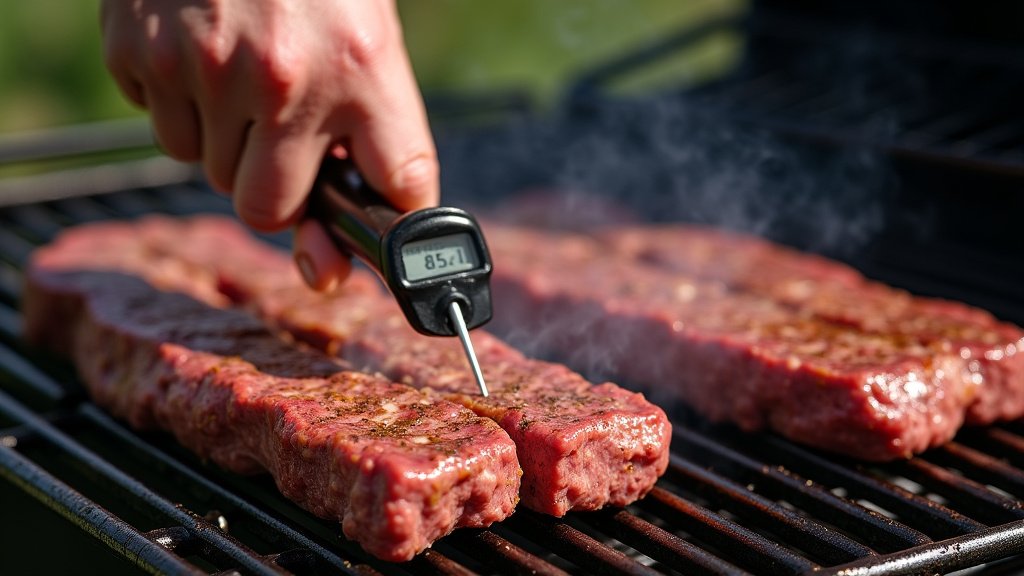
These are probably the most common and versatile. You stick the probe into the thickest part of the meat and get a reading in just a few seconds. They are quick and easy to use.
We found that a good instant-read thermometer is a griller’s best friend. It’s great for checking steaks, burgers, chicken breasts, and roasts. Make sure to insert the probe into the center of the meat, avoiding bone or fat.
Leave-In Probe Thermometers
These come with a probe that stays in the meat during cooking. A cable connects it to a display unit that sits outside the grill. This is fantastic for longer cooks, like briskets or ribs.
You can monitor the temperature without lifting the grill lid. Lifting the lid lets out precious heat and prolongs cooking time. Some even have alarms that sound when your food reaches a preset temperature.
We found that for low-and-slow cooking, a leave-in thermometer is almost essential. It allows you to relax knowing your food is cooking steadily towards perfection. You can check the display unit periodically.
Smart Thermometers and Wi-Fi/Bluetooth Models
For the tech-savvy griller, these are a dream. They work like leave-in thermometers but connect wirelessly to your smartphone or tablet. You can monitor your cook from anywhere in the house.
These often come with apps that offer doneness guides and cooking timers. They can be a bit pricier, but the convenience is undeniable. We found them particularly useful for backyard parties where you might be mingling with guests.
How to Use Your Meat Thermometer Effectively
Getting a thermometer is the first step. Using it correctly is the second, and it’s just as important. A few simple techniques will ensure you get accurate readings every time.
Where to Insert the Probe
Always aim for the thickest part of the meat. Avoid hitting bone, as bone conducts heat differently and can give you a false reading. Also, try to stay away from large pockets of fat. Fat doesn’t reach the same temperature as the muscle tissue.
For whole birds like chicken or turkey, insert the probe into the thickest part of the thigh, away from the bone. For roasts, find the center. For burgers, stick it in the side and push the probe all the way to the middle.
When to Take Readings
Don’t wait until the very end of your estimated cooking time. Start checking a bit earlier, maybe 10-15 minutes before you think it’ll be done. This way, you can track the temperature rise.
Remember carryover cooking. When you remove meat from the heat, its internal temperature continues to rise. This can be by 5 to 10 degrees Fahrenheit. So, pull your meat off the grill when it’s a few degrees below your target temperature.
Reading and Interpreting Temperatures
Familiarize yourself with the target temperatures for the meat you’re cooking. We found that having a chart handy or saving it on your phone is very useful. These temperatures are your guide to both safety and deliciousness.
Consider the type of meat and your personal preference. Beef can be safely enjoyed at rarer temperatures than chicken. Pork is now considered safe at a slightly lower temperature than it was years ago. Always refer to current food safety guidelines for assurance.
Common Grilling Mistakes Without a Thermometer
It’s easy to fall into common traps when you’re grilling without a thermometer. We’ve seen them happen, and we’ve probably made a few ourselves before we learned better!
- The “Looks Done” Fallacy: Meat can look cooked on the outside but still be dangerously undercooked inside. Browning isn’t a sign of safety or perfect doneness.
- Overcooking to Be Safe: Many people err on the side of caution. They cook meat until it’s definitely done, but often far past its prime. This leads to dry, tough results.
- Inconsistent Results: One day your steak is perfect, the next it’s a hockey puck. Without a thermometer, you can’t replicate success because you can’t measure what made it successful.
- Foodborne Illness Risk: As mentioned, this is the most serious mistake. Not knowing your internal temperature means you might be serving unsafe food.
Making the Investment: Is It Worth It?
You might be thinking, “Another kitchen gadget? Do I really need it?” Our research and experience suggest a resounding yes. The investment is minimal, and the rewards are enormous.
You can find reliable instant-read thermometers for under $20. Leave-in or smart thermometers might cost a bit more, but they offer significant convenience for serious grillers. Think about the cost of the meat you’re grilling. A $20 thermometer can save a $50 prime rib from becoming a disaster.
More importantly, it saves you the disappointment of a ruined meal. It gives you the confidence to grill any cut of meat perfectly. You’ll impress your friends and family consistently.
Quick Checklist for Grilling Success with a Thermometer
Ready to upgrade your grilling game? Keep these points in mind:
- Choose the Right Thermometer: Instant-read for most, leave-in for long cooks.
- Know Your Target Temps: Have a reliable chart for safe and desired doneness.
- Insert Correctly: Aim for the thickest part, avoid bone and fat.
- Check Early and Often: Start checking before you think it’s ready.
- Account for Carryover Cooking: Remove meat a few degrees below target.
- Calibrate if Needed: Ensure your thermometer is accurate (most can be calibrated).
Conclusion
So, you’ve seen why a meat thermometer isn’t just another kitchen gadget, but a grilling essential. It’s your ticket to food safety and perfectly cooked meals every time. No more guessing games or disappointing results. You can achieve that ideal doneness for steaks, chicken, and more with confidence. Investing in a thermometer is a small price for great flavor and peace of mind. Your next step is simple: pick out a thermometer that fits your grilling style and get ready to taste the difference.
Frequently Asked Questions
How do I know if my meat thermometer is accurate?
Most instant-read and leave-in thermometers can be calibrated. You can test accuracy by placing the probe in a cup of ice water. It should read 32°F (0°C) after about 30 seconds. If it’s off, check your thermometer’s manual for calibration instructions.
Can I use a meat thermometer on a grill without lifting the lid?
Yes, leave-in thermometers are designed for this. They have a probe that stays in the meat and a cable that runs out of the grill. This allows you to monitor the temperature on an external display unit without losing heat.
What’s the difference between instant-read and leave-in thermometers?
An instant-read thermometer gives a quick temperature reading when you insert its probe for a few seconds. A leave-in thermometer has a probe that stays in the meat throughout cooking, connected to a display unit outside the grill, ideal for long cooks.
How do I clean my meat thermometer?
Always clean the probe after each use. For most thermometers, a simple wipe with a damp cloth and mild soap is sufficient. Ensure it’s completely dry before storing. Avoid submerging digital thermometers in water.
Is it okay to still use the “finger test” for doneness?
While some experienced cooks might have a feel for it, the finger test is highly unreliable for safety and precision. It doesn’t give you an exact internal temperature, which is necessary for ensuring your meat is safely cooked, especially poultry and ground meats.
