
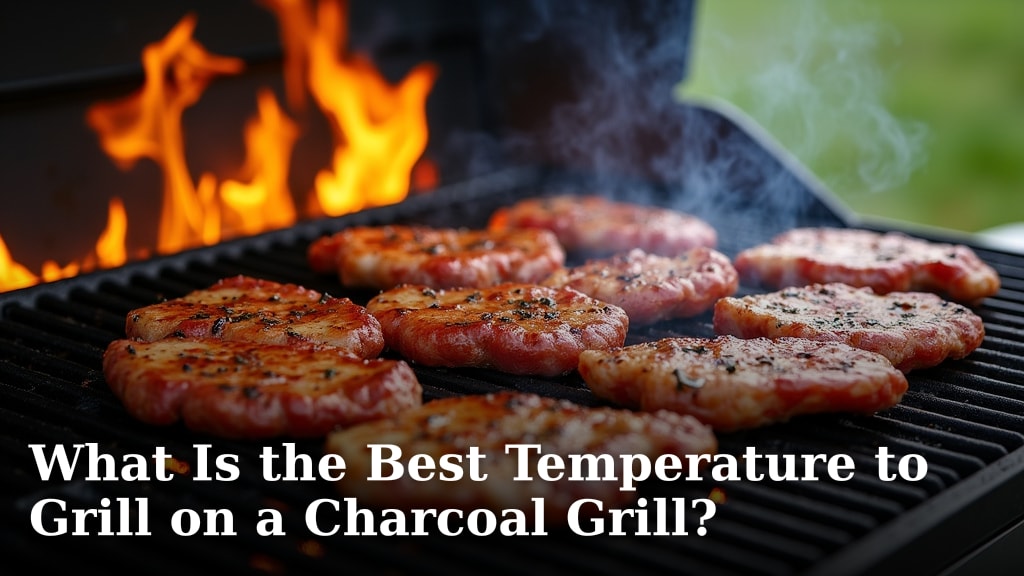
The best temperature to grill on a charcoal grill depends on what you’re cooking, but generally, you’ll want to aim for a medium-high heat, around 400-450°F (204-232°C). This range is fantastic for searing steaks and burgers, giving them that perfect crust while keeping the inside juicy.
Getting your charcoal grill to the right temperature is key for delicious results. Too hot, and you risk burning the outside before the inside cooks. Too cool, and you might end up with pale, sad food. Finding that sweet spot means more than just tossing coals on; it involves managing airflow and coal arrangement for consistent heat.
- Medium-high heat (400-450°F) is great for steaks and burgers.
- Low heat (300-325°F) is better for slow-cooked items like ribs.
- Manage airflow by opening/closing vents to control temperature.
- Arrange coals for direct (hotter) or indirect (cooler) cooking zones.
- Don’t be afraid to experiment to find your grill’s sweet spot!
Ready to master your charcoal grill? Let’s break down how to achieve those perfect grilling temperatures for anything you want to cook.
Mastering Your Charcoal Grill Temperature
Getting your charcoal grill to the perfect temperature is less of an art and more of a science. It’s all about understanding how your grill works. We found that most grilling tasks benefit from knowing a few key temperature ranges. This knowledge helps you avoid common mistakes. You’ll achieve delicious results every time.
Think of your grill as a dynamic oven. You have control over its heat. This control comes from managing the coals and the airflow. It’s an exciting part of charcoal grilling. Let’s break down how to achieve different temperatures.
Understanding Charcoal Grill Heat Zones
Before we talk numbers, let’s talk zones. A well-managed charcoal grill has at least two heat zones. This is crucial for versatile cooking. We call these direct and indirect heat. Understanding these will change your grilling game.
Direct Heat: The Searing Zone
Direct heat is when your food sits directly over the hot coals. This is your go-to for **quick cooking** and **searing**. Think burgers, steaks, chicken pieces, and vegetables. The intense heat creates that beautiful crust we all love. It adds a wonderful smoky flavor.
This zone is typically the hottest part of your grill. It’s where you’ll achieve those high-temperature sears. You need to watch your food closely here. It can go from perfectly seared to burnt in a flash. We found that smaller, thinner cuts of meat do best here.
Indirect Heat: The Gentle Cooker
Indirect heat means your food is placed away from the coals. There’s a barrier, like a drip pan or just empty space, between the coals and your food. This is perfect for **slow cooking** and **smoking**. Ribs, whole chickens, large roasts, and delicate fish often benefit from this method.
This zone provides a more **even, gentle heat**. It cooks food thoroughly without burning the outside. It’s like moving your food to a cooler side of the grill. Many pitmasters swear by this for tender results. You can achieve temperatures much lower than direct heat with this setup.
Achieving Specific Temperatures for Different Foods
So, what temperature is actually best? It truly depends on what you’re cooking. We’ve found that most recipes fall into a few common temperature categories. Knowing these will help you plan your cook.
High Heat: 450-550°F (232-288°C) – The Sear Master
This is your **super-hot zone**. It’s ideal for searing steaks to a perfect medium-rare or charring vegetables quickly. Think of searing scallops or achieving a crust on a thick burger. This heat level is intense and requires constant attention.
To reach this temperature, you’ll need a good amount of lit coals. Arrange them in a single layer across the grilling grate. Ensure your vents are fully open to allow maximum airflow. We found that smaller grills might struggle to maintain this extreme heat for long periods without adding more coals.
Medium-High Heat: 400-450°F (204-232°C) – The All-Arounder
This is your **workhorse temperature range**. Many experts consider this the sweet spot for a variety of foods. It’s excellent for burgers, chicken pieces, sausages, pork chops, and even thicker fish fillets. You get a great sear without the extreme risk of burning.
To achieve this, you’ll use a solid bed of coals, but perhaps not a completely solid layer. You can arrange them on one side of the grill for a direct zone. For indirect cooking, you’d push them to one side. We found that closing the lid helps stabilize this temperature. Partially opening vents can help maintain it.
Medium Heat: 350-400°F (177-204°C) – The Versatile Cook
This temperature is a bit more forgiving. It’s great for **cooking foods that need a little more time** than a quick sear. Think about chicken breasts, fish steaks, or even thicker burgers where you want good cooking without a super-hard sear. It’s also good for some vegetables.
You’ll typically have a good amount of coals, but they might be spread out a bit more. Or, they might be concentrated on one side, creating a strong direct zone and a moderately hot indirect zone. We found that this range is easier to manage for longer cooking times. It allows for adjustments without drastic temperature swings.
Medium-Low Heat: 300-350°F (149-177°C) – The Steady Cook
This is where **slow and steady** wins the race for many items. It’s perfect for cooking larger cuts of poultry, thicker pork chops, or kebabs. You want the food to cook through without drying out. This temperature allows for that.
To achieve this, you’ll need fewer coals. Or, you can use coals that have already been burning for a while and are starting to ash over. Arranging them primarily on one side of the grill is key. This ensures a reliable indirect heat zone. We found that this temperature is great for beginners learning to control their grill.
Low Heat: 250-300°F (121-149°C) – The Smoker’s Friend
This is your **low-and-slow territory**. It’s ideal for true smoking or cooking very large items like a whole brisket or pork shoulder. This temperature range ensures the meat slowly breaks down, becoming incredibly tender and infused with smoke flavor.
To get here, you’ll use a minimal amount of coals. Often, you’ll use a snake method or a specific arrangement to keep the heat low and consistent. Vents will likely be only slightly open. We found that many people use wood chunks or chips in this range to add smoke flavor.
How to Control Your Charcoal Grill Temperature
The real magic of charcoal grilling isn’t just about having coals; it’s about controlling them. Your grill’s design usually includes vents, and these are your primary tools for temperature regulation. We found that consistent temperature control comes down to mastering airflow.
Using the Bottom and Top Vents
Most charcoal grills have two sets of vents: one on the bottom of the grill bowl and one on the lid. The bottom vents control the amount of oxygen feeding the coals. More oxygen means hotter fire. The top vents control how heat and smoke escape.
Opening vents wide allows more air in, increasing the temperature. Closing them down restricts airflow, reducing the temperature. It’s a balancing act. We found that small adjustments to the vents can have a big impact over time. You’ll want to experiment to see how your specific grill responds.
As a general rule:
- To increase temperature: Open bottom vents more, or slightly open top vents.
- To decrease temperature: Close bottom vents more, or slightly close top vents.
Many grill masters suggest starting with vents mostly open and then closing them down as needed. It’s easier to reduce heat than to add it quickly once things get too hot. We found that the top vent also helps you maintain an even temperature once you’ve reached your target.
The Role of the Lid
Don’t underestimate the power of the lid! Keeping your lid on your charcoal grill is essential for maintaining temperature. It traps heat and smoke, acting much like an oven door. When you open the lid, you’re letting precious heat escape.
We found that minimizing lid-lifting is key. Every time you lift the lid to check your food, you lose a significant amount of heat. This can prolong your cooking time. Try to check food with a quick peek rather than leaving the lid open. It helps maintain a consistent cooking environment. This is especially true when aiming for lower temperatures.
Arranging Your Coals for Heat Control
How you arrange your coals is just as important as airflow. This is how you create those direct and indirect heat zones we talked about. We found that a simple two-zone setup is the most common and effective method for many cooks.
The Two-Zone Setup
To create a two-zone fire, pile your lit coals onto one half of the charcoal grate. Leave the other half empty. This gives you a scorching hot side (direct heat) and a cooler side (indirect heat).
This is incredibly useful. You can sear food on the direct side, then move it to the indirect side to finish cooking. This prevents burning while ensuring the inside cooks through. We found that this method is fantastic for everything from steaks to chicken.
The M-Shape or Snake Method (for low and slow)
For very low and slow cooking, especially on larger grills or smokers, the M-shape or snake method is popular. This involves arranging unlit coals in a line or a “U” shape along the edge of the charcoal grate. Lit coals are placed at one end, slowly igniting the unlit coals as they burn. This provides a long, consistent, low heat. We found that this requires careful setup but yields excellent results for extended cooks.
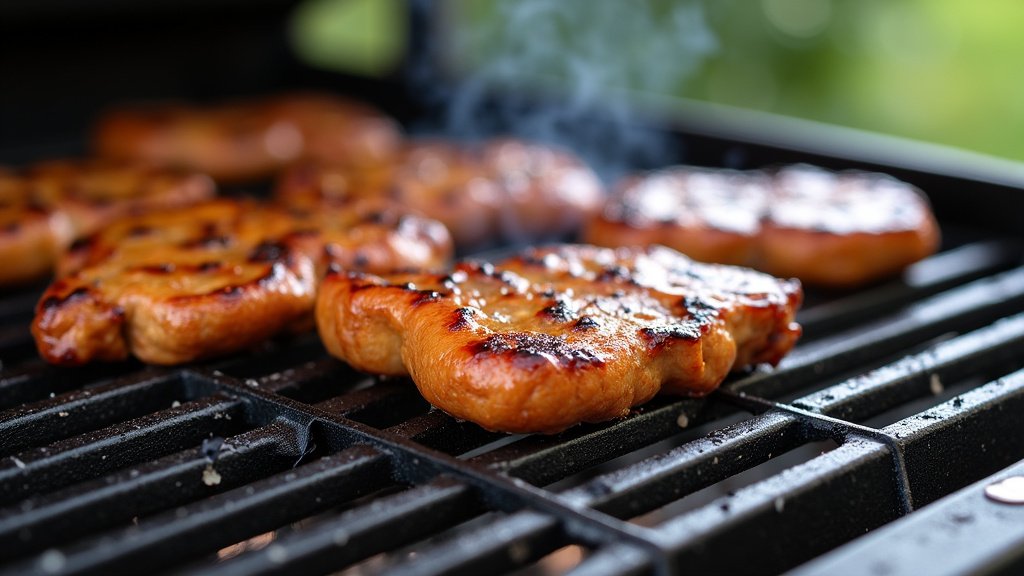
Using a Thermometer: Your Best Friend
While your grill might have a built-in thermometer, they can often be inaccurate. We strongly recommend using a reliable **grill thermometer** or an **instant-read thermometer** for the most accurate temperature readings. Many experts suggest using a probe thermometer that stays in the grill and connects to an external unit.
This allows you to monitor the grill’s internal temperature without opening the lid. For instant-read thermometers, use them to check the internal temperature of your food. This is the best way to ensure it’s cooked safely and to your desired doneness. For instance, the USDA recommends internal temperatures for various meats to ensure safety (USDA).
Quick Temperature Checklist
Here’s a handy rundown to help you remember temperatures:
- High Heat (450-550°F): Searing steaks, scallops, quick charring.
- Medium-High Heat (400-450°F): Burgers, chicken pieces, pork chops, sausages.
- Medium Heat (350-400°F): Chicken breasts, fish steaks, thicker burgers.
- Medium-Low Heat (300-350°F): Whole chickens, thicker chops, kebabs.
- Low Heat (250-300°F): Ribs, briskets, pork shoulders (smoking).
Conclusion
Mastering your charcoal grill temperature opens up a world of grilling possibilities. You’ve learned that the best temperature isn’t a single number, but rather a range suited to your specific dish. Understanding direct versus indirect heat and how to manage your grill’s vents are your most powerful tools. With this knowledge, you can confidently sear, slow cook, and smoke your way to delicious results. Now, go fire up that grill and put your newfound temperature control to the test!
Frequently Asked Questions
How do I know when my charcoal grill is hot enough?
The best way to know your grill’s temperature is by using a reliable thermometer. While a built-in gauge can offer a general idea, an instant-read or probe thermometer will give you the most accurate reading. You can also use the “hand test” as a rough guide: hold your hand about 5 inches above the grate. If you can only hold it for 1-2 seconds, it’s high heat; 3-4 seconds is medium-high; 5-6 seconds is medium.
What if my grill gets too hot?
If your grill gets too hot, the first step is to close the top vent slightly to reduce airflow. You can also close the bottom vents a bit more. If you’ve arranged coals for direct heat, spread them out more thinly or move some coals to the indirect zone. Remember, it’s easier to add coals later if needed than to cool things down quickly once they’ve overheated. How do I know my grill is at the right temperature for chicken breast?
Can I grill in the rain?
Yes, you can grill in the rain, but it will affect your grill’s temperature. Rain can cool down the coals and make it harder to maintain your desired heat. Ensure your grill lid is on as much as possible, and you might need to use more coals or keep the vents more open than usual. Some grill covers are designed to stay on while grilling, which can help.
How do I control the temperature for indirect grilling?
To set up for indirect grilling, pile your lit coals to one side of the charcoal grate, leaving the other side empty. Place your food on the side without coals. By adjusting the vents, you can control the airflow feeding the coals, which will then heat the empty side of the grill. Keeping the lid on helps to circulate the heat evenly around your food.
How many briquettes should I use for a specific temperature?
The exact number of briquettes varies depending on the brand, type of charcoal, weather conditions, and your specific grill. A good starting point for medium-high heat (around 400°F) is typically 40-50 fully lit briquettes arranged for direct heat. For lower temperatures, use fewer coals or let them burn down more. It’s best to experiment and learn how many coals your grill needs for different temperatures.
