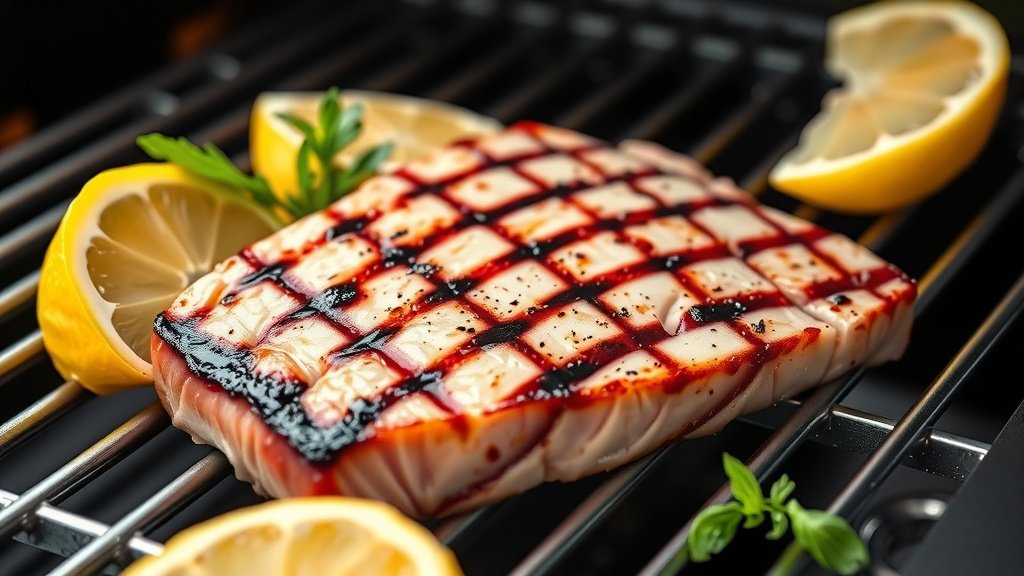
To grill a tuna steak on a gas grill, preheat your grill to high heat, about 500-600°F (260-315°C), and aim for 1.5 to 2 minutes per side for a perfect medium-rare, depending on thickness.
Always use a clean, oiled grill grate and a meat thermometer to ensure your tuna steak reaches your desired doneness without overcooking, keeping it moist and flavorful.
Here’s a quick summary of what you’ll find:
- Choose a thick, fresh tuna steak (Ahi is great) for the best grilling experience.
- Prepare your steak by patting it dry, lightly oiling, and seasoning simply with salt and pepper.
- Preheat your gas grill to a very high temperature to get a fantastic sear.
- Grill quickly over direct heat, flipping once, for a couple of minutes per side to achieve medium-rare.
- Avoid overcooking at all costs; tuna is best when still a little pink in the middle.
How To Grill A Tuna Steak On A Gas Grill?
Grilling a tuna steak on a gas grill is surprisingly simple and creates a delicious meal. You’ll get that beautiful sear and a juicy, tender interior if you follow a few key steps.
Imagine biting into a perfectly grilled tuna steak—it’s a real treat! Using a gas grill makes this process fast and straightforward, perfect for a weeknight dinner or a special occasion.
Why Tuna Steak is a Griller’s Delight
Tuna steaks are fantastic for grilling because they cook quickly and absorb flavors beautifully. They offer a meaty texture that holds up well to high heat, unlike some more delicate fish fillets.
Plus, they’re incredibly versatile. You can pair them with almost anything, from a fresh salad to roasted vegetables. It’s truly a dish that feels gourmet but is surprisingly easy to master.
Choosing the Perfect Tuna Steak
The foundation of a great grilled tuna steak starts at the fish counter. Don’t rush this step; picking the right cut makes all the difference in your final dish.
What Type of Tuna is Best?
Many experts recommend Ahi tuna, also known as Yellowfin tuna, for grilling. It has a firm texture and a mild, rich flavor that stands up well to high heat.
You might also find Bigeye tuna, which is similar. Look for bright, red-pink flesh with no brown spots or dullness. It should smell fresh, like the ocean, not overly fishy.
Thickness Matters
Aim for tuna steaks that are about 1 to 1.5 inches thick. This thickness allows you to get a great sear on the outside while keeping the inside beautifully rare or medium-rare.
Thinner steaks cook too quickly and are prone to overcooking. Thicker ones might require a bit more attention to ensure even cooking without burning the exterior.
Preparing Your Tuna for the Grill
A little prep work goes a long way. This ensures your tuna cooks evenly and doesn’t stick to the grates. Think of it as setting the stage for a culinary masterpiece.
First, always pat your tuna steaks thoroughly dry with paper towels. Excess moisture can prevent a good sear and essentially steam the fish instead of grilling it. Then, brush them lightly with a high smoke point oil, like olive oil or grapeseed oil, to help with non-sticking and flavor.
Simple Seasoning Ideas
Tuna has such a wonderful natural flavor that it doesn’t need much help. A simple seasoning lets the tuna shine. Less is often more when it comes to quality ingredients.
You can’t go wrong with sea salt and freshly cracked black pepper. Some people enjoy a light sprinkle of garlic powder or onion powder for an extra layer of taste.
Here’s a quick checklist for prepping your tuna:
- Pat tuna dry with paper towels.
- Brush lightly with olive oil.
- Season generously with sea salt and black pepper.
- Consider a sprinkle of garlic powder or onion powder.
- Let it sit at room temperature for 15 minutes before grilling.
Getting Your Gas Grill Ready
The grill itself needs some love before the tuna touches it. A hot, clean grill is your best friend when cooking delicate proteins like fish. It’s like having a perfectly preheated oven for baking.
Clean Grates are a Must
Always start with clean grill grates. Food particles from previous cooks can cause your tuna to stick, tear, and burn. This can really spoil the presentation and the taste.
Once hot, use a sturdy grill brush to remove any residue. A clean surface ensures beautiful grill marks and easy flipping. It’s a small step that makes a big difference.
Preheating for Success
Preheat your gas grill to high heat, around 500-600°F (260-315°C). You want the grates to be sizzling hot. This intense heat creates that desirable crust quickly.
Allow at least 10-15 minutes for your grill to come up to temperature. A cold grill will simply not give you the sear you want; it will just cook the tuna slowly and dry it out.
The Grilling Process: Time and Technique
This is where your patience and quick action pay off. Grilling tuna is all about precision and not being afraid of high heat. You’re aiming for a quick, searing cook.
Direct Heat is Your Friend
Grill your tuna steaks over direct high heat. This means placing them directly over the active burners. The intense, direct heat is what creates that beautiful, restaurant-quality sear on the outside.
You want to cook them quickly to ensure the interior remains moist and tender. Think of it like a quick dance with the flames; a swift sear is the goal.
How Long Do You Grill Tuna Steak?
The cooking time for tuna steak is very fast and depends on your desired doneness and the thickness of your steak. Many people prefer tuna medium-rare for the best flavor and texture.
Remember, tuna continues to cook slightly after it’s removed from the grill, a process called carryover cooking. Keep a meat thermometer handy; it’s your best tool for accuracy. Food safety experts often suggest cooking fish to a higher temperature (FDA), but for culinary quality, many prefer tuna on the rarer side.
| Doneness | Internal Temperature | Grill Time Per Side (1-inch steak) |
|---|---|---|
| Rare | 115-120°F (46-49°C) | 1-1.5 minutes |
| Medium-Rare | 125-130°F (52-54°C) | 1.5-2 minutes |
| Medium | 135-140°F (57-60°C) | 2-2.5 minutes |
Flipping Your Tuna
Resist the urge to move your tuna steak around constantly. Place it on the hot grates and let it sear without disturbance for the recommended time for the first side.
Then, flip it just once to cook the other side. This approach helps to build a great crust and prevents the fish from sticking or breaking apart. A clean spatula or tongs works best for flipping.
Common Pitfalls and How to Avoid Them
Even seasoned grillers can sometimes stumble. Knowing the common mistakes can save your tuna steak from an unfortunate fate. We’re here to help you dodge those culinary bullets.
Overcooking Tuna: A Cardinal Sin
This is the most frequent error, and it’s a big one. Overcooked tuna becomes dry, tough, and chalky, losing all its amazing flavor and texture. It turns from a delight into a disappointment.
To avoid this, use a meat thermometer and pull the tuna off the grill when it’s still a few degrees below your target internal temperature. Trust the table above and your thermometer!
Sticking to the Grates
Nothing is more frustrating than a beautifully seared steak tearing apart when you try to flip it. This usually happens because of dirty grates or not enough oil.
Always ensure your grill grates are clean, preheated to high, and lightly oiled just before placing the tuna. These steps create a non-stick surface, letting your tuna lift off easily.
Serving Your Grilled Tuna Steak
You’ve done the hard work; now it’s time to enjoy the fruits of your labor! A few final touches can make your grilled tuna steak even more spectacular. Presentation matters, too!
Resting Your Steak
Just like beef steaks, tuna benefits from a short rest after grilling. Transfer it to a cutting board and let it sit for about 3-5 minutes before slicing or serving.
This resting period allows the juices to redistribute throughout the steak, resulting in a more moist and flavorful bite. It truly makes a noticeable difference in texture.
Fantastic Flavor Pairings
Grilled tuna is versatile, meaning it pairs wonderfully with a variety of simple flavors that enhance, rather than overpower, its natural taste. Think fresh and vibrant.
You might enjoy it with a light sauce, some fresh herbs, or a squeeze of citrus. Many chefs we found suggest keeping it simple to let the tuna itself be the star of the show.
- A squeeze of fresh lemon juice.
- Drizzle of olive oil and fresh parsley or cilantro.
- Light soy-ginger sauce.
- Simple salsa verde or a fresh tomato bruschetta.
Conclusion
Grilling a tuna steak on a gas grill is a rewarding experience that results in a quick, healthy, and incredibly flavorful meal. By choosing a quality steak, prepping it properly, and mastering the high-heat, quick-cook method, you’ll achieve perfect results every time.
Remember, the goal is a beautiful sear and a moist interior, not a dry, overcooked piece of fish. With a little practice, you’ll be grilling restaurant-quality tuna right in your backyard. So, fire up that grill and get ready to enjoy one of the ocean’s finest offerings!
How do I know when my tuna steak is done on the grill?
The best way to know if your tuna steak is done is by using an instant-read meat thermometer. For medium-rare, aim for an internal temperature of 125-130°F (52-54°C). The center should still be pink.
Can I grill frozen tuna steaks?
It’s best to fully thaw frozen tuna steaks before grilling. Grilling from frozen can lead to uneven cooking, where the outside burns before the inside cooks through. Thaw them slowly in the refrigerator overnight for the best results.
What kind of oil should I use for grilling tuna?
Use an oil with a high smoke point, such as olive oil, grapeseed oil, or canola oil. This helps prevent sticking and adds a little flavor without burning at high grill temperatures.
My tuna always sticks to the grill. What am I doing wrong?
Sticking is often caused by grates that aren’t hot enough, not being clean, or not being properly oiled. Ensure your grill is preheated to high heat, clean the grates thoroughly with a wire brush, and then lightly oil the grates just before placing the tuna.
What are some good side dishes to serve with grilled tuna steak?
Grilled tuna steak pairs wonderfully with light, fresh sides. Consider a simple green salad with a vinaigrette, grilled asparagus or zucchini, couscous, or a refreshing fruit salsa. These choices complement the tuna without overwhelming its delicate flavor.