
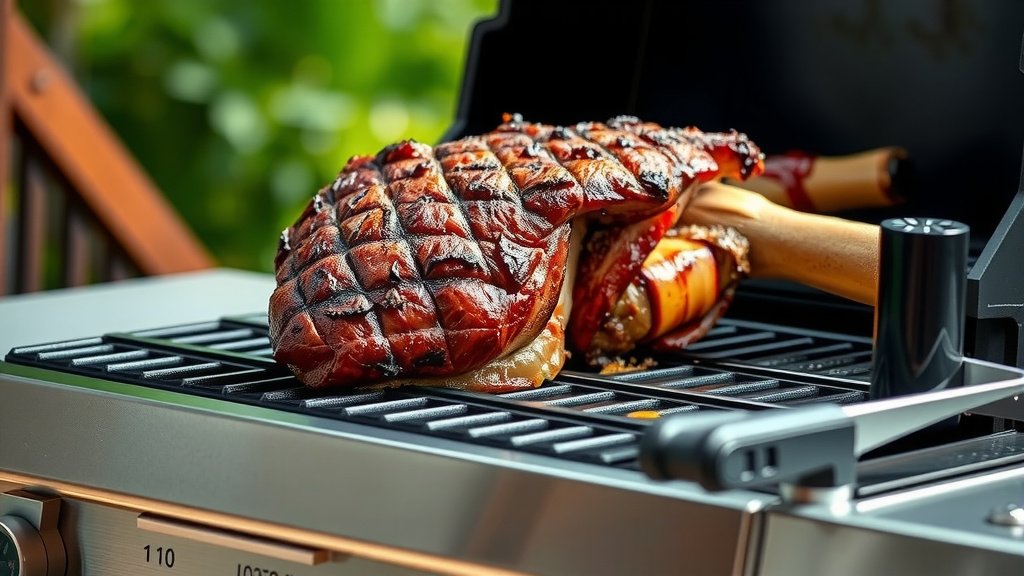
To grill a ribeye roast on a gas grill, you will first sear it over direct high heat to develop a rich crust, then move it to indirect heat to cook gently until it reaches your preferred internal temperature.
This method, known as two-zone grilling, is key for achieving a beautifully browned exterior and a tender, juicy interior with a gas grill.
For those eager to get straight to the delicious details, here’s a quick roadmap to grilling your ribeye roast:
- Choose a quality ribeye roast, considering bone-in for flavor.
- Trim excess fat and tie your roast for even cooking.
- Season generously with salt, pepper, and your favorite rub.
- Set up your gas grill for two-zone cooking: high heat on one side, low/off on the other.
- Sear the roast on all sides over direct high heat until browned.
- Move the roast to indirect heat, closing the lid, and cook until it reaches your desired internal temperature.
- Rest the roast for at least 15-20 minutes before slicing to lock in juices.
How To Grill A Ribeye Roast On A Gas Grill?
Grilling a ribeye roast on a gas grill involves mastering direct and indirect heat, ensuring a fantastic sear and tender finish.
You can achieve a restaurant-quality result right in your backyard with some simple steps.
Picking Your Perfect Ribeye Roast
Selecting the right ribeye roast is your first step to grilling success. Look for a roast with good marbling, which is the white flecks of fat throughout the meat.
Many experts say marbling adds incredible flavor and keeps your roast moist as it cooks.
Bone-In or Boneless?
Both bone-in and boneless ribeye roasts work well on a gas grill. A bone-in roast often offers a richer flavor profile.
However, a boneless roast is easier to slice after cooking, as we’ve found in our research.
Prep Work: Getting Your Roast Ready
Proper preparation makes a big difference in the final taste and texture of your grilled ribeye roast. Don’t skip these simple steps.
This is where you set the stage for a truly amazing meal.
Trimming and Tying
Start by trimming any large, excessive fat from the outside of the roast. Leave a thin layer, about a quarter-inch, to help with flavor and moisture.
If your roast is irregularly shaped, tie it with butcher’s twine every two inches. This helps it cook evenly, ensuring consistent doneness throughout.
The Right Rub
Seasoning is crucial. A simple mix of coarse salt and freshly ground black pepper is always a winner.
For extra flavor, consider a dry rub with garlic powder, onion powder, and a touch of paprika. Apply it generously, pressing it into the meat.
Setting Up Your Gas Grill for Success
Your gas grill is a versatile tool, but knowing how to set it up correctly for a ribeye roast is key. We’re aiming for a two-zone cooking environment.
This setup allows you to sear at high heat and then finish cooking gently.
Two-Zone Grilling Explained
Two-zone grilling means having one side of your grill hot (direct heat) and the other side cooler (indirect heat). You can achieve this by turning on burners on one side to high, and keeping the other burners off or on low.
Many experts suggest this method for larger cuts of meat like roasts because it prevents the outside from burning before the inside is cooked.
The Grilling Process: Sear, Then Roast
This is where the magic happens! You’ll create a delicious crust and then cook your roast to perfection.
Have your meat thermometer ready, it’s your best friend here.
Searing for That Perfect Crust
Preheat your grill to high heat on the direct side, aiming for 450-500°F. Once hot, place the ribeye roast directly over the flames.
Sear each side for about 3-4 minutes, turning with tongs, until a rich, brown crust forms. Don’t rush this step; the crust adds incredible flavor.
Indirect Cooking to Perfection
After searing, move the roast to the indirect heat side of your grill. Close the lid and let the grill’s ambient heat do its work.
Maintain a grill temperature around 300-325°F for this stage, adjusting your burners as needed.
Monitoring Internal Temperature
This is the most critical part. Insert a reliable meat thermometer into the thickest part of the roast, avoiding bone.
You’re looking for specific internal temperatures to achieve your desired doneness (Food Safety and Inspection Service).
| Doneness | Target Temp (Pull from Grill) | Final Temp (After Resting) |
|---|---|---|
| Rare | 120-125°F | 125-130°F |
| Medium-Rare | 125-130°F | 130-135°F |
| Medium | 130-135°F | 135-140°F |
| Medium-Well | 140-145°F | 145-150°F |
Remember, the temperature will rise a few degrees after you remove it from the grill. This is called carryover cooking.
We found that pulling it slightly below your target ensures perfect results.
Resting and Slicing Your Masterpiece
You’ve done the hard work, now comes the patience. Resting is non-negotiable for a juicy roast.
Slicing correctly also makes a huge difference in presentation and tenderness.
The Importance of Resting
Once your roast hits the target temperature, remove it from the grill and place it on a cutting board. Cover it loosely with foil.
Allow it to rest for at least 15-20 minutes. This allows the juices, which have been pushed to the center, to redistribute throughout the meat, keeping every slice tender.
Common Grill Challenges Checklist
Even seasoned grillers face issues sometimes. Here’s a quick checklist to help you avoid common pitfalls when grilling a ribeye roast:
- Is your grill preheated properly for searing?
- Are you using a reliable meat thermometer?
- Did you move the roast to indirect heat after searing?
- Are you resisting the urge to keep opening the grill lid?
- Is the roast getting enough rest before slicing?
Conclusion
Grilling a ribeye roast on a gas grill might seem daunting, but it’s really quite straightforward once you understand the technique. By focusing on proper preparation, two-zone grilling, and careful temperature monitoring, you’re well on your way to a truly memorable meal.
The satisfaction of serving a perfectly grilled, juicy ribeye roast is a reward in itself. Happy grilling!
How long does it take to grill a 3-pound ribeye roast on a gas grill?
A 3-pound ribeye roast typically takes about 1 to 1.5 hours to cook on a gas grill using indirect heat after an initial sear, aiming for a medium-rare doneness. This can vary based on grill temperature consistency and the roast’s thickness.
Can I marinate a ribeye roast before grilling?
Yes, you can marinate a ribeye roast before grilling to add extra flavor and tenderness. Use a marinade with acids like vinegar or citrus juice, but don’t marinate for more than 24 hours, as it can break down the meat too much.
What internal temperature is safe for ribeye roast?
For beef roasts, a minimum safe internal temperature is 145°F (63°C) for medium-rare, followed by a 3-minute rest (Food Safety and Inspection Service). However, many prefer medium-rare at 130-135°F for flavor, which is a common culinary preference for prime cuts.
How do I prevent my ribeye roast from drying out on the grill?
To prevent your ribeye roast from drying out, always cook it using indirect heat after searing, and avoid overcooking it past your desired internal temperature. Resting the roast properly after grilling is also crucial for retaining juices.
Should I trim all the fat off a ribeye roast before grilling?
You should trim excessive, thick layers of fat from a ribeye roast, but leave a thin layer, about a quarter-inch. This remaining fat helps to baste the meat, adding flavor and moisture during the grilling process.
