
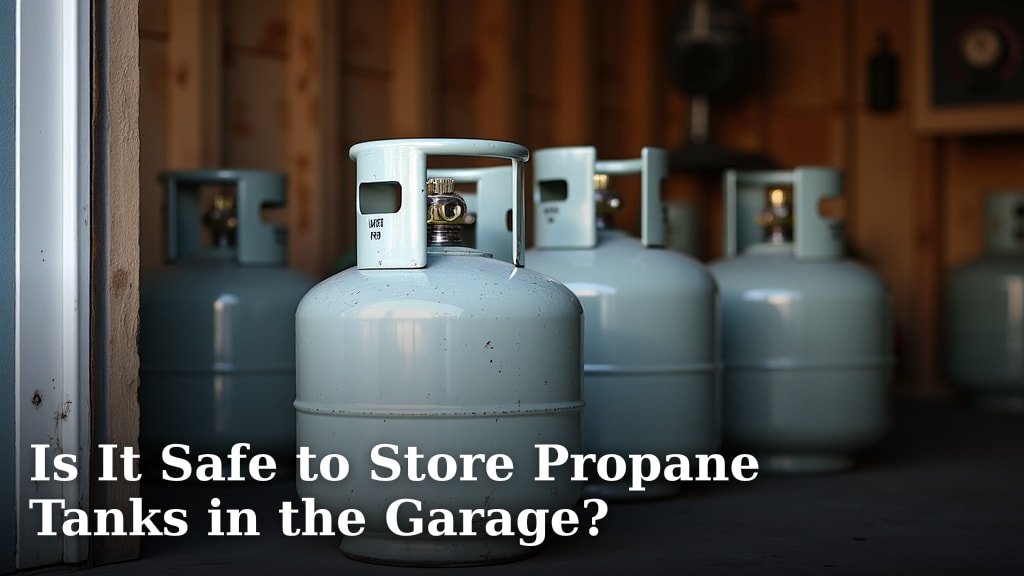
No, it is not safe to store propane tanks in your garage. This includes tanks for your grill, fire pit, or other outdoor appliances. We found that most experts, including fire departments and propane suppliers, strongly advise against it. Propane tanks pose a fire and explosion risk when stored indoors, especially in enclosed spaces like garages.
Propane is heavier than air. If a tank leaks, the gas can collect on the floor. A tiny spark can then cause a serious incident. Even an “empty” tank is not truly empty and still contains enough gas to be dangerous. Your garage might seem convenient, but it’s not the right place for propane storage due to these safety concerns.
TL;DR: Storing Propane Tanks in Your Garage
- Never store propane tanks indoors, including garages or sheds.
- Propane is heavier than air and can accumulate, creating a fire hazard.
- Even empty-looking tanks still contain residual, dangerous propane.
- Always store tanks outdoors, away from heat sources and direct sunlight.
Let’s walk through exactly why storing propane tanks in your garage is a bad idea and explore the best ways to keep them safely.
Why Storing Propane Tanks Indoors Is a Bad Idea
Storing propane tanks inside your garage is a significant safety risk. We found that fire departments and safety organizations consistently warn against this practice. It’s not just about a small leak; the potential consequences can be devastating. Let’s break down why this is such a bad idea and what makes propane tanks so dangerous indoors.
The Invisible Danger: Propane’s Properties
Propane isn’t just any gas. It has specific properties that make it especially hazardous when stored in enclosed spaces like your garage. Understanding these properties helps explain the strict safety rules.
Heavier Than Air: The Pooling Effect
One of propane’s most critical characteristics is that it’s heavier than air. What does this mean for your garage? If a tank leaks, the gas won’t just dissipate into the atmosphere. Instead, it will sink and collect in low areas, much like water in a puddle. This often means it gathers on the garage floor, in pits, or in basements if your garage has one (Occupational Safety and Health Administration).
Imagine a colorless, odorless gas silently accumulating near the floor. You wouldn’t even know it was there until it reached a dangerous concentration. This pooling effect is a major concern.
Highly Flammable: A Spark Is All It Takes
Propane is extremely flammable. When it mixes with air in the right concentration, even a tiny spark can ignite it. Think about all the potential ignition sources in your garage: water heaters, furnaces, clothes dryers, electrical outlets, power tools, car ignitions, or even static electricity from walking across the floor. These are everyday items that can become deadly ignition points if propane is present.
The combination of propane pooling on the floor and numerous ignition sources creates a highly dangerous situation. It’s a recipe for disaster that’s easily avoided by proper storage.
The Danger of “Empty” Tanks
You might think an empty propane tank is harmless. You used it all for your barbecue, right? Not quite. We found that even a tank that seems empty still contains residual propane, and often, it’s enough to be dangerous. Propane tanks are designed to retain some gas pressure (National Fire Protection Association).
This residual gas can still leak and create a hazardous environment. Don’t be fooled by an empty-sounding tank. Treat every propane tank, full or “empty,” with the same level of caution.
Garage Environment: A Perfect Storm for Accidents
Your garage is a practical space, but it’s far from ideal for storing propane. The typical garage environment often combines several factors that increase the risk of an incident.
Poor Ventilation
Garages are usually enclosed spaces with limited ventilation. Unlike the outdoors, where air currents can quickly disperse any leaked gas, propane released in a garage can build up to explosive concentrations very quickly. The gas becomes trapped, increasing the risk with every passing minute.
Even if you open the garage door, it might not be enough to clear a significant leak. The heavier-than-air gas can still linger in lower spots, creating a persistent hazard.
Temperature Fluctuations
Garages often experience significant temperature changes. They can get very hot in summer and very cold in winter. Extreme heat can cause the pressure inside a propane tank to build up. While tanks have relief valves to prevent overpressure, this constant fluctuation adds stress to the tank and its components (Propane Education & Research Council).
Sudden changes in temperature can also affect the integrity of hoses and connections over time, increasing the chance of a leak. It’s best to avoid these extremes for long-term storage.
Collision and Damage Risk
Think about what you do in your garage. You might park your car, move tools, store bicycles, or work on projects. There’s a constant potential for accidental bumps, knocks, or even a car backing into a tank. A damaged tank, valve, or hose is far more likely to leak.
Placing a propane tank in a high-traffic area like a garage simply increases its exposure to potential physical damage. Protecting tanks from impacts is a key safety measure.
Understanding the Risks: Fire and Explosion
The main reason to avoid storing propane in your garage boils down to the risk of fire and explosion. These are not minor incidents; they can be catastrophic, leading to severe injuries, property destruction, and even fatalities.
A propane explosion can create a dangerous concussive force, shattering windows and walls. The subsequent fire can spread rapidly, engulfing your home and adjacent properties. It’s a risk that no one should take, especially when safe alternatives are so readily available.
Where to Store Propane Tanks Safely
So, if the garage is out, where should you keep your propane tanks? The answer is simple and consistent across all safety guidelines: outdoors and away from your home. We found that experts like the National Propane Gas Association recommend specific conditions for outdoor storage.
Key Principles for Safe Outdoor Storage
- Away from Your Home: Keep tanks at least 10 feet from any building opening (doors, windows, vents) and 5 feet from ignition sources.
- Well-Ventilated Area: Choose an open spot where air can circulate freely, allowing any potential leaks to dissipate harmlessly.
- Upright Position: Always store tanks upright on a stable surface to prevent them from tipping over and damaging the valve.
- Shaded Area: Protect tanks from direct sunlight to prevent excessive heat buildup and pressure increase. A shady spot under an overhang is ideal.
- Clear of Debris: Ensure the storage area is free of tall grass, leaves, or other combustible materials that could catch fire.
- Secured: If possible, secure tanks to prevent them from being knocked over, especially in windy conditions or if children or pets are present.
A Quick Checklist for Propane Tank Storage
Use this handy checklist to make sure your propane tanks are stored correctly:
- Is the tank outdoors?
- Is it at least 10 feet from your home’s openings?
- Is it stored upright and stable?
- Is it in a shaded area, out of direct sun?
- Is it away from any potential ignition sources?
- Is the area clear of combustible materials?
Comparing Garage vs. Outdoor Storage
To really drive home the point, let’s look at a side-by-side comparison of storing propane tanks in a garage versus outdoors. You’ll quickly see why one option is clearly superior from a safety perspective.
| Feature | Garage Storage | Outdoor Storage |
|---|---|---|
| Ventilation | Poor, enclosed space. | Excellent, open air. |
| Leak Dispersion | Gas can accumulate and pool. | Gas disperses safely. |
| Ignition Sources | Many (water heaters, tools, cars). | Few to none nearby. |
| Temperature Control | Wide fluctuations, can get very hot. | More stable, less direct sun exposure. |
| Collision Risk | High (cars, tools, activities). | Lower, if chosen spot is safe. |
| Overall Safety | High risk of fire/explosion. | Low risk, widely recommended. |
This comparison clearly illustrates the hazards associated with garage storage and the advantages of outdoor storage. It’s a matter of minimizing risk for your safety and the safety of your family.
Dispelling Common Myths About Propane Storage
Despite clear safety guidelines, we often hear some common misconceptions about propane tank storage. Let’s clear these up.
“My Garage Is Ventilated Enough”
Many people believe their garage is “ventilated enough” because they open the door or have a window. However, this is usually not sufficient for propane safety. As we discussed, propane is heavier than air and sinks. A normal garage door opening won’t quickly clear out a leak that has pooled on the floor.
True ventilation for hazardous materials means constant, active airflow. Your typical garage simply doesn’t meet this standard. Don’t rely on perceived ventilation to keep you safe.
“It’s Only for a Short Time”
The duration of storage doesn’t eliminate the risk. A leak can happen at any time, whether the tank is stored for an hour or a month. Even if you’re just moving it through the garage, accidents can happen. Any amount of time indoors with propane is a risk.
Think of it like this: a fire can start in a minute or in an hour. The potential for danger doesn’t magically appear after a certain time frame. It’s present whenever the hazard is.
“My Tank Has Safety Features”
Modern propane tanks do have safety features, like pressure relief valves and overfill prevention devices. These are designed to reduce risk, not eliminate it entirely, especially when tanks are misused. A safety valve can’t prevent a leak from a damaged hose or a loose connection.
These features are a backup, not a license to ignore basic safety protocols. Always follow storage guidelines, even with the most modern tanks.
The Importance of Regular Inspection and Maintenance
Proper storage is crucial, but it goes hand-in-hand with regular inspection and maintenance of your propane tanks and appliances. We found that many incidents could be prevented by simple checks.
What to Look For
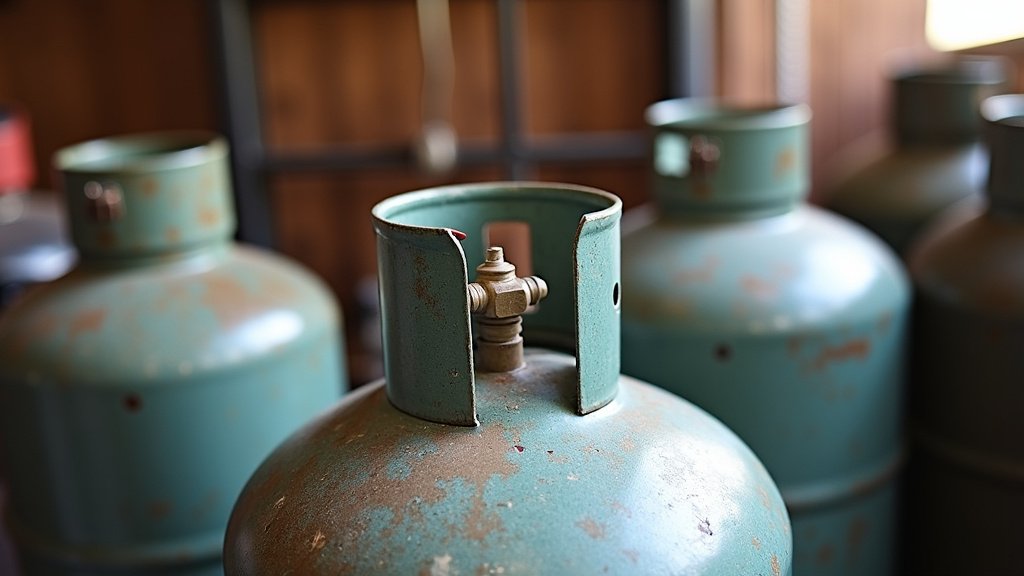
Before and after each use, and certainly before storing, take a moment to inspect your tank. Check for any signs of damage, such as dents, rust, or corrosion on the tank itself. Pay close attention to the valve and connections. Look for frayed hoses, cracks, or loose fittings. If you see any signs of damage, do not use the tank.
If you ever smell propane, act immediately. A strong sulfur-like odor is typically added to propane so you can detect leaks. If you smell it, turn off the tank valve, move the tank outdoors to a well-ventilated area if it’s safe to do so, and contact your propane supplier or fire department.
Conclusion
You’ve seen why storing propane tanks in your garage is a serious risk. Propane’s properties, like being heavier than air and highly flammable, combined with your garage’s environment, create a dangerous situation. Even “empty” tanks pose a threat. We found that the consistent advice from safety experts is clear: store propane tanks outdoors, upright, in a shaded, well-ventilated area, away from your home and ignition sources. Prioritizing these simple outdoor storage practices will keep you, your family, and your property safe.
Frequently Asked Questions
Can a small propane tank be stored indoors?
No, even small propane tanks, like those used for camping stoves, should not be stored indoors. They contain the same dangerous propane that is heavier than air and highly flammable, posing the same risks as larger tanks if they leak.
Does the age of a propane tank affect its safety for storage?
Yes, the age and condition of a propane tank absolutely affect its safety. Older tanks, or those with visible rust, dents, or damage, are more prone to leaks and should be inspected by a professional or exchanged immediately. Always check the recertification date on your tank.
Is it safe to store a propane tank in an attached shed?
No, an attached shed presents similar risks to a garage because it is directly connected to your home. Any leak could allow propane to enter your living space. Always choose a detached, outdoor storage location.
What should I do if I smell propane in my garage?
If you smell propane in your garage, do not turn on or off any lights, appliances, or vehicle ignitions. Open the garage door and any windows if it’s safe to do so, move the tank outdoors to a well-ventilated area if you can do so safely, then immediately call your propane supplier or the fire department from a safe distance.
How far from my house should I store my propane tank?
Safety guidelines suggest storing propane tanks at least 10 feet away from any building openings, such as doors, windows, or vents, and also 5 feet from any potential ignition sources. This distance helps ensure proper ventilation and reduces risk.
