
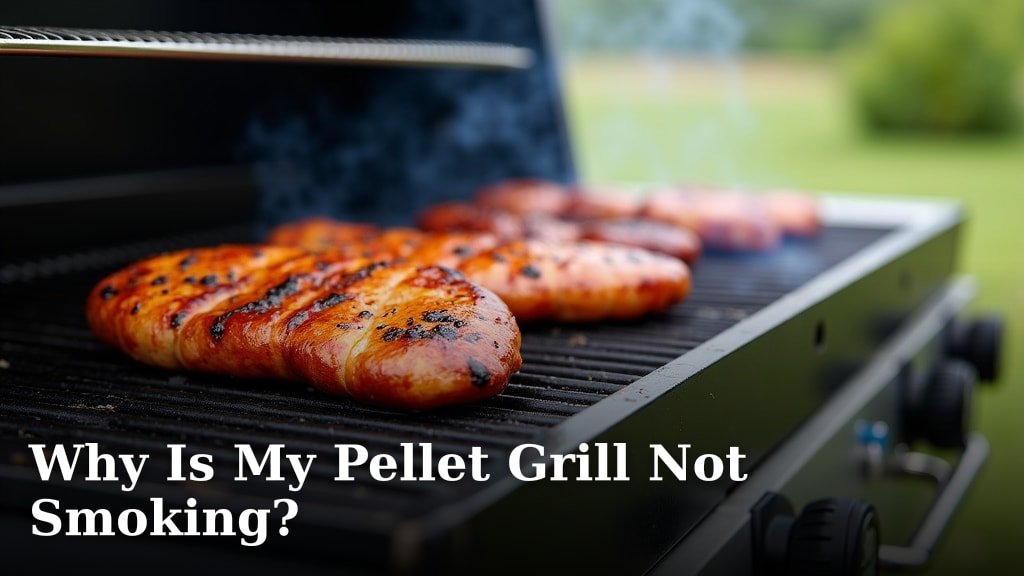
Your pellet grill isn’t smoking because of several common issues like low-quality pellets, a too-low temperature setting, or problems with the igniter or fan. We found that the main reason for a lack of smoke production is often related to how your grill maintains its heat and fuel supply.
You bought a pellet grill for that amazing smoky flavor, right? So, when you see a distinct lack of smoke, it’s natural to wonder what’s going on. We know it’s frustrating when your pellet grill isn’t performing as expected, especially when you’re looking forward to some delicious smoked food.
- Pellet quality and storage are key.
- Temperature settings impact smoke production.
- Grill maintenance matters for consistent smoke.
- Troubleshooting common parts can fix the issue.
- Different woods create different smoke.
Let’s walk through why your pellet grill might not be smoking and what you can do to fix it. We’ll help you get that beautiful blue smoke rolling again.
Addressing Your Pellet Grill’s Smoke Shortage
If your pellet grill isn’t making enough smoke, it’s usually due to common issues with pellets, temperature, or grill components. We’ll help you diagnose and fix these problems.
The Quality and Condition of Your Pellets
Think of pellets as the heart of your smoke flavor. If they’re not right, your grill won’t smoke properly. Poor quality or improperly stored pellets are frequently the culprit.
Understanding Pellet Quality
Have you ever considered where your pellets come from? We found that high-quality pellets are made from 100% hardwood with no fillers or binding agents. Cheaper pellets might have bark, softwoods, or additives that burn poorly and produce less smoke.
When pellets don’t burn cleanly, they produce more ash and less of that desirable blue smoke. You might get a lot of white, acrid smoke, which isn’t what you want for your food.
Impact of Moisture on Pellets
Pellets are like sponges. They absorb moisture from the air very easily. Wet pellets don’t burn efficiently; they smolder and often produce very little smoke, or sometimes just steam.
Always store your pellets in an airtight container in a dry place. If you hear a “pop” sound as they burn, or see lots of steam, your pellets might be too wet.
Many grill manufacturers recommend checking your pellet bag for signs of moisture. Clumping or a sawdust-like consistency can indicate water damage.
Temperature Settings and Smoke Production
This is where things get a bit scientific, but don’t worry, we’ll keep it simple. Your grill’s temperature setting plays a huge role in how much smoke it makes. There’s a sweet spot for maximum smoke production.
The “Smoke Zone” Explained
Pellet grills are designed to produce the most smoke at lower temperatures, typically between 180°F and 225°F. This range is often called the “smoke zone” or “cold smoke” setting.
At these lower temperatures, pellets smolder rather than fully combust. This smoldering creates that beautiful, flavorful blue smoke. When you increase the temperature, the pellets burn hotter and faster, producing less smoke and more heat.
If you set your grill to a high temperature, say 350°F or more, don’t expect much smoke. The grill is prioritizing heat generation over smoke creation at that point.
Fluctuating Temperatures and Smoke
Your pellet grill works by feeding pellets into a burn pot and using a fan to control combustion. It cycles through feeding pellets and letting them burn down to maintain a target temperature. This cycling can affect smoke output.
We found that newer grills have more advanced controllers that try to keep the temperature very steady. However, older models or basic controllers might have wider temperature swings. These swings can lead to periods of less smoke.
Component Malfunctions Affecting Smoke Output
Sometimes the issue isn’t with your pellets or settings, but with a part of the grill itself. Like any machine, parts can wear out or become dirty. We’ll look at the key components.
Issues with the Igniter
The igniter is what gets your pellets burning in the first place. If it’s not working correctly, your pellets might not light at all, or they might not light consistently. This can result in a lack of sustained smoke.
A faulty igniter might not heat up enough to get a good, steady burn. You might see pellets just charring or producing very wispy, weak smoke. Check your owner’s manual for igniter troubleshooting steps.
Auger and Pellet Delivery Problems
The auger is a spiraled rod that feeds pellets from the hopper into the burn pot. If the auger gets jammed or isn’t turning correctly, pellets won’t reach the burn pot. No pellets, no smoke!
We’ve seen cases where a foreign object, like a piece of wood or a clump of wet pellets, can jam the auger. Always ensure your pellets are free from debris before loading them into the hopper.
The Role of the Fan and Airflow
The induction fan supplies oxygen to the burn pot. It’s crucial for combustion and for pushing the smoke out. If the fan isn’t working right, you’ll have problems.
A weak fan might not provide enough oxygen, causing pellets to smolder inefficiently. A fan that’s too strong might cause pellets to burn too quickly, reducing smoke production. Dust and grease can also build up on fan blades, hindering performance.
Maintaining Your Grill for Optimal Smoke
Regular maintenance is like giving your grill a health check-up. It ensures all parts are working as they should and prevents many common problems, including a lack of smoke.
Cleaning the Burn Pot
Ash and unburnt pellet residue can build up in the burn pot. This creates a barrier that prevents new pellets from igniting properly and restricts airflow. We found that a dirty burn pot is a common reason for poor smoke production.
Always clean out the burn pot before each cook, or at least every few cooks. A small shop vacuum works wonders for this. A clean burn pot allows for consistent, clean combustion.
Hopper and Chute Cleaning
Pellet dust and small debris can accumulate in the hopper and pellet chute over time. This can impede the flow of pellets to the auger, leading to an inconsistent supply.
Periodically empty your hopper and vacuum out any dust. This prevents auger jams and ensures a smooth, continuous flow of fuel.
Troubleshooting Checklist: Get Your Smoke Back!
Okay, let’s put it all together. Here’s a quick checklist to help you diagnose why your pellet grill isn’t smoking.
- Check your pellets: Are they dry and high-quality?
- Verify temperature settings: Are you in the “smoke zone” (180-225°F)?
- Inspect the burn pot: Is it clean and free of ash?
- Listen for the igniter: Do you hear it heating up during startup?
- Watch the auger: Is it turning and feeding pellets?
- Listen for the fan: Is it running consistently?
Comparing Pellet Types for Smoke Flavor
Different wood types produce different smoke flavors and even different smoke amounts. Knowing this can help you choose the best pellets for your desired outcome (BBQ Guys).
| Pellet Type | Smoke Profile | Best for… |
|---|---|---|
| Hickory | Strong, bold smoke | Beef, pork, game meats |
| Apple | Mild, slightly sweet fruit smoke | Pork, poultry, fish |
| Mesquite | Very strong, earthy smoke | Beef, lamb, chili |
| Cherry | Mild, fruity, reddish smoke ring | Pork, poultry, fish, baking |
| Oak | Medium, classic BBQ smoke | Beef, poultry, fish |
You can see how much variety there is! Experiment with different types to find your favorite. Just remember, a lack of smoke often means a mechanical issue, not just a flavor preference.
When to Call for Professional Help
You’ve tried all the troubleshooting steps, and your pellet grill still isn’t smoking. What now? Sometimes, it’s best to call in the experts.
If you suspect a faulty controller board, a wiring issue, or a burnt-out motor, it might be time to contact your grill’s manufacturer or a qualified service technician. Tampering with electrical components can be dangerous.
Many manufacturers have excellent customer support. They can often walk you through more advanced diagnostic steps over the phone, or help you arrange for repairs. Don’t hesitate to reach out if you’re stumped.
Conclusion
You’ve got the tools now to diagnose why your pellet grill isn’t smoking. From checking your pellets for moisture to ensuring your grill’s components are clean and functioning, these steps will help you restore that essential smoky flavor. Don’t let a lack of smoke ruin your BBQ plans. By following our advice, you can quickly identify and fix common issues, ensuring your next cook is a smoky success. Get back to enjoying perfectly smoked meats by putting these tips into action today!
Frequently Asked Questions
Why is my pellet grill making white smoke instead of blue smoke?
White, acrid smoke often indicates incomplete combustion, usually due to wet or low-quality pellets. It can also mean your grill hasn’t reached its optimal temperature yet. Aim for thin, wispy blue smoke, which provides the best flavor.
Can the type of wood pellets really affect smoke production?
Yes, different wood types can influence how much smoke is produced and its quality. Some woods, like hickory or mesquite, naturally produce more intense smoke. Ensure you’re using 100% hardwood pellets designed for grilling to get consistent results.
How often should I clean my burn pot to ensure good smoke?
For optimal smoke production and grill performance, you should clean your burn pot every 2-3 cooks, or after each long smoking session. Ash buildup restricts airflow and prevents pellets from burning efficiently, leading to less smoke.
My grill lights, but there’s still no smoke. What’s wrong?
If your grill lights but produces no smoke, check your temperature setting first. You might be operating above the “smoke zone” (180-225°F). Also, confirm your pellets are dry and high-quality, as wet pellets can smolder without producing visible smoke.
Is it normal for a pellet grill to produce less smoke at higher temperatures?
Absolutely. Pellet grills are designed to produce significant smoke at lower temperatures, where pellets smolder. As you increase the temperature for searing or baking, the pellets burn more completely, generating more heat and significantly less smoke.
