
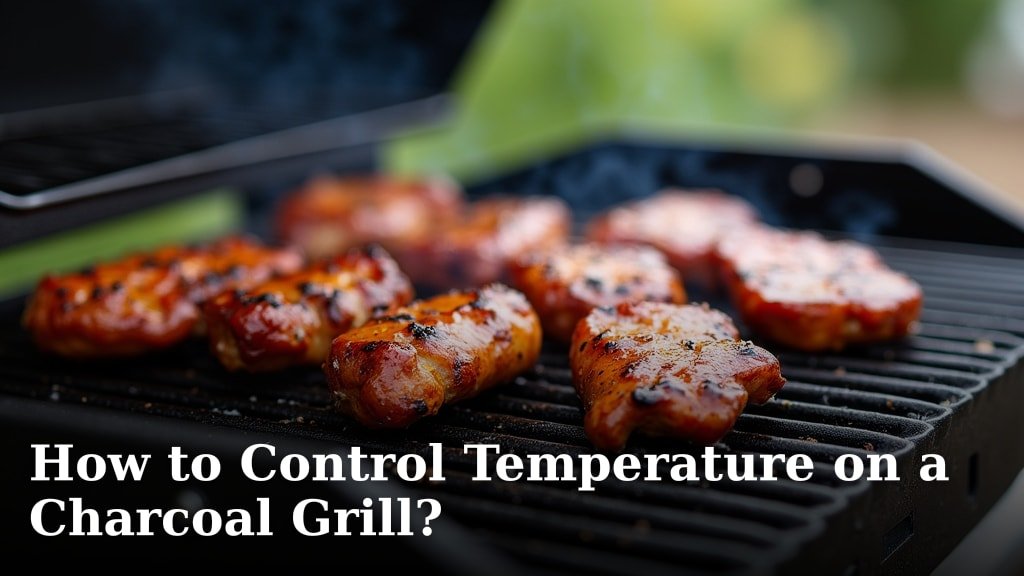
To control temperature on a charcoal grill, you adjust the air vents. More oxygen means hotter coals. Less oxygen makes them cooler. It’s all about managing that airflow.
Getting your grill to the perfect temperature can feel tricky at first. You want that juicy steak or those tender ribs cooked just right, don’t you? We found that mastering your vents is the secret weapon for consistent heat.
- Adjust air vents to change heat.
- More air makes the grill hotter.
- Less air makes it cooler.
- Use a thermometer to monitor temperature.
- Practice makes perfect grill master.
Ready to become a charcoal grilling pro? Let’s walk through exactly how to control temperature on a charcoal grill, step by step.
Mastering Your Charcoal Grill’s Heat
Controlling the heat on your charcoal grill is simpler than you might think. It really comes down to managing the airflow. More air means more heat; less air means less heat. This guide will show you how.
Think of your grill like a fireplace. You control the flames by adjusting how much air gets to the burning wood. A charcoal grill works the same way.
The Role of Air Vents in Temperature Control
Your charcoal grill has at least two sets of vents. You’ll find one set on the lid (the top vent) and another on the bottom (the bottom vent). These are your primary temperature controls.
The top vent lets hot air escape, creating a vacuum that pulls in fresh air from the bottom vent. The bottom vent feeds oxygen to your coals. It’s a delicate balance.
Understanding Top Vents
The top vent primarily controls how much hot air leaves your grill. When you open it wider, more hot air escapes. This draws more oxygen up through the coals from the bottom vent.
We’ve found that leaving the top vent at least partially open is always a good idea. Closing it completely can smother your fire and create a bitter, smoky flavor.
Understanding Bottom Vents
The bottom vent is where the magic happens. This is your main control for feeding oxygen to the coals. Think of it as the gas pedal for your fire.
When the bottom vent is wide open, your coals get a lot of oxygen. They burn hotter and faster. When it’s mostly closed, they get less oxygen, burning cooler and slower.
Initial Setup for Temperature Success
Before you even light a match, a little setup goes a long way. This ensures you can hit your target temperature and hold it steady. Don’t skip these first steps.
Preheating your grill correctly also helps avoid temperature spikes later on. You want a steady, even heat.
Charcoal Arrangement Matters
How you arrange your charcoal impacts heat distribution. There are a few common methods, each suited for different cooking styles. You’ll use these for either direct or indirect heat.
For direct heat, spread coals evenly across the bottom grate. This is great for searing or quick cooks. For indirect heat, pile coals on one side or in a ring. This creates a cooler zone for roasting (National Barbecue Association).
The Chimney Starter Advantage
Using a chimney starter is one of the best ways to get your coals going. It lights them evenly and quickly. This means you get a consistent heat right from the start.
You avoid using lighter fluid, which can give your food an off-flavor. Just newspaper and coals, and you’re good to go in about 15-20 minutes.
Achieving and Maintaining Your Desired Temperature
Now that your coals are hot, it’s time to fine-tune the temperature. This is where your vents truly come into play. It takes a little practice to get it just right.
Monitoring your grill’s temperature with a reliable thermometer is essential. The thermometer built into your grill lid might not always be accurate. We’ve found that a separate probe thermometer gives you the best readings.
Adjusting Vents for Heat Changes
Here’s the core principle: to increase heat, open the vents more. To decrease heat, close them more. But remember, small adjustments are key.
If you need to raise the temperature, open both top and bottom vents a little more. Wait 10-15 minutes, then check your thermometer. If you need to lower it, close them a bit.
| Desired Temperature | Bottom Vent | Top Vent | Notes |
|---|---|---|---|
| High Heat (400°F+) | Wide Open | Wide Open | Searing, quick cooking. |
| Medium Heat (325-375°F) | Half to 3/4 Open | Half Open | Grilling chicken, vegetables. |
| Low Heat (225-275°F) | Mostly Closed | Slightly Open | Slow cooking, smoking. |
The Impact of Lid Position
Always cook with the lid closed as much as possible, especially when trying to maintain a consistent temperature. Opening the lid too often lets out a lot of heat and smoke.
Every time you open the lid, you lose valuable heat. It can take several minutes for your grill to recover. So, peek less and trust your thermometer more.
Troubleshooting Common Temperature Issues
Even seasoned grillers run into temperature snags. Don’t worry if your grill isn’t cooperating perfectly. We’ve all been there. Here are some common problems and solutions.
A little patience and understanding of how your grill works can solve most issues. It’s a learning process.
Temperature Too High
If your grill gets too hot, resist the urge to panic. Your first step is to close the bottom vent significantly. This cuts off oxygen to the coals.
You can also slightly close the top vent, but never all the way. If it’s still too hot, remove a few coals, but this should be a last resort. Remember to always use heat-safe gloves.
Temperature Too Low
When your grill isn’t hot enough, open both your bottom and top vents wider. This will give your coals more oxygen and allow more hot air to draw through.
If your coals seem to be dying out, you might need to add a few more pre-lit coals. Do this carefully. Don’t just dump cold coals onto the existing fire.
Your Charcoal Grilling Temperature Checklist
To help you keep track, here’s a quick checklist for controlling your charcoal grill’s temperature:
- Check your fuel: Ensure enough charcoal for the cook.
- Start with a chimney: Light coals evenly for best results.
- Position your vents: Set them based on your desired heat.
- Use a reliable thermometer: Monitor actual grill temperature.
- Adjust gradually: Make small vent changes, then wait.
- Keep the lid closed: Avoid opening it unnecessarily.
Conclusion
You now have the knowledge to confidently control your charcoal grill’s temperature. Remember, it all comes down to managing those vents and understanding airflow. Small, patient adjustments are key. Don’t be afraid to experiment a little; that’s how you learn your grill’s quirks. We found that consistency comes with practice.
With a reliable thermometer and these tips, you’ll be cooking perfectly every time. Go forth and grill with confidence! Your taste buds (and your guests) will thank you.
Frequently Asked Questions
How long does it take for grill temperature to change after adjusting vents?
You should allow 10-15 minutes for your grill’s temperature to respond to vent adjustments. Charcoal changes heat slowly. Patience is important to avoid over-correcting.
Should I ever close the top vent completely?
No, you should almost never close the top vent entirely. This can suffocate your fire. It also traps stale smoke, which can give your food a bitter taste.
Can adding new charcoal lower my grill’s temperature?
Yes, adding unlit, cold charcoal will temporarily lower your grill’s temperature. It’s best to add pre-lit coals if you need to extend your cooking time. This maintains a more stable heat.
Why is my grill thermometer inaccurate?
Many built-in lid thermometers are not very accurate. They measure the temperature at the top of the dome, not at grate level where your food cooks. We found using a separate, reliable probe thermometer gives you the best reading.
What’s the easiest way to get my grill to high heat quickly?
To achieve high heat fast, ensure both your top and bottom vents are wide open. This maximizes airflow to your coals. Starting with a full chimney of hot, lit charcoal also helps immensely.
