
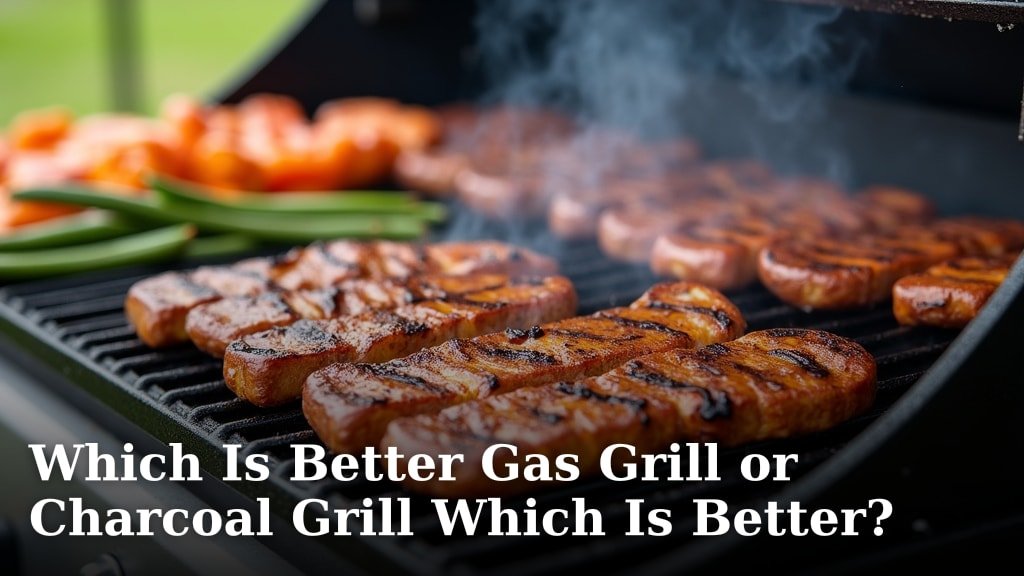
Choosing between a gas grill or charcoal grill depends on your priorities, but for many, the convenience and quick heat-up time of a gas grill make it the better choice. Charcoal grills offer a unique smoky flavor, yet they require more effort and time to get started.
There isn’t a universally “better” option; it truly comes down to your grilling style and preferences. Do you value speed and easy cleanup, or are you chasing that classic, smoky taste? We found that each type offers distinct advantages, catering to different outdoor cooking needs and tastes. Consider what matters most for your backyard barbecues.
- Gas grills offer convenience and precise temperature control.
- Charcoal grills provide an authentic smoky flavor.
- Gas grills heat up faster and are easier to clean.
- Charcoal grills can reach higher temperatures for a good sear.
- The “better” choice depends on your personal grilling priorities.
Let’s walk through the key differences between these two popular grilling methods, helping you decide which one is right for your home.
Gas Grill vs. Charcoal Grill: Which Is Right For Your Backyard?
Deciding between a gas grill and a charcoal grill comes down to your priorities. We found that gas grills offer unmatched convenience, while charcoal grills deliver a unique flavor profile.
The Convenience Factor: Why Gas Grills Often Win
When speed and ease are top concerns, gas grills really shine. You simply turn a knob, press a button, and you’re ready to cook. This instant gratification is a major draw for many.
Startup Time and Heat Control
A gas grill heats up in minutes, often reaching optimal cooking temperature in just 10-15 minutes. This means you can decide to grill spontaneously, without much fuss. We found that the burners allow for precise temperature control, similar to your kitchen stove. You can easily adjust zones for direct or indirect cooking, perfect for different foods.
Temperature control on a gas grill is incredibly straightforward. If you need to raise the heat, just turn up a burner. If you need to lower it, turn it down. This makes cooking complex meals or delicate items much easier. You can go from searing steaks to gently cooking vegetables with a few twists of a dial.
Cleanup and Maintenance
Gas grills are generally much easier to clean. There’s no ash to deal with. After cooking, you simply turn up the heat to burn off any food residue, then brush the grates clean. The drippings collect in a removable tray that you can empty later. We found this process saves a lot of time and effort.
Regular maintenance for a gas grill mostly involves cleaning the grates and emptying the grease tray. You’ll also want to check the gas lines and connections periodically for safety (National Fire Protection Association).
The Flavor Factor: The Allure of Charcoal
For many grill masters, the smoky taste of food cooked over charcoal is irreplaceable. This distinct flavor is what keeps charcoal grills popular, despite their extra demands.
Achieving the Signature Smoky Taste
Charcoal imparts a specific flavor that gas grills can’t quite replicate. The smoke from the burning charcoal, and the drippings hitting the hot coals, create compounds that infuse into your food. This is often described as a more authentic BBQ experience. We found that the high heat capability of charcoal also helps create a fantastic sear on meats.
To enhance this smoky flavor even more, you can add wood chips or chunks directly to the coals. Different types of wood, like hickory or mesquite, will impart different flavors, letting you customize your meal (Barbecue Industry Association).
High Heat Searing Capabilities
Charcoal grills can reach much higher temperatures than most gas grills. We found that some models can hit upwards of 700°F (370°C). This intense heat is perfect for achieving that desirable crust, or “sear,” on steaks, burgers, and other meats. The Maillard reaction, responsible for that delicious browned surface, happens best at high temperatures.
While gas grills can sear, charcoal often does it better and faster. If you love a perfectly seared steak with a juicy interior, a charcoal grill might be your preferred tool. It takes practice to master, but the results can be truly rewarding.
The Commitment: Time, Effort, and Skill
Grilling with charcoal is more of an event, requiring a bit more investment in time and skill. It’s not just about cooking; it’s about the process.
The Art of Starting Charcoal
Getting a charcoal grill ready takes time. You need to arrange the coals, light them, and wait for them to ash over and reach the right temperature. This can take anywhere from 20-40 minutes. We found that a chimney starter can speed up this process, but it’s still not instant like a gas grill.
Controlling the heat on a charcoal grill also requires more finesse. You adjust temperature by moving coals, opening or closing vents, and raising or lowering the cooking grates. This takes practice and a good understanding of how airflow affects heat. It’s a hands-on experience that some people truly enjoy.
The Cleanup After the Cookout
After the cooking is done, you’re left with ash. This needs to be disposed of safely once it’s completely cooled. We found this step adds to the overall cleanup time. Grates on charcoal grills can also get very dirty and often require more vigorous scrubbing.
Many charcoal grill owners consider the cleanup part of the charm. It’s the ritual, the effort, and the payoff of delicious food. If you dread dealing with ash and soot, a gas grill might be a better fit.
Cost Considerations: Initial Purchase and Ongoing Expenses
When budgeting for a grill, think about both the upfront cost and the long-term running expenses. We found there can be significant differences here.
Initial Investment
Generally, basic charcoal grills are less expensive to buy than basic gas grills. You can find a decent charcoal kettle grill for under $100. Gas grills, especially those with multiple burners and features, typically start around $200-$300 and can go much higher. However, you can also find very high-end charcoal grills that cost a lot.
The price difference narrows when you compare similar quality levels. A high-quality charcoal smoker might cost as much as a mid-range gas grill. It really depends on the brand, materials, and features you’re looking for.
Fuel Costs Over Time
Over the long run, the cost of fuel can add up. Propane tanks for gas grills typically cost around $20-$30 for a refill and can last for several cooking sessions. Bags of charcoal can range from $10-$25, and you might use a whole bag or more for a single long cookout, especially if you’re doing low-and-slow BBQ. We found that for frequent grilling, gas often proves to be more economical per use.
If you grill once a week, the fuel cost difference becomes more noticeable. If you only grill a few times a year, the fuel cost is less of a factor compared to the initial purchase price.
Grill Type Comparison: At a Glance
To help you weigh the pros and cons, here’s a quick comparison of gas and charcoal grills.
| Feature | Gas Grill | Charcoal Grill |
|---|---|---|
| Startup Time | Fast (10-15 min) | Slow (20-40 min) |
| Temperature Control | Precise and easy | Requires skill/practice |
| Flavor Profile | Clean, consistent | Smoky, authentic BBQ |
| Cleanup | Easy (no ash) | More effort (ash disposal) |
| Searing Capability | Good | Excellent (higher temps) |
| Fuel Cost (per use) | Generally lower | Generally higher |
| Initial Cost | Higher | Lower |
Your Grilling Checklist: What Matters Most To You?
Think about these questions as you make your decision. Your answers will guide you to the right grill for your lifestyle.
- Are you looking for maximum speed and convenience for weeknight meals?
- Is the classic smoky BBQ flavor absolutely essential for your grilling experience?
- Do you enjoy the hands-on process of tending to a fire and mastering heat control?
- How much time are you willing to dedicate to cleanup after each grilling session?
- What’s your budget for both the grill and ongoing fuel expenses?
- How often do you plan to grill, and for how many people typically?
Conclusion
Ultimately, the “better” grill is the one that best fits your lifestyle and grilling aspirations. If you crave instant meals and easy cleanup, a gas grill is
