
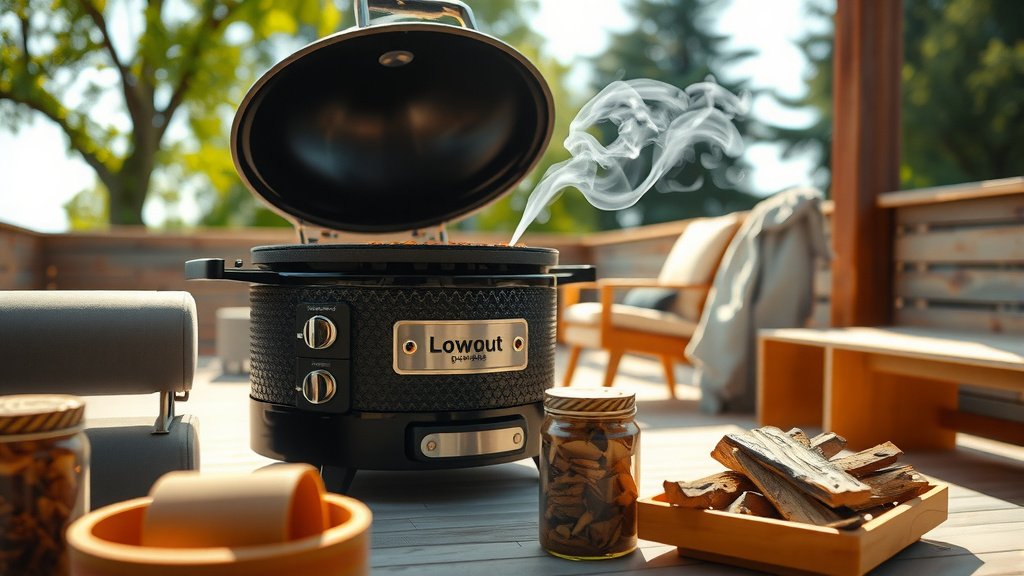
To use a smoker grill, you first select your fuel, prepare your meat, and then stabilize your unit’s temperature before adding food and maintaining consistent heat for hours.
The core process involves maintaining a low, consistent temperature and creating flavorful smoke to infuse your food slowly and gently.
Here’s a quick look at what you will learn:
- Understand the basics of how a smoker grill works to cook food.
- Discover which type of smoker grill might be best for your cooking style.
- Learn the crucial steps for preparing your meat and setting up your smoker.
- Gain tips on how to manage temperature and smoke for optimal results.
- Identify essential tools and common pitfalls to ensure smoking success.
How To Use A Smoker Grill?
Using a smoker grill means mastering low and slow cooking, infusing foods with deep, smoky flavors through careful temperature and smoke management.
Do you dream of tender ribs or succulent pulled pork? A smoker grill can make those dreams come true. It’s a rewarding cooking method that takes time and a little patience. But don’t worry, we’re here to guide you every step of the way.
What Exactly Is a Smoker Grill?
Think of a smoker grill as a special oven designed for low-temperature cooking. It uses indirect heat and wood smoke to cook food. Unlike grilling, which is fast and hot, smoking is a marathon, not a sprint.
Many experts say this method breaks down tough meat fibers. This process makes them incredibly tender and juicy (Meathead Goldwyn, AmazingRibs.com).
Why Do People Love Smoked Food So Much?
It’s all about the flavor, isn’t it? Smoking adds a unique depth to food. You get a savory, earthy taste that you simply cannot get from other cooking methods. It’s a taste that brings people together.
The Magic of Low and Slow
Cooking at lower temperatures for longer times transforms food. Tough cuts of meat become fork-tender. Flavors deepen as the smoke slowly penetrates the protein. It’s a truly transformative experience for your taste buds.
Choosing Your Smoker Grill: A Quick Look
Smoker grills come in many shapes and sizes. Each type has its own quirks and benefits. What works for one person might not be right for another.
We found that understanding the differences helps you choose wisely. Think about your budget, space, and how much hands-on effort you want to put in.
| Smoker Type | Fuel Source | Key Benefit | Effort Level |
|---|---|---|---|
| Pellet Smoker | Wood Pellets | Set-and-forget temperature control | Low |
| Charcoal Smoker | Charcoal, Wood Chunks | Classic smoky flavor, traditional feel | Medium |
| Electric Smoker | Electricity, Wood Chips | Very easy to use, consistent heat | Low |
| Propane Smoker | Propane, Wood Chips | Quick to heat up, good temperature stability | Medium |
Getting Started: Your First Smoke
Ready to light that fire? Let’s walk through the initial steps. Don’t be intimidated; it’s easier than you might imagine.
Picking Your Fuel: Wood Matters
The wood you use impacts the final flavor. We found that different woods pair best with different foods. For instance, oak and hickory are strong, great for beef and pork. Fruitwoods like apple and cherry add a milder, sweeter smoke, good for poultry and fish.
Prepping Your Meat: A Flavor Foundation
Before it hits the smoke, your meat needs some love. This often means applying a dry rub or a brine. A rub creates a flavorful crust. A brine keeps the meat moist. Many chefs use both for a flavor punch.
Setting Up Your Smoker: The Essential Steps
Every smoker is a bit different, but some steps are universal. First, you might need a water pan. This adds moisture, keeping the meat from drying out. It also helps stabilize the smoker’s temperature.
Next, get your temperature probes ready. One for the smoker air, one for the meat itself. Accuracy is key here.
Temperature Control: The Heart of Smoking
This is where the magic truly happens. Low and slow means holding a steady temperature. For most smoking, you’re aiming for 225-275°F (107-135°C). We found that consistency prevents dry, tough meat.
Adding Smoke: Not Too Much, Not Too Little
When do you add the wood? Usually, once your smoker is at temperature. A common pitfall is too much smoke too early. This can make food taste bitter. Aim for a “thin blue smoke,” a sign of clean, good combustion.
The Smoking Process: Monitoring and Patience
Once your food is in, step back a bit. Resist the urge to constantly open the lid. “If you’re looking, it’s not cooking,” as the old saying goes. Every peek lets out heat and smoke.
You’ll use those temperature probes to track progress. The meat probe tells you when it’s done. The smoker probe helps you maintain heat.
What’s the “Stall”?
About halfway through cooking, you might notice the meat’s internal temperature stops rising. This is called “the stall.” It happens because moisture evaporating from the meat cools the surface. Just be patient. It will push through!
The Critical Resting Period
Once your meat reaches its target internal temperature, remove it. But don’t slice it yet! Tent it loosely with foil and let it rest for 30 minutes to an hour. This allows juices to redistribute, leading to a much more tender and moist result. Research shows this step significantly improves texture (Cook’s Illustrated).
Essential Tools for Your Smoking Success
Having the right gear makes a difference. Here’s a quick list to get you started:
- Good Meat Thermometer: A reliable instant-read thermometer is a must for checking internal meat temperatures.
- Smoker Temperature Probe: To monitor the ambient temperature inside your smoker.
- Heat-Resistant Gloves: For handling hot grates or meat safely.
- Long Tongs and Spatula: For moving food without burning yourself.
- Spray Bottle: For spritzing meat with apple cider vinegar or juice to keep it moist.
Common Mistakes New Smokers Make
Everyone makes mistakes, especially when learning something new. Here are a few to watch out for:
Forgetting to Preheat
Just like your oven, your smoker needs to reach its target temperature before food goes in. This ensures stable cooking from the start.
Over-Smoking
Too much wood or using the wrong type can give food a bitter taste. Less is often more with smoke.
Opening the Lid Too Often
Each time you open the lid, you lose heat and smoke. This prolongs cooking time and affects temperature stability. Trust your probes!
Not Accounting for the Wind or Cold
Weather affects your smoker’s performance. On a cold or windy day, your smoker will struggle to maintain heat. Plan accordingly!
Conclusion
Using a smoker grill is an enjoyable journey. It blends science with culinary art. You’re not just cooking; you’re creating a truly special meal. Remember to focus on consistent temperature, good smoke quality, and patience. With these steps, you’ll be serving up incredibly flavorful, tender food in no time. Happy smoking!
Frequently Asked Questions About Smoker Grills
What is the ideal temperature range for smoking most meats?
Most meats smoke best between 225°F and 275°F (107°C-135°C). This range allows for slow cooking and maximum smoke absorption without drying out the food.
How long does it typically take to smoke a brisket?
Smoking a full brisket can take anywhere from 8 to 16 hours, sometimes even longer. The exact time depends on the brisket’s size, the smoker’s consistency, and the desired tenderness. It’s truly done when it probes tender, not just by time or temperature.
Should I use wood chips or wood chunks for smoking?
Wood chips are ideal for shorter smoking times or for adding a lighter smoke flavor, often used in electric smokers. Wood chunks burn longer and produce more consistent smoke, making them better for longer cooks in charcoal or offset smokers.
Is it necessary to use a water pan in a smoker?
Using a water pan is highly recommended for most smoking. It helps maintain moisture in the cooking chamber, preventing meat from drying out. It also helps stabilize temperature fluctuations within the smoker, creating a more consistent cooking environment.
How do I prevent my smoked meat from tasting bitter?
To avoid bitter-tasting meat, focus on achieving “thin blue smoke” rather than thick white smoke. Thick white smoke often indicates incomplete combustion and can impart a harsh flavor. Also, avoid over-smoking, especially in the first few hours, and ensure proper airflow in your smoker.
