
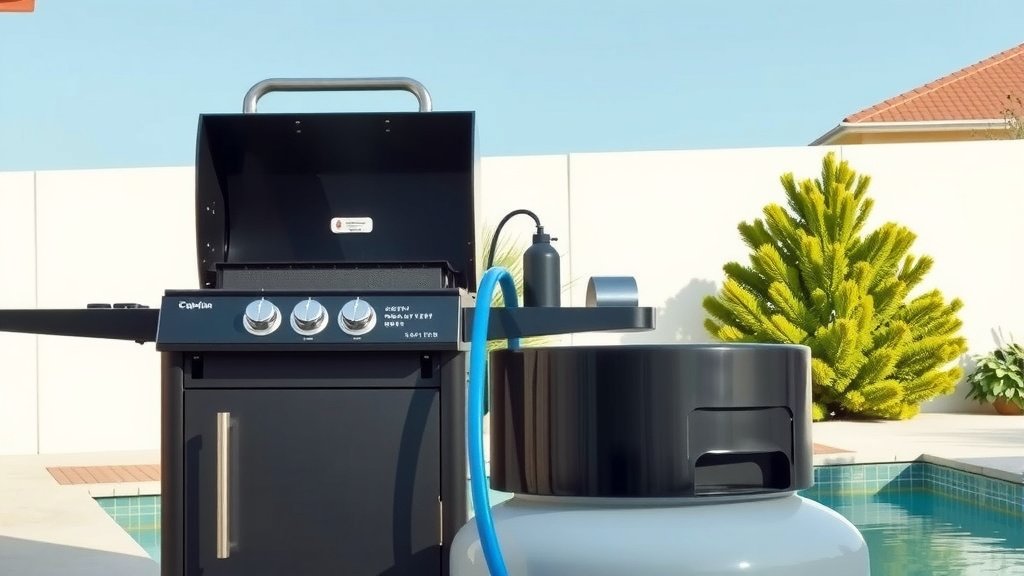
To connect a propane tank to a gas grill, first ensure both tank and grill valves are off, then align the tank’s valve with the grill’s regulator, and hand-tighten the connector clockwise until it’s snug.
Always perform a leak test with soapy water after connection by brushing it over the connections and looking for bubbles, which indicate a leak and require immediate attention.
- Get ready for grilling by understanding your propane tank and grill parts.
- Safety is first; always check for leaks with soapy water after connecting.
- Connect the tank by hand-tightening the regulator until it’s snug, but do not overtighten.
- Know when to disconnect safely and how to store your tank correctly.
How To Connect A Propane Tank To A Gas Grill?
Connecting a propane tank to your gas grill is a straightforward task when you know the steps and focus on safety. You simply align the grill’s regulator hose with the tank valve and hand-tighten it clockwise until secure.
Why Knowing This Connection is Important
Understanding how to connect your propane tank properly is not just about convenience; it’s about safety and delicious meals. A correct connection prevents gas leaks, which can be very dangerous. You want your grill to work safely, right?
A loose connection can lead to low flame or no flame at all, spoiling your BBQ plans. Many experts say a secure fit is key for optimal grill performance (NFPA guidelines).
Propane Tank Basics You Need to Know
Most gas grills use a standard 20-pound propane tank. These tanks feature an Overfill Protection Device (OPD) valve, which is a safety mechanism. You’ll notice it has three lobes on the hand wheel.
Always make sure your tank is upright and on a level surface before you begin. This helps with stability during the connection process.
Understanding Your Grill’s Regulator
Your grill’s regulator is the part that connects to the propane tank. Its job is to control the gas pressure coming from the tank. Without it, the gas flow would be too high for safe grilling.
The regulator hose usually has a large plastic or metal hand nut. This nut is designed to screw onto the tank’s valve easily.
Safety First: What to Do Before You Start
Before you even touch the tank or the grill, stop and think about safety. We found that most grilling accidents are preventable with simple checks. Is your grill on a stable surface?
Ensure your grill is outdoors and in a well-ventilated area. Never try to connect a tank indoors or in enclosed spaces. You need plenty of fresh air around you.
Safety Checklist Before Connecting
Taking a moment for this short checklist saves stress later. It helps you catch potential issues before they become problems.
- Ensure the grill’s burner control knobs are all in the “OFF” position.
- Confirm the propane tank valve is completely closed (turn clockwise).
- Check the regulator hose for any visible cracks, cuts, or damage.
- Verify the tank is upright and stable on a flat, non-combustible surface.
Step-by-Step Guide to Connecting Your Propane Tank
Ready to get grilling? Follow these simple steps. It’s like fastening a seatbelt – once you know how, it becomes second nature.
Step 1: Position the Tank Safely
Place the propane tank on the designated spot on your grill or next to it. Make sure it stands upright and cannot tip over easily. Most grills have a special shelf or ring for the tank.
Step 2: Check the Valve and Hose
Remove any plastic dust cap from the tank valve. Inspect the connection point on both the tank and the regulator hose. You’re looking for debris or damage that might prevent a good seal.
Step 3: Hand-Tighten the Regulator
Align the regulator’s connector with the tank valve. The threads are designed for a specific fit, so it should go on smoothly. Turn the large hand nut clockwise, tightening it by hand.
We found that hand-tightening is sufficient. Do not use wrenches or tools, as this can damage the valve or the regulator. A snug fit is what you’re aiming for.
Step 4: Confirm a Secure Fit
Once you’ve hand-tightened it, give the connection a gentle tug. It should feel firm and not wobble. This confirms you have a secure mechanical connection.
Testing for Leaks: A Must-Do Step
This step is non-negotiable. Skipping the leak test is like driving without a seatbelt. Leaks can be very dangerous. Research often connects gas leaks with potential fire hazards (CDC).
How to Perform the Leak Test
Mix a small amount of liquid dish soap with water in a spray bottle or cup. Make a sudsy solution. With the tank valve closed and all grill knobs off, spray or brush this solution generously over the tank valve and regulator connection.
Now, slowly open the propane tank valve. Watch the connection point. If you see bubbles forming, even small ones, you have a leak. Close the tank valve immediately.
If you see bubbles, re-tighten the connection and test again. If bubbles still appear, do not use the grill. We found that a faulty regulator or tank valve may need replacing.
Troubleshooting Common Connection Issues
Sometimes things don’t go perfectly, and that’s okay. What if your grill doesn’t light after connecting the tank? Or the flame seems very low?
First, check that the tank valve is fully open and all grill burner knobs are off before you light it. Many experts say a common mistake is not fully opening the tank valve.
If the flame is low, try resetting your grill’s regulator. Turn off the tank valve and all grill burners. Disconnect the regulator. Wait a minute, then reconnect and open the tank valve slowly. This often fixes low flow issues.
When to Call for Help (or Replace Parts)
If you consistently find leaks, or if the regulator or hose shows damage, it’s time for new parts. Do not try to repair a damaged regulator or hose yourself. These components are not meant for DIY fixes.
If you suspect a problem with the tank itself, contact your propane supplier. They can inspect the tank for you.
Disconnecting Your Propane Tank Safely
When the tank is empty or you need to store it, disconnecting is simple. First, turn off all the grill burner knobs. Next, turn the propane tank valve clockwise until it’s completely closed. This stops the gas flow.
Once the valve is closed, unscrew the regulator’s hand nut counter-clockwise. Store the regulator hose in a clean, protected spot. Place a dust cap on the tank valve if you have one.
Propane Tank Storage Tips
Proper storage ensures your tank stays safe when not in use. Never store a propane tank indoors or in a garage. It should always be kept outdoors, in a well-ventilated area, away from direct sunlight.
Keep the tank upright and on a stable surface. Protect it from getting knocked over. Also, keep it away from sources of ignition like pilot lights or electric motors.
| Safe Storage Practices | Unsafe Storage Practices |
|---|---|
| Outdoors in a shaded, well-ventilated area | Indoors, in garages, sheds, or basements |
| Upright on a stable, flat surface | Lying on its side, unstable, or near stairs |
| Away from ignition sources (grills, heaters) | Near heat sources, open flames, or electrical appliances |
| With valve closed and dust cap in place | Valve left open, no protective cap |
Conclusion
Connecting a propane tank to your gas grill is a basic yet very important skill for any griller. By following these steps and prioritizing safety, you’ll ensure your grilling sessions are both enjoyable and worry-free. Remember to always perform a leak test and handle your tank with care. Now, go fire up that grill and enjoy some delicious food!
How often should I check my propane tank hose and regulator?
We found that you should visually inspect your propane tank hose and regulator for cracks or damage before each use. A thorough leak test with soapy water should be done at the start of each grilling season or any time you reconnect the tank.
Can I use an old propane tank with a new grill?
Yes, you can typically use an older propane tank with a new grill, as long as the tank is in good condition, certified, and has an OPD (Overfill Protection Device) valve. Always check the tank’s inspection date, as older tanks may need recertification.
What should I do if I smell gas around my grill?
If you smell gas around your grill, immediately turn off the gas supply at the propane tank valve and all burner control knobs on the grill. Move away from the grill and do not attempt to light it or use any electrical devices nearby. Contact your propane supplier or a qualified technician for inspection.
Why is my grill’s flame very low, even with a full tank?
A very low flame, even with a full tank, often indicates that your grill’s regulator has tripped its safety device, limiting gas flow. This can happen if the tank valve is opened too quickly. To fix this, turn off the tank and all grill knobs, disconnect the regulator, wait a minute, then reconnect and open the tank valve very slowly.
Is it safe to store a spare propane tank next to my grill?
Storing a spare propane tank next to your grill is generally safe, provided both are outdoors, in a well-ventilated area, and away from any ignition sources. Ensure the spare tank is kept upright and the valve is tightly closed, ideally with a dust cap in place. Never store it in an enclosed space.
