
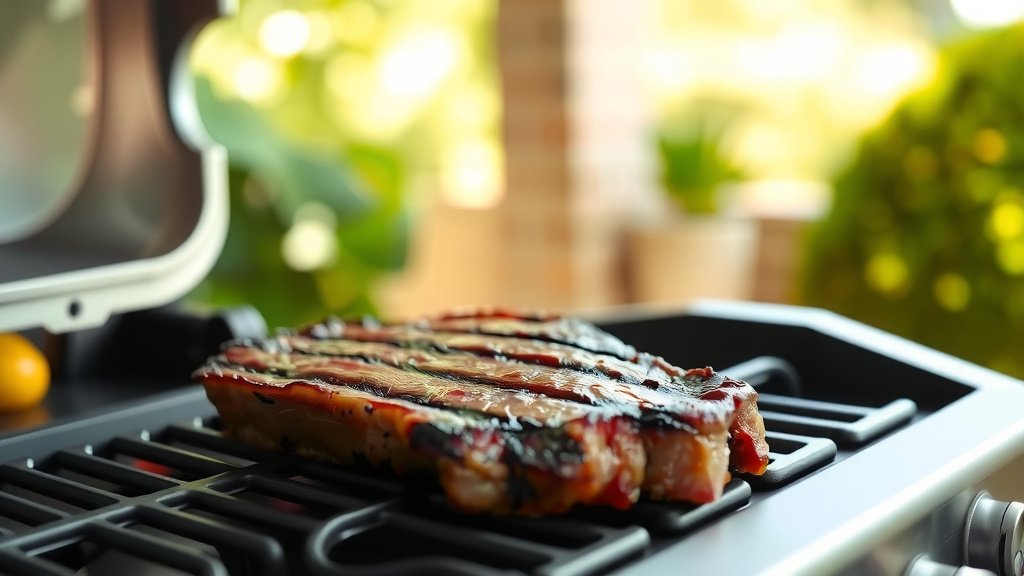
Grilling tri-tip on a gas grill typically takes 30-40 minutes for medium-rare, using a two-zone cooking method.
Aim for an internal temperature of 130-135°F before resting, ensuring a tender and juicy result for your grilled tri-tip.
Here’s what you need to know quickly about grilling tri-tip:
- Achieve a medium-rare tri-tip in 30-40 minutes on a gas grill.
- Always use a two-zone heat setup for best results.
- Sear the meat first for flavorful crust, then finish with indirect heat.
- Target an internal temperature of 130-135°F before resting.
- Rest your tri-tip for 10-15 minutes and slice against the grain.
How Long To Grill Tri Tip On Gas Grill?
You can expect your tri-tip to grill for about 30 to 40 minutes for a perfect medium-rare, utilizing a combination of direct and indirect heat zones on your gas grill.
This timing ensures a flavorful crust with a tender, juicy interior, making your grilling efforts truly worthwhile.
Understanding Tri-Tip: The Basics
The tri-tip cut, often called “triangle roast,” is a wonderfully flavorful piece of meat from the bottom sirloin.
It’s lean yet surprisingly tender when cooked correctly, making it a favorite for many grill enthusiasts.
It has a distinct grain that changes direction, which is important to remember later for slicing.
Essential Tools for Grilling Tri-Tip
Before you even light your grill, gather a few key items. These tools will make your tri-tip grilling experience much smoother.
Having the right equipment on hand prevents last-minute scrambling and helps you stay focused.
Why a Meat Thermometer is Your Best Friend
A reliable instant-read meat thermometer isn’t just helpful; it’s really essential for tri-tip.
Guessing the internal temperature can easily lead to overcooked or undercooked meat, which nobody wants.
Many experts say that using a thermometer is the single most important step for perfectly grilled meat (USDA).
Prepping Your Tri-Tip for Grilling
Proper preparation sets the stage for a great grilled tri-tip. Don’t skip these steps; they truly make a difference.
Taking a few extra minutes here will pay off in a big way when it’s time to eat.
First, pat your tri-tip dry with paper towels. This helps achieve a nice, crispy sear later on the grill.
Trim any excessive fat, leaving about a quarter-inch cap if you like some extra flavor and moisture.
Season generously! A simple mix of salt, black pepper, and garlic powder works wonders, or use your favorite rub.
To Marinate or Not to Marinate?
Some grillers love a good marinade for tri-tip, while others prefer a simple dry rub. It’s all about personal taste.
Marinating for a few hours can add moisture and another layer of flavor, especially with acidic ingredients.
However, a quality tri-tip with a dry rub allows its natural beefy flavor to shine through beautifully.
Setting Up Your Gas Grill for Success
This is where the magic of two-zone grilling comes into play, a technique widely recommended by grilling experts.
It lets you sear at high heat and finish cooking at a lower, more controlled temperature.
Achieving the Perfect Two-Zone Heat
On one side of your grill, set burners to high for direct heat. On the other side, turn the burners off or to low for indirect heat.
Close the lid and allow your grill to preheat for about 10-15 minutes until the direct side is very hot.
This setup gives you flexibility to manage the cook, whether you’re searing or gently bringing the temperature up.
The Searing Phase: Locking in Juices
Place your seasoned tri-tip directly over the high-heat burners. You want to hear that satisfying sizzle!
Sear for about 4-6 minutes per side, creating a beautiful, dark crust. This step builds incredible flavor, called the Maillard reaction.
Don’t move the meat too much during this time; let that crust develop evenly on each surface.
Indirect Grilling: The Slow Cook
After searing, move the tri-tip to the indirect heat side of your grill. Close the lid to allow the internal temperature to rise slowly and evenly.
This is where your meat thermometer becomes truly essential. You are aiming for your desired doneness.
We found that for a perfectly grilled tri-tip, pulling it off the grill at the right internal temperature is key.
Here’s a general guide:
| Doneness Level | Target Internal Temperature (Off Grill) | Resting Temperature |
|---|---|---|
| Rare | 120-125°F | 125-130°F |
| Medium-Rare | 130-135°F | 135-140°F |
| Medium | 135-140°F | 140-145°F |
| Medium-Well | 140-145°F | 145-150°F |
| Well-Done | 150°F+ | 155°F+ |
Remember, the meat’s temperature will continue to rise a few degrees after it leaves the grill (this is called carryover cooking).
Plan to pull your tri-tip off when it’s about 5 degrees below your target final temperature.
Resting Your Tri-Tip: Don’t Skip This!
Once your tri-tip reaches the desired temperature, take it off the grill and place it on a cutting board.
Tent it loosely with aluminum foil and let it rest for at least 10-15 minutes. This step is non-negotiable.
Resting allows the juices, which have been pushed to the center during cooking, to redistribute throughout the meat, making it incredibly moist and tender.
Slicing Tri-Tip Against the Grain
This is another crucial step for tenderness. Tri-tip has two distinct grain directions.
Look closely at the meat; you’ll see the muscle fibers running in two different patterns.
Slice the meat into two sections along where the grain changes, then slice each section thinly against its respective grain.
Slicing against the grain shortens the muscle fibers, making each bite much more tender and easier to chew.
Troubleshooting Common Tri-Tip Grilling Issues
Even seasoned grillers face challenges. Maybe your tri-tip cooked too fast, or perhaps it came out a bit dry.
If your tri-tip cooked too quickly, your direct heat might have been too high or you didn’t move it to indirect heat soon enough.
For dryness, it often means it was overcooked past its target internal temperature, or you skipped the resting step.
Learning from each grilling experience helps you hone your skills for the next cookout.
Quick Tips Checklist for Grilling Tri-Tip
- Preheat your grill thoroughly to create distinct hot and cooler zones.
- Always use a reliable meat thermometer for accuracy.
- Pat the meat dry before seasoning for a better sear.
- Don’t forget to rest the tri-tip after grilling.
- Slice against the grain in two separate sections for tenderness.
- Have fun and experiment with seasonings you love!
Flavor Enhancements for Your Tri-Tip
Want to take your tri-tip to the next level? Consider finishing it with a compound butter while it rests, or a drizzle of chimichurri sauce.
You can also smoke your tri-tip on the gas grill using a smoke box with wood chips for added smoky flavor.
Many experts say that post-grill flavor additions can truly elevate the dish, offering another layer of deliciousness (Cook’s Illustrated).
Conclusion
Grilling tri-tip on a gas grill is a rewarding experience, yielding a flavorful and tender cut of beef that’s perfect for any gathering.
By understanding the importance of a two-zone setup, using a meat thermometer, and following the crucial steps of resting and proper slicing, you’re set for success.
It takes a little practice, but with these tips, you’ll soon be grilling tri-tip like a true pro, impressing everyone with your skill.
FAQs About Grilling Tri-Tip on a Gas Grill
How do I know if my gas grill is hot enough for searing?
Your gas grill is ready for searing when you can only hold your hand about an inch above the grates for 2-3 seconds. The grates should look visibly hot, often with a slight reddish glow.
Can I grill a frozen tri-tip directly on a gas grill?
No, you should always thaw your tri-tip completely before grilling. Grilling from frozen will lead to uneven cooking, with the outside potentially burning before the inside reaches a safe temperature.
What kind of wood chips can I use for smoking tri-tip on a gas grill?
For beef like tri-tip, popular choices for wood chips include oak, hickory, mesquite, or even a mix with some apple or cherry for a sweeter note. Soak them in water for about 30 minutes before putting them in a smoke box.
My tri-tip came out tough; what did I do wrong?
Tough tri-tip usually means one of two things: it was either overcooked (cooked past medium-rare/medium) or it was sliced with the grain, not against it. Remember to check internal temperature and carefully identify the grain direction.
Is it possible to reverse sear a tri-tip on a gas grill?
Yes, absolutely! Reverse searing tri-tip on a gas grill works wonderfully. Cook the tri-tip first over indirect heat until it’s about 10-15°F below your target temperature, then sear it quickly over high direct heat for that beautiful crust.
