
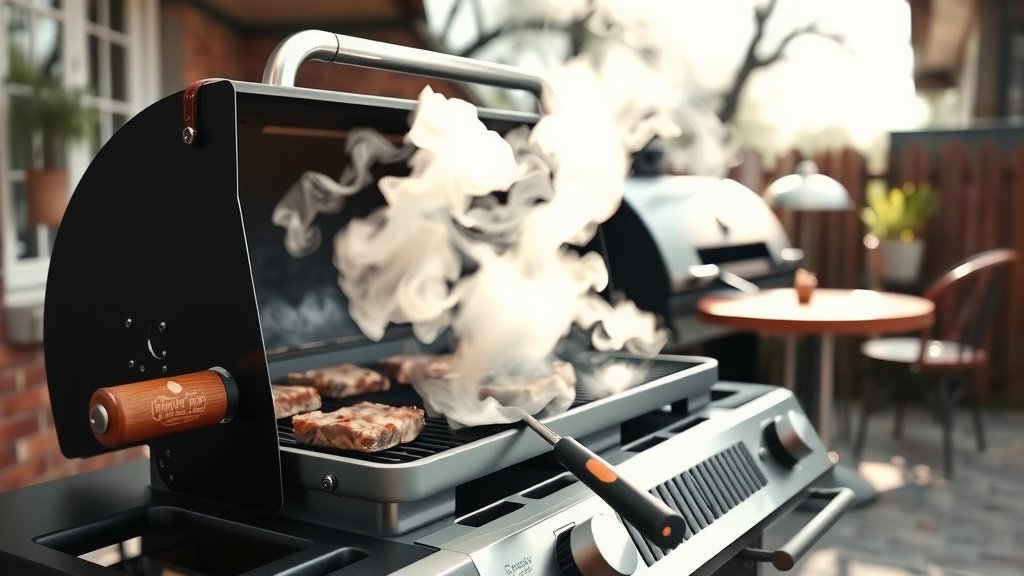
You can smoke meat on a gas grill by creating indirect heat and using a smoke box or foil packet filled with wood chips.
This method allows you to infuse delicious smoky flavors into your food without needing a dedicated smoker, using your existing gas grill setup.
TL;DR
- Set up your gas grill for indirect heat, usually turning on only one or two burners.
- Use a smoke box or a foil packet with pre-soaked or dry wood chips for your smoke source.
- Place this smoke source directly over a lit burner to generate a steady stream of smoke.
- Maintain a consistent low temperature, typically between 225°F and 275°F, for slow cooking.
- Always monitor the meat’s internal temperature with a reliable thermometer for both safety and perfect doneness.
How Do You Smoke Meat On A Gas Grill?
To smoke meat on a gas grill, you set up your grill for indirect cooking, add a source of smoke from wood chips, and maintain a low, steady temperature.
This approach transforms your everyday gas grill into a surprisingly effective smoker, delivering rich, flavorful results.
Why Smoke on a Gas Grill?
Perhaps you love the idea of smoked brisket but don’t own a dedicated smoker. That’s totally fine!
Many grill enthusiasts find that using a gas grill for smoking is a fantastic way to try new flavors and expand their cooking skills.
It offers great temperature control, which is often easier than managing a charcoal fire, allowing for a more relaxed smoking experience.
Getting Started: What You Will Need
Before you begin, gathering your tools makes the process smoother. Think of it like a chef prepping their station.
You’ll need a gas grill, wood chips or chunks, a smoke box or heavy-duty aluminum foil, and a reliable meat thermometer.
Don’t forget the meat you wish to smoke! Selecting the right cut is a great first step (USDA).
Choosing Your Wood Chips or Chunks
The type of wood you choose dramatically impacts your food’s final flavor. It’s like picking a spice blend.
Many experts say to match the wood to the meat. For example, hickory for pork or apple for poultry.
We found that different woods offer varying intensities, from mild and fruity to strong and bold (Traeger Grills).
| Wood Type | Flavor Profile | Best Paired With |
|---|---|---|
| Apple | Sweet, Mild, Fruity | Pork, Poultry, Fish |
| Cherry | Mild, Sweet, Fruity | Beef, Pork, Chicken |
| Hickory | Strong, Smoky, Bacony | Beef, Pork, Ribs |
| Mesquite | Very Strong, Earthy | Beef, Lamb, Game |
| Oak | Medium, Classic Smoke | Beef, Lamb, Brisket |
Preparing Your Wood Chips: Soak or Not Soak?
This is a debate in the smoking world, a real “to be or not to be” moment for wood chips.
Some people suggest soaking wood chips for 30 minutes to an hour to create more smoke and prevent them from burning too quickly.
However, we found that unsoaked chips might start smoking faster and produce a cleaner smoke (Oklahoma Joe’s Smokers).
Experiment to see which method works best for your grill and desired smoke level.
Setting Up Your Gas Grill for Smoking
The key to smoking on a gas grill is creating indirect heat. You want to cook slowly, not sear.
Typically, you’ll turn on just one or two burners on one side of your grill, leaving the area directly under the meat unlit.
This helps maintain a lower, more stable temperature, essential for true smoking.
Adding Your Smoke Source
Once your grill is set, it’s time for the smoke. This is where the magic happens!
If using a smoke box, fill it with your chosen chips and place it directly on the grates over a lit burner.
For a DIY option, wrap chips in a foil packet, poke holes in it, and place it over a lit burner.
The chips will start to smolder and release beautiful, aromatic smoke.
Maintaining Consistent Temperature
Temperature control is perhaps the most challenging, yet crucial, aspect of smoking.
Aim for a range between 225°F and 275°F. Your grill’s built-in thermometer might not be perfectly accurate.
Many experts recommend using a separate, reliable grill thermometer placed near your meat for precise readings (AmazingRibs.com).
Adjust the lit burners’ settings slightly to keep your temperature steady, like fine-tuning a guitar.
Monitoring Your Meat’s Internal Temperature
Never guess when your meat is done. A good quality digital meat thermometer is your best friend.
You’ll want to track the internal temperature to ensure food safety and achieve optimal tenderness.
Research often connects specific internal temperatures with proper doneness for different cuts (FoodSafety.gov).
For example, pork shoulder usually aims for 195-205°F for shreddability.
The Infamous “Stall”
Don’t be surprised if your meat’s temperature stops rising for a few hours. This is known as the “stall.”
It’s a natural cooling effect as moisture evaporates from the surface of the meat, similar to sweat cooling your skin.
Just be patient and trust the process; it will eventually push through and continue cooking.
Resting Your Smoked Meat
Once your meat reaches its target internal temperature, remove it from the grill.
Wrap it loosely in foil and let it rest for a period, often 30 minutes to an hour for larger cuts.
This crucial step allows the juices to redistribute throughout the meat, ensuring a more tender and flavorful result.
Troubleshooting Common Smoking Issues
Sometimes things don’t go perfectly, and that’s okay. It’s part of the learning curve.
If your smoke is thin and wispy, you’re doing great. Thick, white smoke indicates burning, which can taste bitter.
If your grill temperature spikes, briefly open the lid to release some heat, then close it to stabilize.
Essential Smoking Checklist
- Gas grill with a lid
- Wood chips or chunks
- Smoke box or foil packet
- Reliable meat thermometer
- Grill thermometer for ambient temperature
- Long tongs or grilling gloves
- Spray bottle for spritzing (optional, for moisture)
- Your favorite cut of meat
Conclusion
Smoking meat on a gas grill is a remarkably accessible and rewarding culinary adventure. You don’t need fancy equipment to create deep, smoky flavors.
By understanding indirect heat, managing your smoke source, and carefully controlling temperature, you can transform everyday cuts into extraordinary meals.
So, fire up your gas grill, grab some wood chips, and prepare to impress your taste buds and those of your family and friends. Happy smoking!
Can I use wood chunks instead of chips on a gas grill?
Yes, you can use wood chunks! They generally burn slower and produce smoke for a longer period than chips, making them ideal for longer smokes. Place them in a smoke box or directly on the grates over a lit burner.
How often should I add wood chips when smoking on a gas grill?
For a noticeable smoke flavor, you’ll typically need to add wood chips every 30 to 60 minutes for the first few hours of smoking. After that, the meat will have absorbed a good amount of smoke, and you can reduce how often you add them or stop altogether for a milder flavor.
What’s the best type of meat to smoke first on a gas grill?
Many beginners find success with cuts like pork shoulder (for pulled pork) or baby back ribs. These meats are relatively forgiving and taste fantastic with a good smoke ring, making them excellent choices for your initial smoking attempts on a gas grill.
Do I need to soak wood chips for my gas grill?
While some sources suggest soaking, it’s not strictly necessary. Soaking can delay smoke production. Unsoaked chips might start smoking faster and produce a cleaner smoke. Experiment to see what results you prefer.
How do I prevent my meat from drying out while smoking on a gas grill?
To prevent your meat from drying out, maintain a consistent low temperature and consider using a water pan inside the grill if space allows. Some people also spritz their meat with apple cider vinegar or apple juice periodically to add moisture and flavor.
