
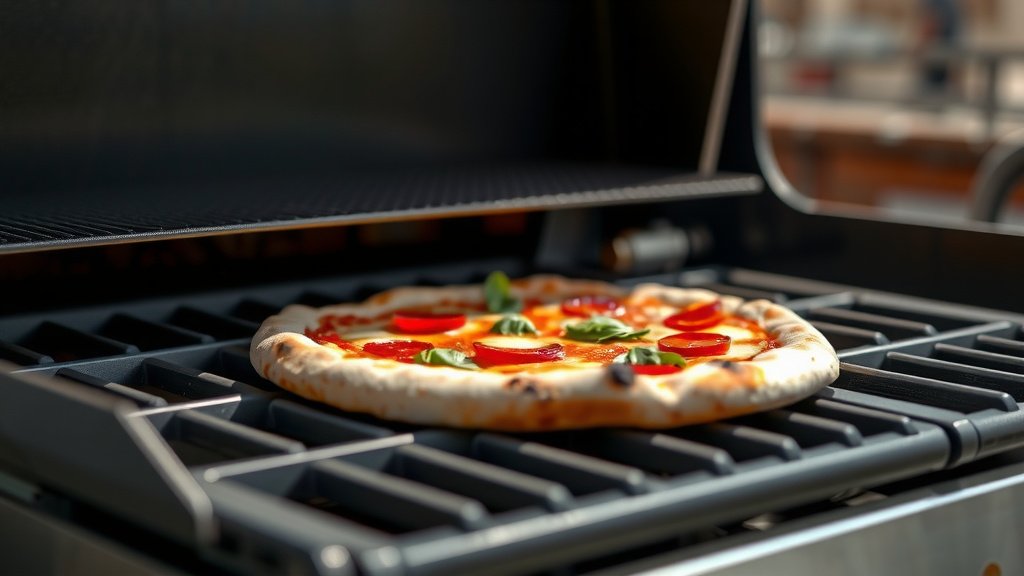
You can absolutely cook delicious pizza on a gas grill by setting up two heat zones, using a pizza stone or thick pan, and cooking it quickly at high temperatures.
This method creates a wonderfully crisp crust and bubbly cheese, rivaling your favorite brick oven pizza, right in your backyard.
- Cooking pizza on a gas grill gives you a crispy crust and perfectly melted cheese.
- You will need a pizza stone or heavy pan, plus some simple tools.
- Preheating your grill to a high temperature, around 500-550°F (260-288°C), is a must for success.
- Set up two heat zones: one direct heat side and one indirect heat side.
- Grill your pizza in stages, first cooking the bottom, then adding toppings, and finishing with indirect heat.
How Do You Cook Pizza On A Gas Grill?
Cooking pizza on a gas grill is a fantastic way to get that authentic crispy crust and perfectly melted cheese. You will use a combination of direct and indirect heat to cook your pizza quickly and evenly.
Why Grill Your Pizza?
Grilling pizza offers a unique flavor and texture that baking in a conventional oven cannot match. The intense, dry heat of the grill mimics a wood-fired oven. This heat creates a beautifully charred crust with gooey, bubbly toppings.
Plus, it keeps the heat out of your kitchen, which is great for warm weather. You get to enjoy the outdoor cooking experience while making a family favorite.
Gather Your Tools and Ingredients
Before you even fire up the grill, make sure you have everything ready. This preparation saves you stress and ensures a smooth cooking process. Think of it like a chef preparing their mise en place.
The Right Stone or Pan
A good pizza stone or heavy cast-iron pan is your best friend here. These items absorb and hold heat, giving your pizza a truly crispy bottom. A pizza peel is also incredibly helpful for transferring the pizza.
Many experts recommend a stone that fits your grill grate well. We found that a ceramic or cordierite pizza stone works best for even heat distribution. Make sure to get a stone designed for high heat.
Prep Your Ingredients
Have all your toppings ready and within reach. Think small here; finely sliced vegetables and crumbled meats cook faster. Too many toppings can make your pizza soggy and hard to handle.
Keep your sauce, cheese, and other toppings organized on a tray near the grill. This setup makes assembly quick, which is important for grill pizza.
Preheating Your Grill Correctly
Proper preheating is perhaps the most critical step for grilling pizza. You are aiming for very high temperatures to cook the pizza quickly.
Achieving High Heat
Turn all your grill burners to high and close the lid. Let the grill heat up for at least 15-20 minutes. You want the internal temperature to reach 500-550°F (260-288°C).
This intense heat quickly crisps the dough. A hot grill also prevents the dough from sticking to your pizza stone or grates. We found that a longer preheat provides more consistent results.
Setting Up Heat Zones
Once your grill is super hot, it is time to create two heat zones. Turn off one or two burners on one side of the grill. This creates an indirect heat zone.
Keep the remaining burners on high for direct heat. You will start your pizza over direct heat and finish it over indirect heat. This method prevents burning while ensuring thorough cooking (Culinary Institute of America).
Handling Your Pizza Dough
The dough is the foundation of your pizza. Choose wisely and handle it with care. You want a dough that is not too sticky and easy to work with.
Store-Bought vs. Homemade Dough
Using store-bought dough is perfectly fine and saves time. Look for fresh pizza dough in your grocery store’s bakery section. If you make your own, ensure it is at room temperature before grilling.
Many grill masters suggest a slightly drier dough for grilling. This dryness makes it easier to transfer and prevents sticking. Lightly flour your work surface and the dough.
The Art of Grilling Your Pizza
This is where the magic happens. Grilling pizza requires quick hands and careful attention. Do not walk away from your grill during this stage.
First Side Down
Carefully place your stretched dough directly onto the hot grill grates over the direct heat zone. Close the lid and let it cook for 2-3 minutes. You are looking for slight char marks and bubbles forming.
This initial cook gives the dough structure. Research often connects this step with developing a robust, chewy crust. Use tongs to lift and check the bottom.
Adding Toppings
Once the first side has some grill marks, quickly flip the dough to the indirect heat zone. Now, add your sauce, cheese, and toppings.
Work fast! You do not want the dough to get too cold. Keep your toppings light and simple. Less is often more when grilling pizza.
The Second Cook
After topping, close the grill lid again. Let the pizza cook over indirect heat for another 5-8 minutes. The exact time depends on your grill and desired crispiness.
Watch for the cheese to melt and bubble and the crust to turn golden brown. If your crust is not browning enough, you can carefully slide it back over the direct heat for a minute. Do not burn it!
Troubleshooting Common Issues
Even seasoned grillers face challenges. Knowing how to fix them will help you achieve pizza perfection.
Burned Crust
If your crust is burning too quickly, your grill might be too hot or you left it over direct heat too long. Try reducing the direct heat slightly or moving it to indirect heat sooner. A thicker pizza stone can also help.
Soggy Bottom
A soggy bottom often means your pizza stone was not hot enough. Ensure a proper, long preheat. Too many wet toppings can also contribute to this problem. Try reducing sauce or using drier ingredients.
Uneven Cooking
If one side of your pizza is cooking faster, rotate it occasionally. Most grills have hot spots, so moving your pizza can ensure a uniform cook. Keep an eye on it throughout the process.
Cleaning Up Your Grill
Once your pizza is devoured, remember to clean your grill. Burnt cheese or toppings can create flare-ups next time. Use a grill brush to scrape off any residue while the grates are still warm.
Your Pizza Grilling Checklist
- Preheat grill to 500-550°F (260-288°C) for 15-20 minutes.
- Set up two heat zones: direct and indirect.
- Flour your pizza peel generously.
- Cook dough over direct heat for 2-3 minutes.
- Flip dough to indirect heat, add toppings quickly.
- Cook with lid closed for 5-8 minutes until cheese is bubbly.
- Rotate pizza if cooking unevenly.
Conclusion
Cooking pizza on a gas grill is a rewarding experience that yields incredible results. By following these steps, setting up proper heat zones, and using the right tools, you will create a delicious, restaurant-quality pizza. Get ready to impress your family and friends with your grilling prowess. It truly transforms a simple meal into an exciting backyard adventure.
Can I use aluminum foil instead of a pizza stone on the grill?
Using aluminum foil is not recommended for grilling pizza. Foil does not retain heat well and will not give you the crispy crust you want. A pizza stone or heavy cast-iron pan is essential for proper heat transfer and a great texture.
What kind of cheese is best for grilled pizza?
Low-moisture mozzarella is ideal for grilled pizza because it melts beautifully without making the crust soggy. You can also experiment with provolone, fontina, or a blend of cheeses for different flavors. Fresh mozzarella is tasty but has high water content, so use it sparingly.
How do I prevent the pizza dough from sticking to the grill?
To prevent sticking, ensure your grill grates are clean and well-oiled before preheating. Also, dust your pizza peel and the bottom of your dough generously with flour or cornmeal. A very hot pizza stone or grate helps release the dough easily.
Can I grill frozen pizza on a gas grill?
Yes, you can grill frozen pizza on a gas grill, but it requires adjustments. Place the frozen pizza on a hot pizza stone over indirect heat. Close the lid and cook for the recommended time on the package, adding a few extra minutes. Keep a close watch to prevent burning.
Should I oil the pizza stone before putting the pizza on it?
You should generally not oil a pizza stone directly. Oiling can cause it to smoke excessively and potentially burn. Instead, rely on a properly preheated stone and a lightly floured dough to prevent sticking. The stone’s natural porosity will become seasoned over time.
