
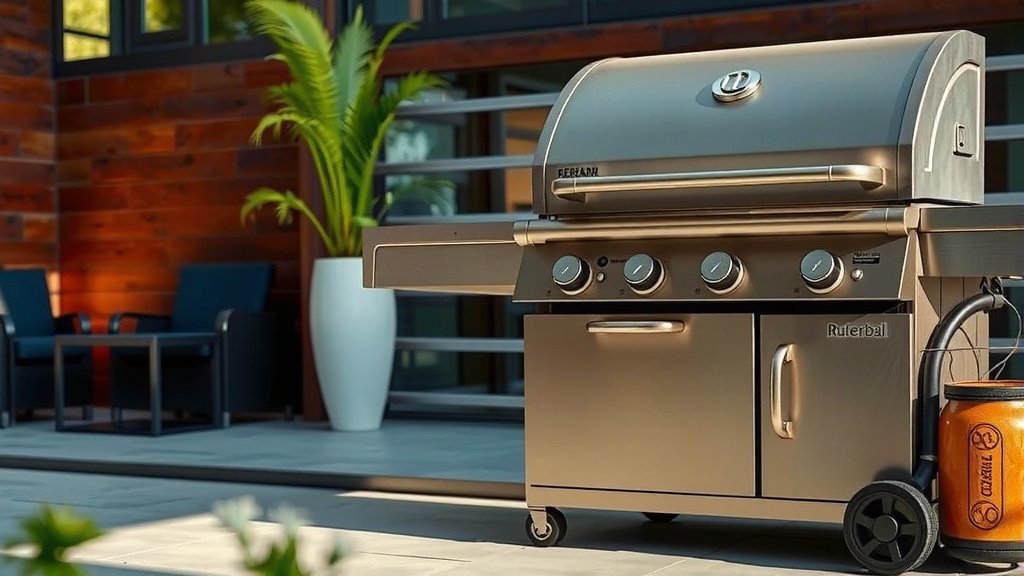
An infrared BBQ grill utilizes intense radiant heat to cook your food directly, ensuring it sears quickly and develops a delicious crust while keeping the inside wonderfully juicy.
Unlike conventional grills that use hot air, an infrared grill transfers energy through electromagnetic waves, much like the sun warms your skin, for unmatched speed and cooking consistency.
- Infrared grills use radiant heat for fast, incredibly even cooking.
- They reach much higher temperatures than traditional grills, perfect for searing.
- Food cooks quicker and often retains more moisture, staying juicier.
- You can find infrared technology in gas, electric, and even some specialty charcoal grills.
- Cleanup is often simpler thanks to fewer troublesome flare-ups during cooking.
What Is An Infrared BBQ Grill?
An infrared BBQ grill is a modern grilling appliance that cooks food using high-intensity radiant heat. It’s designed to deliver a searing hot, consistent cooking surface.
This type of grill aims to give you professional-grade results right in your own backyard, making quick work of everything from thick steaks to delicate fish.
How Does Infrared Technology Work on a Grill?
Imagine the sun warming your face on a bright day. That’s radiant heat, and it’s how an infrared grill works. It doesn’t rely on hot air to cook your food.
Instead, a ceramic or metallic panel heats up to extremely high temperatures, emitting infrared waves that directly transfer energy to your food. This direct heat transfer is incredibly efficient.
Radiant Heat vs. Convection Heat
Traditional grills primarily use convection heat. This means hot air circulates around your food, slowly cooking it.
An infrared grill focuses energy directly onto the food. It’s like standing in front of a warm fireplace versus being in a warm room; you feel the direct heat more intensely.
We found that this difference is why infrared grills cook so much faster and hotter than their conventional counterparts (Culinary Institute of America insights).
Why Choose an Infrared Grill? The Key Advantages
Thinking about a new grill? An infrared model offers some compelling benefits that might just change your grilling game. Let’s look at why many grill masters love them.
Amazing Searing Power
Do you dream of steakhouse-quality sear marks? An infrared grill delivers! It reaches incredibly high temperatures, often over 700°F, in just minutes.
This intense heat quickly creates a flavorful, crispy crust on your meats, known as the Maillard reaction, sealing in all those delicious juices.
Faster Cooking Times
Because the heat is so direct and intense, your food cooks much more quickly. This means less waiting and more eating, perfect for busy weeknights.
We found that a thick steak that might take 10-12 minutes on a traditional grill could be ready in half the time on an infrared model.
Even Heat Distribution
Have you ever had to play musical chairs with your food on the grill, searching for the “hot spots”? Infrared grills distribute heat very evenly across the cooking surface.
This uniform heat means fewer cold spots and more consistent results, helping you cook everything perfectly without constant shifting.
Fewer Flare-Ups
Grease dripping onto an open flame causes those annoying flare-ups. With infrared, the radiant heat source often shields the flames from dripping fats.
This reduces flare-ups significantly, meaning less burnt food and a safer grilling experience for you.
Juicier Food, Every Time
The rapid, intense searing creates a crust that helps lock in the natural moisture of your food. This is a huge benefit for steaks, chicken, and pork.
Many experts say that infrared cooking helps prevent meat from drying out, leaving you with tender, juicy results.
Are There Different Kinds of Infrared Grills?
When you explore infrared grilling, you’ll discover it’s not a one-size-fits-all technology. Manufacturers use it in a few different ways.
- Full Infrared Grills: These grills use infrared technology for all or most of their cooking surface. They are designed entirely around radiant heat.
- Infrared Burners on Traditional Grills: Many standard gas grills now include one or two dedicated infrared burners, often on the side or as a dedicated searing zone. This gives you the best of both worlds.
- Electric Infrared Grills: For smaller spaces or indoor use, electric infrared grills offer smokeless, high-heat cooking without propane or charcoal.
Full Infrared Grills
These grills are built from the ground up to maximize the benefits of infrared cooking. They offer the highest temperatures and most consistent radiant heat.
If searing is your absolute top priority, a full infrared grill might be what you’re looking for. They often come with a slightly higher price tag, we found.
Infrared Burners on Traditional Grills
This option is very popular. You get the familiar flexibility of traditional burners for general cooking, plus the intense heat of an infrared burner for searing.
It’s a great way to try infrared cooking without committing to a full infrared unit. You can grill burgers normally and then sear your steak on the IR zone.
Potential Drawbacks to Consider
No grill is perfect for everyone, and infrared grills do have a few things to keep in mind. They can be more expensive upfront than a basic gas grill.
Also, the intense heat means there’s a slight learning curve. You need to pay closer attention to your food to avoid burning it, especially when you first start out.
| Feature | Traditional Gas Grill | Infrared BBQ Grill |
|---|---|---|
| Primary Heat | Convection (hot air) | Radiant (direct energy) |
| Max Temperature | Often 500-600°F | Often 700-1000°F+ |
| Cooking Speed | Moderate | Very Fast |
| Searing Quality | Good, but can take time | Excellent, instant sear |
| Flare-Ups | More common | Less common |
| Moisture Retention | Good | Excellent, locks in juices |
Is an Infrared Grill Right for Your Backyard?
Still wondering if an infrared grill is a good fit for your grilling habits? Consider these points to help you decide.
- Do you prioritize perfectly seared meats and restaurant-quality crusts?
- Are you often short on time and need faster cooking solutions?
- Do you want to minimize frustrating flare-ups while grilling?
- Are you comfortable with a slightly higher initial investment for advanced technology?
- Do you enjoy experimenting with new grilling techniques and flavors?
If you answered yes to most of these questions, an infrared grill might be your next favorite kitchen tool!
Tips for Grilling with Infrared
Once you get your infrared grill, a few simple tips will help you master it quickly and enjoy all its benefits.
Preheat Properly
Infrared grills get hot fast, but you still need to preheat them. Give it about 5-10 minutes to reach its peak searing temperature.
This ensures you get that immediate, intense heat transfer when your food hits the grates.
Mind Your Cooking Time
Because these grills are so efficient, food cooks much faster. Keep a close eye on your proteins, especially at first.
You might need to adjust your usual cooking times down significantly. A good meat thermometer is always your best friend here.
Clean Up Is Easy
The high heat of an infrared grill can actually help with cleanup. Many experts recommend letting the grill run on high for a few minutes after cooking.
This intense heat will incinerate most food residue, turning it into ash that you can easily brush off. Less scrubbing for you!
Conclusion
An infrared BBQ grill offers a fantastic way to elevate your outdoor cooking. Its ability to deliver intense, even, radiant heat means faster cooking, incredible searing, and consistently juicier food.
Whether you opt for a full infrared unit or a hybrid grill with dedicated infrared burners, you’re embracing a technology that can truly transform your grilling experience. It’s an investment in quality and efficiency that many home cooks find truly rewarding.
FAQs
What kind of fuel does an infrared grill use?
Most infrared BBQ grills are gas-powered, typically using propane or natural gas. However, you can also find electric infrared models and even some specialty charcoal grills that incorporate infrared heating elements.
Can I use an infrared grill for low and slow cooking?
While infrared grills excel at high-heat searing, some models offer variable heat control that allows for lower temperatures. For dedicated low and slow cooking, like smoking briskets, a traditional offset smoker or a specific low-temperature grill might be a better choice.
Is an infrared grill healthier than a regular grill?
The health benefits are often debated. Infrared grills can reduce flare-ups, which might lessen the formation of some harmful compounds associated with burnt food. The faster cooking time also means less exposure to heat, but generally, the healthfulness depends more on what you’re cooking and how you prepare it.
Do infrared grills make food taste different?
Many people find that the intense searing capability of an infrared grill enhances the flavor of meats by creating a richer, more caramelized crust. It doesn’t impart a specific “infrared flavor,” but rather optimizes the natural flavors of the food through efficient cooking.
How do I clean an infrared grill?
Cleaning an infrared grill is often straightforward. Many recommend turning the grill to high after cooking to burn off any food residue, turning it into ash. Once cooled, you can easily brush away the ash with a stiff grill brush. Avoid using harsh chemicals that could damage the infrared emitter.
