
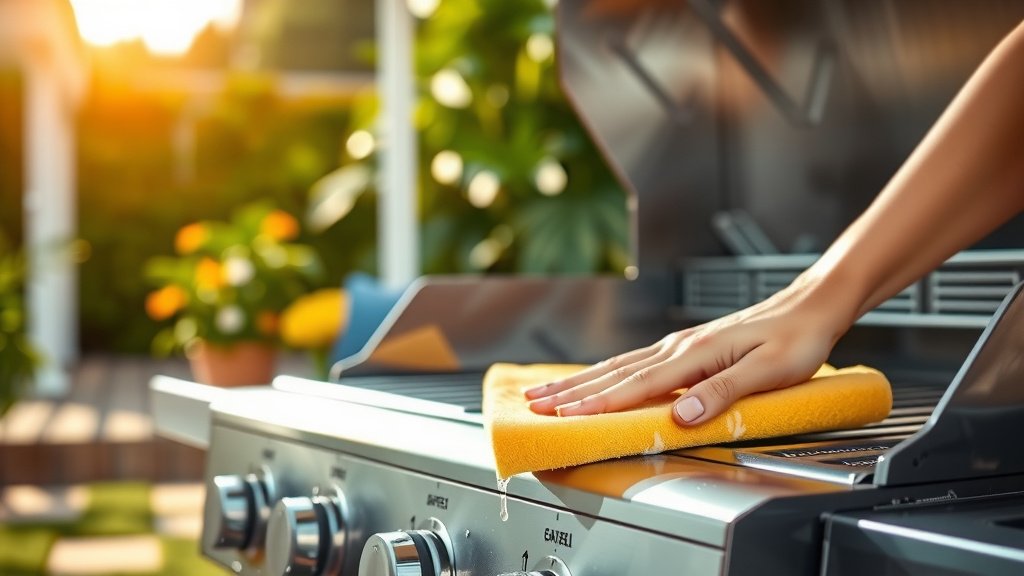
To wash your BBQ grill effectively, you’ll generally start by scraping off large food debris with a stiff brush and then degreasing the grates with warm soapy water.
For a deep clean, you might soak the grates and use specialized grill cleaners, rinsing thoroughly before drying to prevent rust and ensure your next cook is delicious.
Here’s a quick overview of how to wash your BBQ grill:
- Always let your grill cool completely before starting any cleaning.
- Scrape off leftover food bits and grease with a sturdy grill brush.
- Use warm water mixed with dish soap for general cleaning of grates and surfaces.
- For tough grime, consider specialty degreasers or a simple baking soda paste.
- Rinse all cleaned parts very well and dry them completely to keep rust away.
How To Wash BBQ Grill?
Washing your BBQ grill involves removing food residue, degreasing surfaces, and rinsing thoroughly to maintain hygiene and longevity.
The best approach often depends on the type of grill you own and the level of grime present after your cooking adventures.
Why a Clean Grill Makes All the Difference
Cleaning your grill isn’t just about appearances; it significantly impacts your grilling experience.
A well-maintained grill performs better and keeps your food tasting great every time you fire it up.
Better Tasting Food
Old food bits and burnt grease clinging to your grates can transfer unwanted flavors to your fresh ingredients.
A clean grill ensures your chicken tastes like chicken, not last week’s charred burgers, giving you a pure cooking canvas.
Longer Grill Life
Grease and food acids can corrode metal over time, leading to rust and part failure.
Regular washing helps prevent this damage, extending the life of your valuable outdoor cooking appliance (Consumer Reports).
Gathering Your Grill Cleaning Tools
Before you start, gather everything you’ll need. Having the right tools makes the job much easier and more efficient.
You probably have most of these items around your house already, ready for action.
Basic Supplies for Regular Cleaning
For routine washes, you’ll need just a few simple things. These items are your first line of defense against everyday grilling messes.
A quick clean after each use can save you a lot of effort later on.
For the Really Tough Jobs
Sometimes, your grill needs a little extra muscle to get truly clean. For those tougher cleanups, you’ll want some specialized items.
These tools and solutions help you tackle baked-on grease and stubborn stains effectively.
Step-by-Step: Washing Your Grill Grates
The grates are where all the magic happens, so they need the most attention. Here’s a simple way to wash them thoroughly.
Follow these steps for a grill that’s ready for its next meal.
Let it Cool Down First
This might seem obvious, but it’s crucial. Never attempt to clean a hot grill.
Always wait until your grill is completely cool to the touch to prevent burns and damage to your cleaning tools.
Scrape Away Loose Debris
Once cool, use a stiff wire brush or a scraper tool to remove any large pieces of food or burnt-on residue.
This initial scraping makes the later washing steps much easier (Food Network).
The Power of Soap and Water
Dish soap is a surprisingly effective degreaser for grill grates. It breaks down grease and lifts food particles.
Many experts say this simple mixture is all you need for most cleanings.
- Mix warm water with a few drops of dish soap in a bucket or spray bottle.
- Apply the soapy water generously to the grates, letting it sit for a few minutes.
- Scrub with a non-abrasive scrubber or a specialized grill sponge.
- Repeat this process until you see the grease and grime lifting away.
Rinse Thoroughly and Dry
After scrubbing, rinse the grates with clean water. Make sure no soap residue remains, as it can affect food flavor.
Then, dry the grates completely with a cloth or paper towels to prevent rust from forming (Weber Grills).
Tackling Stubborn Grease and Grime
Sometimes, soap and water aren’t quite enough for those extra-greasy situations. That’s when you bring out the big guns.
These methods are great for giving your grill a deep, restorative clean.
Effective Cleaning Solutions
There are several options for cutting through tough grease. Each has its strengths, depending on what you have on hand.
Choose the solution that best fits your cleaning needs and available products.
| Cleaning Solution | How It Works | Best For |
|---|---|---|
| Warm Soapy Water | Breaks down light grease, lifts food particles. | Regular, light cleaning. |
| Baking Soda Paste | Abrasive yet gentle, absorbs odors, lifts tough grime. | Baked-on food, stubborn stains. |
| Vinegar Solution | Cuts grease and helps sanitize. | General degreasing, removing mild rust. |
| Commercial Grill Cleaner | Strong degreasers for heavy buildup. | Heavy, caked-on grease. |
Spot-Cleaning Techniques
For isolated stubborn spots, you don’t always need to clean the entire grill. Focus your efforts where they’re most needed.
A dedicated scraper or a baking soda paste can work wonders on localized trouble spots.
Cleaning Other Important Grill Parts
Your grill is more than just its grates. The interior, exterior, and even the burners need attention too.
Neglecting these areas can affect performance and appearance.
Inside the Firebox and Exterior
The inside of your grill (the firebox) can collect grease and ash. Gently scrape down the sides into a drip pan.
For the exterior, use a mild dish soap and water solution, wiping with a soft cloth to keep the finish looking great.
Burners and Heat Shields
Carefully remove burner covers (heat shields) and clean them with a brush. Check burner ports for blockages.
Use a wire brush to gently clean burner tubes if needed, ensuring even flame distribution (BBQ Guys research).
Your Post-Cook Quick Clean Checklist
A little care right after you finish cooking goes a long way. This quick checklist keeps your grill ready for its next session.
Making this a habit will save you from bigger cleaning jobs down the line.
- Turn up the heat for 10-15 minutes to burn off food residue.
- Let the grill cool down completely.
- Scrape the grates thoroughly with your grill brush.
- Empty and clean the drip pan if it’s full.
- Wipe down exterior surfaces if they look messy.
- Cover your grill to protect it from the elements.
Preventing Rust and Keeping Your Grill Pristine
Rust is the enemy of any metal grill. Preventing it is easier than trying to remove it later.
These simple steps will help keep your grill rust-free and ready for use.
Protective Measures and Safety
After cleaning, always ensure your grates are dry. You can even apply a thin coat of cooking oil to seasoned cast iron grates.
When working with cleaners, wear gloves and eye protection to safeguard yourself from chemicals (OSHA guidelines).
Conclusion
Washing your BBQ grill properly is a fundamental part of responsible grill ownership. It protects your investment and ensures every meal is delicious and safe.
By following these straightforward steps and tips, you can enjoy a clean, efficient, and long-lasting grilling experience, making your outdoor cooking endeavors a true pleasure.
FAQ: How often should I clean my grill grates?
Many experts suggest a quick scrape after every use. A more thorough wash with soap and water is good every 2-3 months, or more often if you grill frequently or use a lot of marinades.
FAQ: Can I use oven cleaner on my BBQ grill?
While oven cleaner is very powerful, it’s generally not recommended for grill grates. It can be too harsh, potentially damaging finishes or leaving residue that could transfer to food. Stick to dedicated grill cleaners or natural solutions.
FAQ: What’s the best way to clean rusty grill grates?
For light rust, a paste of baking soda and a bit of water, scrubbed with a brass wire brush, can work. For heavier rust, some people soak grates in a vinegar solution for a few hours. Always rinse thoroughly and re-season afterwards.
FAQ: Do I need to clean under the grates too?
Absolutely! Grease and food particles can accumulate under the grates, especially in the drip pan and on heat diffusers. Cleaning these areas prevents flare-ups, maintains proper heat distribution, and keeps your grill hygienic.
FAQ: How do I store my grill after washing it?
After washing, ensure all parts are completely dry. For metal grates, a light coating of cooking oil can help prevent rust. Then, cover your grill with a good-quality, weather-resistant grill cover to protect it from rain, dust, and debris.
