
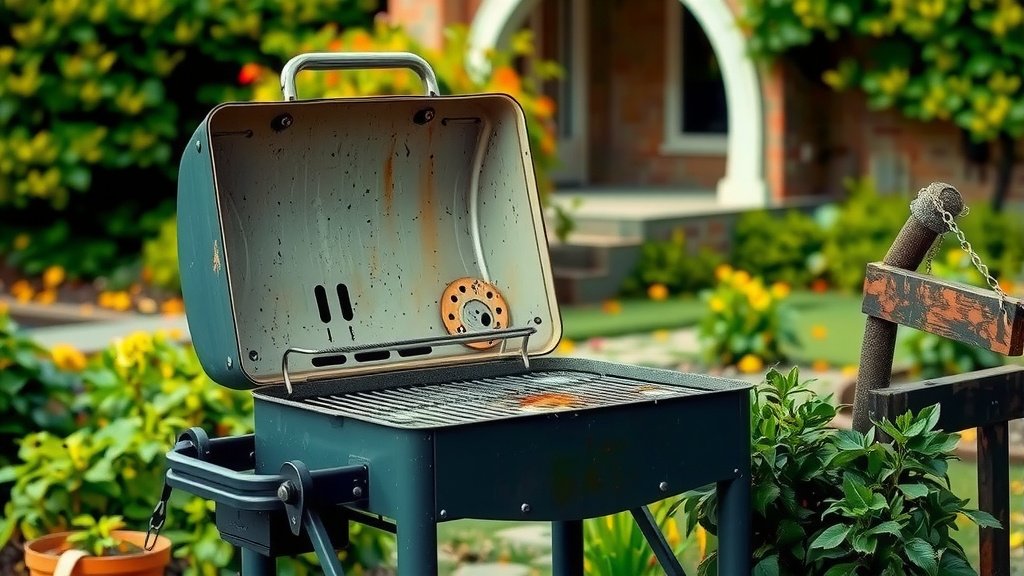
Disposing of an old BBQ grill often involves breaking it down, separating materials for recycling, and checking with your local waste management services for specific rules.
Many components like steel, aluminum, and propane tanks can be recycled, while others like plastic or wood may need regular trash collection or bulk waste pickup.
- Getting rid of your old grill starts with safety first, especially if you have a propane tank.
- You’ll need some basic tools to disassemble the grill into separate materials.
- Many parts are recyclable, including metal grates, burners, and the grill body itself.
- Always check with your local recycling center or waste facility for their specific guidelines.
- Some municipalities offer special bulk waste pickups for items like old grills.
How To Dispose Of Old BBQ Grill?
To dispose of an old BBQ grill safely and responsibly, first disconnect any propane tanks and clean the grill. Then, disassemble it to separate recyclable metals from other waste, and contact your local waste management for disposal options.
So, you’ve enjoyed countless cookouts, sizzling steaks, and smoky ribs on your beloved grill. But now, it’s seen better days, right? You’re looking at a rusty, wobbly relic, wondering, “What do I do with this old thing?” Don’t worry, we’ve all been there. Getting rid of an old BBQ grill isn’t as simple as tossing it in the bin, but it’s also not rocket science.
Let’s walk through the steps together, making sure you dispose of it properly and perhaps even help the environment. It’s all about being prepared and knowing your options.
Safety First: Before You Start
Before you even think about moving that grill, safety is key. If you have a propane grill, the most important step is disconnecting the propane tank. This tank contains flammable gas, and you don’t want any accidents.
Turn off the gas valve completely. Then, unthread the regulator from the tank. Many experts recommend storing propane tanks upright and outside, away from direct sunlight or heat, until they can be safely recycled (NFPA guidelines).
Empty and Clean Your Grill
You wouldn’t put a dirty plate back in the cupboard, right? The same goes for your grill. Make sure it’s completely empty of any ash, charcoal, or grease. Scrape off any food residue from the grates and the interior. A little elbow grease here makes the next steps much cleaner.
Empty charcoal ashes into a metal container, douse them with water, and let them cool for at least 48 hours before disposal. For grease, collect it in an old can and dispose of it with your regular trash.
Disassembly: The Breakdown Process
Okay, it’s time to get a little hands-on. Disassembling your grill might seem daunting, but it’s often straightforward. You’ll usually need a few basic tools. Think screwdrivers, wrenches, and maybe a pair of pliers.
The goal is to separate the different materials. Why? Because metals can often be recycled, which is much better than sending everything to a landfill.
What Tools Do You Need?
Gathering your tools beforehand makes the job much smoother. We found that most grills can be taken apart with a standard screwdriver set (Phillips and flathead) and an adjustable wrench. Sometimes, a socket set comes in handy for stubborn bolts.
Safety gloves are a good idea too, as old grills can have sharp edges or rusty bits. Don’t forget eye protection, just in case something springs loose.
Taking Apart Your Gas Grill
If you have a gas grill, start by removing the grates and then the heat tents or flavorizer bars. Next, carefully detach the burners. These are often held in place by a single screw or clip. Disconnect any gas lines from the main body, ensuring the propane tank is already removed.
Finally, you can usually unscrew the side tables, the main firebox, and then the cart. Some parts might be riveted, which means they won’t easily separate without drilling, but many components are bolted.
Breaking Down a Charcoal Grill
Charcoal grills are generally simpler. After cleaning out the ash, you’ll likely remove the grates, any ash catchers, and then separate the bowl from the legs. Many charcoal grills are quite basic in their construction. They often have fewer parts and simpler fasteners than their gas counterparts.
It’s usually a matter of unscrewing a few bolts to get the legs off the main body. Once disassembled, you’ll find mostly metal parts.
Recycling Your Grill Components
This is where you can really make a difference. Many parts of your old grill are recyclable. Think of it as giving your grill a second life, in a way!
Separating the materials before disposal is often the most important step for responsible recycling. It also makes it easier for recycling centers to process the materials.
Metal Recycling Options
Most grills are made primarily of steel, aluminum, or cast iron. These are all valuable scrap metals. We found that local scrap metal yards will often accept these materials. Some even pay you a small amount, which is a nice bonus!
Check their requirements; sometimes they prefer metals separated by type. The grill grates, burners, firebox, and cart frame are typically metal.
Propane Tank Recycling
You absolutely cannot throw a propane tank in the trash. It’s highly dangerous. Many places that sell propane, like hardware stores or gas stations, offer tank exchange or disposal services. Some local recycling centers also have designated drop-off points for propane tanks (EPA guidelines).
Always ensure the tank is empty before taking it for recycling, though some services might check this for you. Never try to puncture or alter a propane tank.
Other Materials: Plastics and Wood
What about the non-metal parts? Many grills have plastic wheels, handles, or side table components. Some older models might even have wooden accents. These parts usually cannot be recycled with metals.
Generally, plastic and wood components go into your regular trash, unless your local recycling program specifically accepts those types of plastics. It’s always best to check with your municipal waste authority.
Local Disposal Services: What Are Your Options?
Once you have your grill disassembled and materials separated, it’s time to find out how your community handles large item disposal. Every town or city has slightly different rules, so a quick call or visit to their website is a smart move.
You want to avoid fines for improper disposal, right? So let’s make sure you’re following the local game plan.
Here’s a quick checklist for your grill disposal:
- Disconnect and recycle propane tank.
- Empty and clean all grill components.
- Disassemble grill using basic tools.
- Separate metal parts for scrap recycling.
- Set aside non-recyclable parts for trash.
- Contact local waste management for guidelines.
Bulk Waste Pickup
Many municipalities offer a bulk waste or large item pickup service. This is often scheduled a few times a year, or you might need to schedule a special pickup for a fee. Old grills definitely fall into this category for many areas. We found that this is a convenient option if available.
Check your city or county’s waste management website for specific dates, rules, and if any fees apply for this service. You might need to place the grill (or its main parts) at the curb on a certain day.
Drop-Off Recycling Centers
Your local solid waste facility or recycling center is another great resource. They often have specific areas for scrap metal and other bulk items. Research suggests that drop-off centers are ideal for items you’ve already disassembled.
Look up their operating hours, any fees, and what types of materials they accept. Sometimes, you need to bring identification to use these facilities.
Here’s a simple guide to common grill materials and their usual disposal paths:
| Material | Typical Disposal Method | Notes |
|---|---|---|
| Propane Tanks | Exchange/Recycle at Retailer/Facility | NEVER put in regular trash. |
| Steel/Cast Iron Parts | Scrap Metal Recycling | Grates, firebox, frame. |
| Aluminum Components | Scrap Metal Recycling | Some handles, trim. |
| Plastic Parts | Regular Household Trash | Wheels, knobs, handles (unless specific local recycling applies). |
| Wooden Elements | Regular Household Trash | Some side tables or handles. |
| Ash/Grease | Regular Household Trash | Cooled and contained. |
Donation or Resale (If Usable)
What if your grill isn’t completely kaput? Perhaps it just needs a good cleaning or a minor repair. If it’s still in decent, usable condition, consider donating it to a charity or offering it for free online. Someone else might be able to give it a new home.
This is a great option for grills that are functional but you’ve just upgraded. You’d be surprised who might appreciate a gently used grill.
Conclusion
So, there you have it! Disposing of an old BBQ grill doesn’t have to be a chore. With a little planning, some basic tools, and a quick check of your local resources, you can ensure your old grill is retired responsibly. Remember to prioritize safety, separate materials, and explore recycling options.
You’re not just getting rid of an old appliance; you’re making a choice that benefits the environment. Happy grilling, and enjoy your new grill when it arrives!
Frequently Asked Questions
Can I put my old BBQ grill on the curb for regular trash pickup?
Generally, no. Most municipal trash services consider old BBQ grills as bulk waste, which requires a special pickup or disposal at a designated facility. Always check your local waste management guidelines.
How do I properly dispose of a used propane tank?
Never put a propane tank in your regular trash or recycling bin. Take empty tanks to a propane retailer for exchange or disposal, or to a hazardous waste facility that accepts them. Many hardware stores offer tank exchange programs.
Is it worth disassembling my grill for recycling?
Absolutely! Disassembling your grill allows you to separate valuable metal components (like steel, aluminum, and cast iron) which can be recycled at a scrap metal yard. This reduces landfill waste and is often the most environmentally friendly option.
What if my grill still works but I want a new one?
If your old grill is still functional, consider donating it to a local charity, community center, or offering it for free on online marketplaces. This gives it a second life and helps someone else enjoy outdoor cooking.
Are there any parts of a grill that are considered hazardous waste?
The primary hazardous component is the propane tank, due to the residual gas. Aside from that, once cleaned, most grill components are not typically considered hazardous. However, always confirm with local waste services for any specific regional regulations.
