
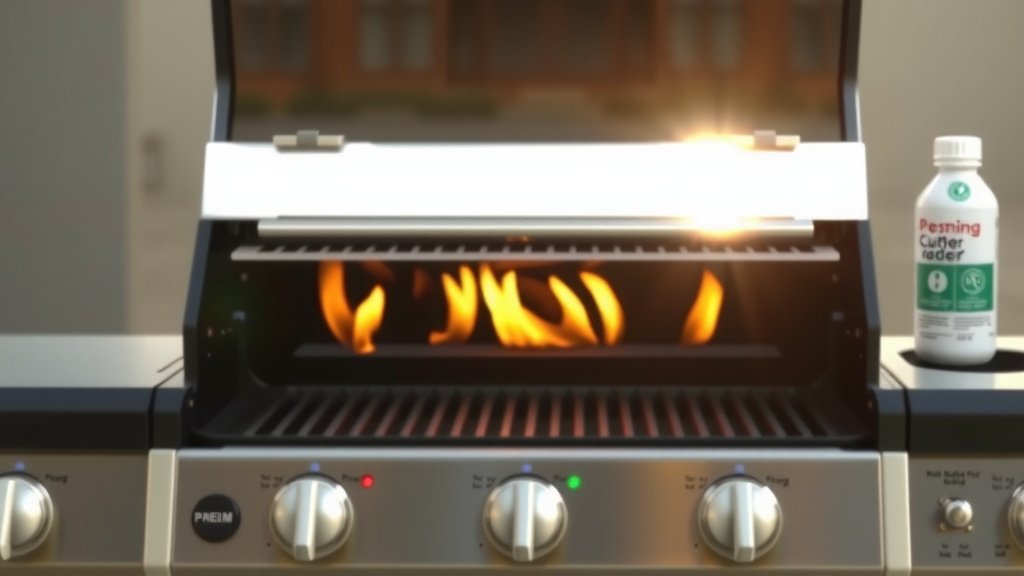
A typical propane grill can reach impressive temperatures, usually between 400°F and 600°F, making it ideal for most grilling tasks.
For intense searing, many quality propane grills will push past 700°F, with some models even touching 750°F to 800°F on their hottest spots.
Here’s a quick glance at what you’ll find in this guide:
- Discover the typical heat range your propane grill can achieve.
- Uncover the key factors that influence how hot your grill gets.
- Learn how to master different heat zones for various cooking styles.
- Get practical tips to keep your grill performing at its best.
- Find simple solutions if your grill isn’t heating up properly.
How Hot Does A Propane Grill Get?
Your propane grill, a true backyard workhorse, is built to generate significant heat. Most models comfortably hit a range of 400°F to 600°F for all your grilling needs.
When you crank it up for searing, you’ll often see temperatures soar beyond 700°F, perfect for that restaurant-quality crust.
Understanding Grill Temperatures for Better Cooking
Knowing your grill’s temperature capabilities is a game-changer for your cooking. It helps you get those perfect grill marks or ensure your chicken cooks through safely.
Think of your grill as having different heat zones, each suited for a specific cooking method. Getting this right takes your grilling from good to great.
The Average Heat Range of a Propane Grill
Most home propane grills are designed to operate within a broad temperature spectrum. You can typically expect a good 400-600°F for general cooking.
For tasks like searing steaks, reaching 700°F or even higher isn’t uncommon on a well-maintained, powerful grill (Grill Master Association). This intense heat is what locks in juices.
What Shapes Your Grill’s Maximum Heat?
Ever wonder why one grill feels hotter than another? Several elements come together to determine your grill’s top temperature. It’s more than just turning a knob.
Factors like the burner power, how many burners you have, and even the weather outside play a big part in its performance.
Burner Power: The BTU Story
BTUs, or British Thermal Units, measure the heat output of your grill’s burners. A higher BTU rating generally means more potential heat for your cooking surface.
However, more BTUs don’t always mean a hotter grill; the design efficiency also matters. We found that a well-designed grill with fewer BTUs can sometimes outdo a poorly designed one with more.
Number of Burners Matters
Having multiple burners allows for better heat distribution and control across the cooking surface. You can create different temperature zones, which is incredibly useful.
More burners also often mean a larger cumulative heat output, helping the grill reach higher temperatures more consistently (Consumer Reports).
Grill Construction and Lid Design
The materials your grill is made from and how well its lid seals play a big role. Thicker, heavier gauge steel or cast aluminum retain heat better than thin metals.
A well-fitting lid minimizes heat escape, allowing your grill to hold and build up heat more efficiently. It’s like having a well-insulated oven outdoors.
Outdoor Temperature and Wind’s Impact
Don’t underestimate Mother Nature! Cold temperatures and strong winds can significantly reduce your grill’s ability to get hot and stay hot. It’s like trying to heat your house with the windows open.
In chilly or windy conditions, your grill works harder and might struggle to reach its maximum potential. Try to position your grill out of direct wind when possible.
Reaching Different Heat Zones
The beauty of a propane grill is its versatility in creating various heat zones. You can go from a gentle simmer to a fiery sear with just a turn of the dial.
This control lets you cook different foods perfectly, whether you’re searing steaks, roasting a whole chicken, or gently warming vegetables. It truly opens up your culinary options.
High Heat for Perfect Searing
For that perfect sear on steaks, burgers, or even vegetables, you want temperatures above 500°F, ideally closer to 650-700°F. This high heat caramelizes the outside quickly.
Achieving this involves preheating your grill with all burners on high for 10-15 minutes. You’ll notice the grates getting very hot, ready for contact searing.
Medium Heat for All-Purpose Grilling
Most common grilling, like cooking chicken breasts, sausages, or thicker vegetables, works best around 350-450°F. This range cooks food through without burning the exterior.
You can achieve medium heat by turning a couple of burners down after preheating, or by using indirect grilling techniques on multi-burner models. It’s your everyday grilling sweet spot.
Low Heat for Slow Roasting
Sometimes you need gentle, consistent heat, like for a whole chicken or a roast. Low heat typically means temperatures between 250-325°F, allowing for slow, even cooking.
To get low heat, use only one or two burners on their lowest setting and place food away from direct heat. This method is excellent for foods that need more time (USDA guidelines for safe cooking temperatures).
Propane vs. Other Grill Types
Propane grills offer excellent heat control and quick startup. But how do they compare to charcoal or natural gas options?
Each type has its own strengths, depending on your grilling style and heat preferences. Let’s look at a general comparison to help you choose what’s best for you.
| Grill Type | Typical Max Temp Range | Heat Control | Startup Time |
|---|---|---|---|
| Propane Grill | 400-750°F (or higher) | Excellent (instant adjustment) | Fast (5-10 min preheat) |
| Charcoal Grill | 350-700°F (can exceed) | Good (requires vent adjustment) | Moderate (20-30 min for coals) |
| Natural Gas Grill | 400-750°F (similar to propane) | Excellent (instant adjustment) | Fast (5-10 min preheat) |
Keeping Your Grill Hot: Maintenance Tips
A well-maintained grill is a hot grill! Regular care ensures your burners function optimally and that heat isn’t lost due to neglected parts. It’s a small effort for a big reward.
These simple steps will help your grill get hot faster and stay hot, making your grilling sessions more enjoyable and efficient.
- Clean Your Burners: Keep burner ports clear of debris. Clogged ports mean weak flames and less heat.
- Check for Gas Leaks: Regularly inspect gas lines and connections. Leaks reduce pressure and heat.
- Clean the Grates: Remove cooked-on food. Clean grates transfer heat more efficiently to your food.
- Inspect Heat Shields/Flame Tamers: Ensure they are in good condition to distribute heat evenly.
- Calibrate Thermometer: If your lid thermometer seems off, check its accuracy with an external thermometer.
When Your Grill Isn’t Hot Enough: Quick Fixes
It’s frustrating when your grill won’t reach temperature. Don’t panic! Most low-heat issues have straightforward solutions. You can usually get back to grilling quickly.
Here are a few common culprits and what you can do to troubleshoot them, helping you restore your grill’s heat power.
First, always check your propane tank. Is it nearly empty? A low tank can severely limit gas flow. Also, ensure the tank valve is fully open.
Sometimes, the OPD (Overfill Protection Device) on your propane tank can trip, restricting gas flow. Try resetting it by turning off the tank and grill, disconnecting the regulator, waiting a minute, then reconnecting and slowly opening the tank valve before lighting.
Are your burner tubes clogged? Food drippings can block the small holes. Use a wire brush or paper clip to clear any obstructions, allowing for a stronger flame.
Finally, inspect your regulator and hose for any kinks or damage. A faulty regulator can’t supply enough gas pressure, leading to low heat. Consider replacing it if it appears damaged.
Conclusion
Your propane grill is a fantastic tool, capable of delivering serious heat for all your culinary ambitions. Understanding how hot it gets and what influences those temperatures helps you become a more confident and effective griller.
From searing a juicy steak at 700°F to slow-roasting a tender chicken at 300°F, your propane grill offers remarkable versatility. With a little care and attention to maintenance, you’ll enjoy consistently hot and reliable performance for years to come. So, fire it up, master the heat, and enjoy those delicious results!
How do I know my propane grill is hot enough?
You can tell your grill is hot enough when it reaches the desired internal temperature on the lid thermometer. For a quick check, hold your hand a few inches above the grates; if you can only hold it there for 2-3 seconds, it’s typically around 400-500°F, which is great for most cooking.
Can a propane grill get as hot as a charcoal grill?
Yes, many propane grills can achieve similar high temperatures to charcoal grills, often reaching 700°F or more for searing. While charcoal might offer a slightly different flavor profile due to smoke, in terms of pure heat, propane grills are very competitive.
Why is my propane grill not getting hot past 300°F?
If your propane grill isn’t heating past 300°F, the most common issue is a tripped OPD valve on the propane tank. Try performing a “grill reset” by shutting off the tank, disconnecting the regulator, waiting, then reconnecting and slowly opening the tank valve before lighting the grill.
Does the size of the propane tank affect grill temperature?
The size of your propane tank (e.g., 20lb vs. larger sizes) does not directly affect the maximum temperature your grill can reach. It only determines how long the grill can run before needing a refill. A larger tank simply holds more fuel.
Is it bad to run my propane grill on high heat all the time?
Running your propane grill on high heat constantly isn’t necessarily “bad,” but it can use more fuel and might cause premature wear on certain components over time. It’s best to use high heat for specific tasks like searing and then adjust to medium or low as needed for the rest of your cooking.
