
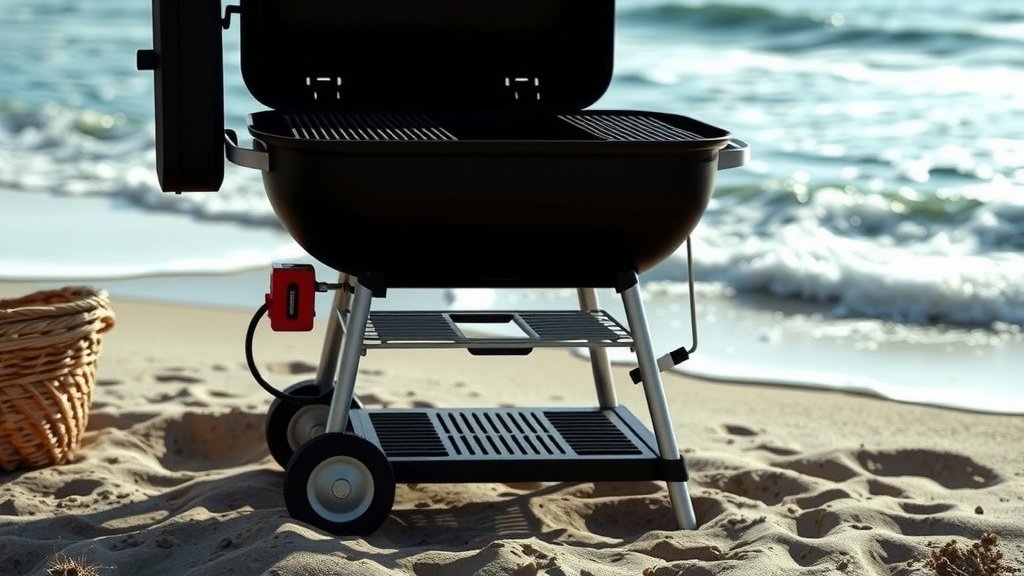
You can often bring a propane grill to the beach, but it truly depends on the specific rules of that particular beach or park. Always check local regulations first, as many beaches have strict prohibitions on open flames, including grills.
Grilling at the beach with propane can be a fantastic experience if allowed, but safety and environmental responsibility are paramount to prevent accidents and keep our coastlines clean.
- Bringing a propane grill to the beach is usually okay, but always check local beach rules before you go.
- Safety is super important, especially with fire risks and wind near the ocean.
- Portable propane grills are often better than charcoal for beaches due to easier cleanup.
- You’ll need to pack essential gear for a safe and clean grilling experience.
- Always plan to leave no trace and dispose of all waste properly.
Can You Bring A Propane Grill To The Beach?
So, you’re dreaming of grilling hot dogs and burgers with the sound of waves in the background, right? It sounds amazing! The short answer to whether you can bring a propane grill to the beach is: it depends entirely on the beach you plan to visit. While some beaches welcome them, others strictly forbid any type of grill, propane or otherwise. Checking those local rules is your first and most vital step.
Checking Local Beach Rules is Key
Before you even load up your car, you need to be a detective. Why are these rules in place? We found that most prohibitions stem from fire safety concerns, especially in dry coastal areas or during high winds (NOAA). There are also environmental reasons, like preventing litter from ash or food scraps.
How do you find these rules? Easy! Check the beach’s official website, look for signs posted at the entrance, or even call the local park or recreation department. It only takes a few minutes, but it can save your beach day from disappointment or even a fine. Many experts suggest this preemptive check as the best way to avoid issues.
Propane vs. Charcoal: The Beach Debate
When beach grilling is allowed, propane often gets a warmer welcome than charcoal. Why? Propane grills typically pose less of a fire risk because there are no open embers or ashes to blow around. This helps keep the sand and surrounding areas cleaner and safer.
Charcoal, on the other hand, requires proper disposal of hot coals, which can be tricky and dangerous on a beach. Many guidelines point to propane as a safer option for environments where fire hazards are a concern (U.S. National Park Service).
Understanding the Risks of Beach Grilling
Even with propane, grilling on the beach carries unique challenges. Wind is a big one; it can make controlling your flame difficult and cool down your cooking surface. Sand is another nemesis, getting into everything and potentially damaging your grill. And of course, there’s always the fire hazard, even with propane, especially near dry vegetation or if your grill isn’t stable.
Safety First: Grilling on Sand
If you’re cleared to grill, pick your spot wisely. Find a level, firm surface for your grill, ideally away from the immediate water’s edge and away from curious feet. Keep a clear perimeter around the grill, free from towels, bags, and anything flammable. Think of it like creating a small, safe cooking zone.
What About Portable Propane Grills?
Portable propane grills are your best friend for beach outings. They are designed for easy transport and setup, often featuring collapsible legs or compact designs. We found that smaller 1-pound propane tanks are usually sufficient for a few hours of grilling and are easier to manage than larger tanks.
Choosing the Right Spot on the Beach
When you’re looking for your perfect grill spot, consider a few things. You want to be far enough from other beachgoers to give everyone space. Avoid areas with dry grass or dune vegetation, as these are fire risks. A spot with some natural windbreak, like a small dune or even a beach umbrella, can make a big difference in maintaining grill temperature.
Essential Gear for a Beach BBQ
Preparing for your beach BBQ means more than just bringing the grill. You’ll want to pack smart to ensure a smooth, enjoyable, and safe experience. Here’s a quick comparison:
| Must-Haves | Nice-to-Haves |
|---|---|
| Portable propane grill | Folding table for prep |
| Propane tanks (enough for your cookout) | Windscreen for grill |
| Grill tools (tongs, spatula) | Beach chairs and umbrella |
| Cooler with food and drinks | Small shovel for sand cleanup |
| Fire extinguisher or bucket of sand/water | Trash bags (for all waste) |
| First-aid kit | Bluetooth speaker |
Packing Your Propane Grill Safely
When you pack your grill, make sure it’s clean and cool. Secure the propane tank properly to prevent it from rolling around or getting damaged during transport. Disconnect any tanks that aren’t actively in use and store them upright. This prevents any leaks and keeps your car safe. Many experts advise securing all loose parts to avoid damage.
Grill Responsibly: Leave No Trace
This is crucial! You want to leave the beach even cleaner than you found it. Pack out everything you packed in, including all food scraps, wrappers, and used propane tanks. Never bury trash in the sand. Responsible grilling means being a good steward of our beautiful natural spaces. Research often highlights the importance of environmental responsibility (EPA).
Here’s a quick checklist for leaving no trace:
- Pack out all food waste.
- Collect all packaging and wrappers.
- Dispose of used propane tanks properly.
- Ensure no grill residue or grease is left behind.
- Check your immediate area for any dropped items.
Dealing with Unexpected Wind and Sand
The beach environment can be unpredictable. If the wind picks up, you might need a makeshift windbreak. Some beach tents or even your car can offer a bit of protection. For sand, try to keep your grill elevated, if possible, and always keep food covered until it’s ready to eat. A simple lid or foil can protect your masterpieces from the elements. We found that a bit of planning goes a long way in managing beach conditions.
Alternative Beach Food Options
What if your chosen beach says “no” to grills? Don’t worry, your beach day isn’t ruined! You can always prepare a fantastic picnic. Think pre-made sandwiches, salads, fruit, and snacks. Many people bring pre-cooked items like grilled chicken or pulled pork that just need to be warmed or eaten cold. A big cooler with ice will keep everything fresh. There are many ways to enjoy great food by the ocean without a grill.
Conclusion
Bringing a propane grill to the beach can be a wonderful way to enhance your day, but it always starts with checking those local rules. Prioritizing safety, understanding the unique challenges of the beach environment, and committing to responsible cleanup are all vital. With a little planning and respect for the rules, you can enjoy delicious food with the incredible backdrop of the ocean. Your perfect beach BBQ is absolutely possible, just be sure to do your homework first and grill with care!
Can I use any size propane tank at the beach?
While specific rules may vary, smaller 1-pound propane cylinders are generally more accepted and safer for transport and use at beaches than larger 20-pound tanks. Always confirm the allowed tank size with local beach regulations.
What if there’s a burn ban in effect?
If a burn ban is in effect, it typically prohibits all forms of outdoor cooking with open flames, including propane grills. Disregarding a burn ban can result in significant fines and environmental damage, so it’s always best to pack a picnic instead.
Are there designated grilling areas at some beaches?
Yes, some beaches and coastal parks feature designated grilling areas, often with concrete pads or picnic tables. These spots are usually safer and have clear rules for use. Look for these areas on official park maps or websites.
How do I protect my food from sand while grilling?
To protect your food from sand, use containers with tight-fitting lids for all ingredients before cooking. While grilling, try to keep your grill slightly elevated and use lids on your grill whenever possible. Serving food immediately into covered dishes also helps.
What’s the best way to clean my grill after beach use?
After beach use, clean your grill thoroughly to remove salt, sand, and grease. Use a grill brush to scrape grates, then wipe down all surfaces. A damp cloth with a mild detergent can remove salt residue. Ensure it’s completely dry before storing to prevent rust.
