
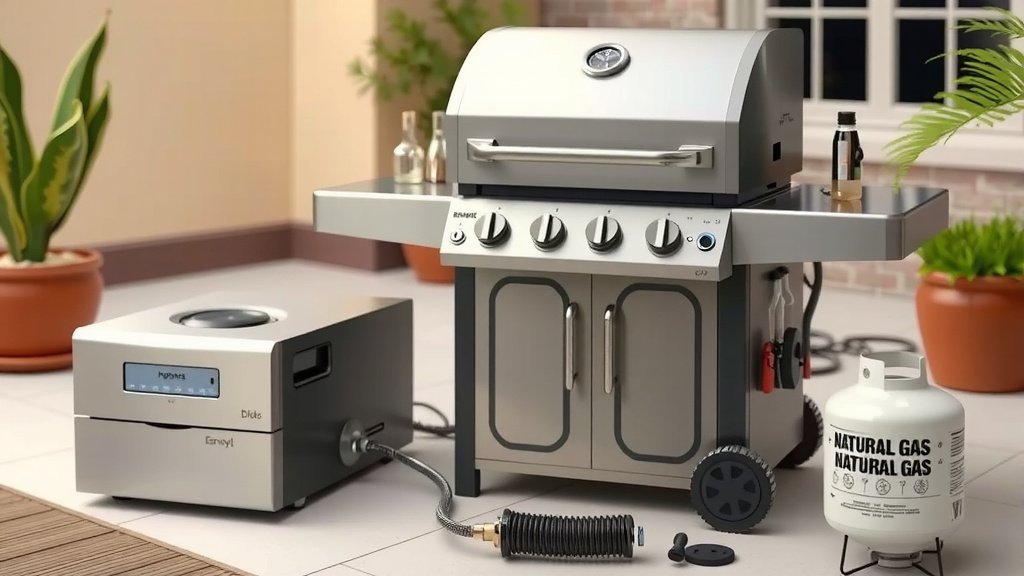
Yes, you can convert a propane grill to natural gas, but it requires specific conversion kits and professional installation for safety and proper function.
This conversion involves replacing key components like orifices, regulator, and sometimes the gas hose to ensure your grill safely handles the lower pressure of natural gas.
Thinking about converting your propane grill to natural gas? Here’s the quick scoop:
- You absolutely can convert your grill, but it’s not a DIY job for everyone.
- You’ll need a specific conversion kit designed for your grill’s make and model.
- Key parts like the regulator and burner orifices must be changed out.
- Natural gas operates at a much lower pressure than propane, so safety is paramount.
- Professional installation is highly recommended to prevent gas leaks and ensure correct performance.
Can A Propane Grill Be Converted To Natural Gas?
Yes, converting a propane grill to natural gas is certainly possible, but it requires careful attention to detail and specific parts.
You’ll need a designated conversion kit to ensure your grill operates safely and efficiently with natural gas.
Why Consider Converting Your Grill?
Many grill owners initially buy a propane grill for its portability. But what if your grilling habits change?
Perhaps you’ve moved to a new home with a natural gas hookup, or you just tire of refilling propane tanks. Let’s look at why this switch might appeal to you.
The Convenience Factor
Imagine never running out of fuel mid-grill. With natural gas, you get a continuous supply directly from your home’s gas line.
No more last-minute trips for tank refills, and no more storing heavy propane tanks. It’s quite freeing, isn’t it?
Cost Savings Over Time
While the initial conversion has a cost, natural gas generally costs less per unit than propane. Over time, these savings can really add up.
Many experts say that natural gas is often a more economical choice for frequent grillers (American Gas Association).
Understanding the Gas Differences
Before diving into conversion, it helps to know what makes propane and natural gas different. They aren’t interchangeable without modifications.
Each gas has unique properties that impact how your grill needs to be set up to burn correctly.
Propane: High Pressure, Portable Power
Propane is a liquid under pressure, stored in tanks, and it exits the tank as a gas at higher pressure.
This higher pressure means different orifices are needed in your grill to mix the right amount of air for combustion.
Natural Gas: Lower Pressure, Constant Supply
Natural gas comes from a pipeline and operates at a much lower pressure than propane.
Your grill needs smaller orifices to accommodate this lower pressure and achieve the correct air-to-fuel ratio for burning.
Is Conversion Always Possible?
While many grills can be converted, it’s not a universal guarantee. Your grill’s manufacturer must offer a specific conversion kit.
We found that attempting to convert a grill without a manufacturer-approved kit is extremely risky and could void warranties.
What Does a Conversion Kit Include?
A proper conversion kit isn’t just one part. It contains several crucial components tailored to your specific grill model.
These parts ensure your grill runs safely and efficiently on its new fuel source.
Essential Components You’ll Find
Typically, a conversion kit will include a new regulator designed for natural gas, a set of new burner orifices, and sometimes a new gas hose with quick-connect fittings.
You might also find new control valves or specific instructions unique to your grill’s design. Think of it like giving your grill a precision tune-up for a new fuel.
The Conversion Process: What to Expect
You’re probably wondering what the conversion itself actually involves. It’s more than just swapping out a tank.
It’s a detailed process that modifies your grill’s internal gas flow system.
Step-by-Step Overview
Here’s a general idea of the steps involved in converting your grill:
- Disconnect the propane tank and remove the old regulator.
- Replace the existing burner orifices with the smaller natural gas orifices from the kit.
- Install the new natural gas regulator and hose.
- Connect the grill to your home’s natural gas line, often using a quick-connect fitting.
- Perform a thorough leak test using soapy water to ensure there are no gas escapes.
- Test light the burners to confirm proper flame size and color.
Why Professional Help is Best
Many experts, including the National Fire Protection Association (NFPA), strongly advise against DIY conversions.
Working with gas lines carries inherent risks, and a professional can ensure the job is done correctly and safely, reducing the chance of leaks or malfunctions.
Safety First: Risks of a DIY Conversion
Trying to convert your grill yourself without the right knowledge and tools can lead to serious problems.
Gas leaks, fires, or explosions are real dangers when modifications are not done by a certified technician.
It’s simply not worth the risk. Your safety and the safety of your home are far too important to compromise.
Maintaining Your Converted Grill
Once converted, your natural gas grill needs regular maintenance, just like any other appliance.
Periodically check for hose wear, clean the burners, and ensure all connections remain tight and secure. We found that good upkeep extends the life of your grill.
Cost of Conversion: What’s the Investment?
The cost of converting your grill can vary depending on several factors. It’s wise to budget for both parts and labor.
Consider this an investment in your grilling convenience and long-term fuel savings.
Kit Costs and Installation Fees
Conversion kits typically range from $50 to $200, based on your grill’s brand and model. Installation by a qualified gas technician might add another $100 to $300.
It’s always smart to get a few quotes before deciding. Remember, this fee covers peace of mind and expert work.
| Feature | Propane Grill | Natural Gas Grill | Converted Grill |
|---|---|---|---|
| Fuel Source | Portable tanks | Home gas line | Home gas line |
| Pressure | High | Low | Low (after conversion) |
| Portability | High | Low (fixed line) | Low (fixed line) |
| Fuel Cost | Generally higher | Generally lower | Generally lower |
| Refilling | Required | Never | Never |
Conclusion
Converting a propane grill to natural gas is a practical and often cost-effective choice for many grill enthusiasts.
It offers the unparalleled convenience of an endless fuel supply, letting you grill whenever the mood strikes without worrying about tank levels.
While it’s a definite “yes” on the possibility of conversion, remember that safety and proper function rely on using a manufacturer-approved kit and, ideally, professional installation.
Don’t compromise on safety; a little planning and expert help will ensure your grilling sessions are always enjoyable and worry-free. Happy grilling!
Is it cheaper to grill with propane or natural gas?
Generally, natural gas is cheaper per therm than propane. While the upfront conversion cost exists, many grillers find they save money on fuel in the long run, especially if they grill often.
How long does a natural gas grill last compared to propane?
The lifespan of a grill doesn’t really depend on whether it uses propane or natural gas. Proper maintenance and quality of the grill itself are the main factors. A well-maintained natural gas grill can last just as long as a well-maintained propane grill.
Can I switch back to propane after converting to natural gas?
Theoretically, yes, but it would involve reversing the conversion process. This means reinstalling the original propane orifices and regulator. It’s not a quick switch and would require the same careful attention and potentially professional help as the initial conversion.
What is the biggest challenge in converting a grill?
The biggest challenge is ensuring proper safety and function. This means obtaining the correct manufacturer-specific conversion kit and correctly installing the components, particularly the orifices and regulator, to match the different gas pressures. Incorrect installation poses significant safety risks.
Do all grill brands offer conversion kits?
No, not all grill brands offer conversion kits for every model. It depends heavily on the manufacturer’s design and policies. You should always check with your grill’s manufacturer or an authorized dealer to confirm if a kit is available for your specific model.
