
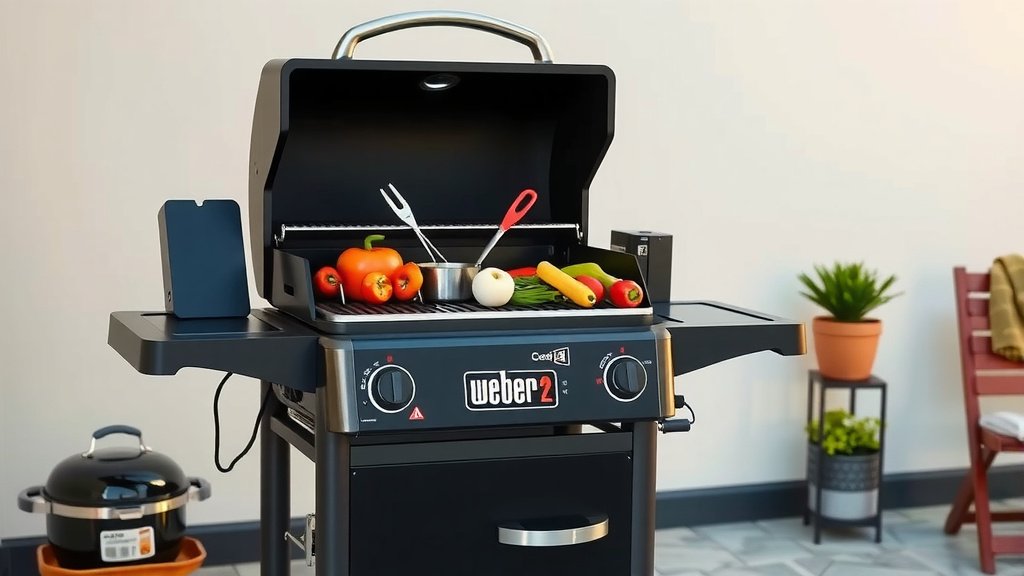
To start a Weber gas grill, always begin by ensuring the gas tank is properly connected and fully open. Then, open the grill lid, turn one burner knob to the START/HIGH position, and press the igniter button promptly.
This sequence allows any built-built-up gas to safely dissipate before ignition and ensures a smooth, safe start for your cooking adventure.
Here’s a quick overview of what you’ll learn in this article:
- Discover the essential steps to safely start your Weber gas grill.
- Learn how to troubleshoot common ignition problems easily.
- Find out why proper preheating is important for your food.
- Understand simple safety checks to keep your grilling enjoyable.
- Get tips for quick post-grill cleanup to extend your grill’s life.
How To Start A Weber Grill Gas?
Starting your Weber gas grill involves a few simple steps to ensure safety and an optimal cooking experience. You will first check your gas connection, open the lid, then ignite the burners, and finally preheat.
Safety First: Your Essential Pre-Grill Checklist
Before you even think about lighting a flame, pause for a moment. Grilling should be fun, not frightening. We found that following simple safety rules makes all the difference (NFPA).
- Is your grill on a level, non-combustible surface?
- Is it at least three feet away from your house, garage, or any overhangs?
- Are all vents clear and unobstructed?
- Is your propane tank upright and securely fastened?
- Do you have a fire extinguisher nearby?
Connecting Your Propane Tank Securely
Most Weber gas grills run on propane, which comes in a standard 20-pound tank. You need to connect this tank correctly to ensure a steady gas flow.
First, make sure the grill’s burner control knobs are all in the “OFF” position. This prevents any accidental gas leaks.
Next, remove the safety cap from your propane tank valve. Line up the regulator from your grill with the tank valve. Turn the regulator’s black knob clockwise until it is hand-tight and secure.
Do not use tools to tighten this; hand-tight is enough. Overtightening can damage the connection. Open the main tank valve by turning it counter-clockwise until it stops.
The Power of a Proper Leak Test
Even if you are careful, a small leak can happen. Many experts say a leak test is non-negotiable before every grilling session (Consumer Reports).
Mix a solution of equal parts dish soap and water. With the gas tank open and grill knobs OFF, apply this soapy water to the hose and regulator connections.
If you see bubbles forming, you have a gas leak. Immediately turn off the gas tank. Retighten connections and test again. If bubbles persist, do not use the grill. Contact Weber support for help.
Opening the Lid: A Must-Do Step
Always open your grill lid before attempting to ignite the burners. Why? Because gas can build up inside the closed grill. If you light it with the lid down, it could lead to a sudden flare-up, which is unsafe.
Opening the lid allows any potential gas to escape safely into the air. This simple action is a key part of safe operation.
Igniting Your Weber Gas Grill
Now for the exciting part: lighting it up! Your Weber grill usually has an electronic igniter button. We found this system to be very reliable (Weber Support).
Turn one burner knob, usually the far left one, to the “START/HIGH” position. You might hear a hiss as the gas begins to flow. Press and hold the igniter button for a few seconds. You should hear a clicking sound and see the burner light.
If it does not light on the first try, release the igniter, wait about 30 seconds for any gas to clear, and then try again. Once that first burner is lit, you can turn on the other burners to your desired setting.
What If The Igniter Fails? Manual Lighting
Sometimes, igniters have a bad day. Don’t worry, you can still light your grill manually. We found that manual lighting is a simple backup (Grill Master Forums).
With the lid open, turn one burner knob to “START/HIGH.” Immediately use a long grill lighter or a match in a holder to light the burner through the cooking grates. Be very careful. Once one burner is lit, the others can be lit by simply turning their knobs on.
Preheating: The Secret to Perfect Grilling
Think of your grill like a frying pan. You would not put a steak in a cold pan, would you? The same applies to grilling. Preheating is essential for searing and even cooking.
Once all burners are lit, close the lid. Let your Weber grill preheat for 10 to 15 minutes. The temperature gauge should reach your target cooking temperature, often around 450-550°F for high heat.
This time also helps burn off any leftover food particles from your last cook. You want a hot and clean surface before food goes on.
Cleaning the Grates: Before You Cook
After preheating, open the lid again. Use a good quality grill brush to scrape off any remaining food bits from the grates. This helps prevent food from sticking and gives you those beautiful sear marks.
A clean grate also ensures your food tastes its best, free from lingering flavors of past meals. Many guidelines point to a clean grill as a healthier grill (USDA).
Troubleshooting Common Starting Issues
Sometimes, things do not go as planned. Do not get frustrated! Here are some common problems and their quick fixes:
| Problem | Possible Cause | Solution |
|---|---|---|
| Grill won’t light | Tank not fully open | Open propane tank valve completely. |
| Low flame or no flame | Bypass safety valve activated | Turn off tank, disconnect, wait 30s, reconnect, open tank slowly. |
| Igniter clicks, no flame | No gas or dirty electrodes | Check tank, ensure connection, clean igniter electrodes. |
| Flare-ups during start | Lid was closed during ignition | Always ignite with the grill lid open. |
When to Change Your Propane Tank
Nothing ruins a good cookout like running out of gas mid-grill. We found that checking your tank level often saves stress.
You can weigh your tank, or for a simpler method, pour warm water down the side of the tank. The water will feel cool where the liquid propane is. The condensation will show you the level.
Post-Grill Cleanup and Shut Down
Once your meal is done, turn off the burners. Turn off the propane tank valve first. This helps clear any residual gas from the lines. Then, turn all burner knobs to “OFF.”
Let the grill cool down. Once cool, brush the grates again and clean the flavorizer bars and other components. Many experts recommend a thorough cleaning after each use (Weber Maintenance Guide).
Keeping Your Grill Ready for Next Time
A little care goes a long way. Regularly check for blockages in burner tubes and ensure your igniter battery is fresh. This helps maintain consistent performance.
Conclusion
Starting your Weber gas grill does not need to be complicated. By following these straightforward steps, you are not just lighting a grill; you are creating memories. Remember to prioritize safety, ensure your gas connections are tight, and always preheat for the best results. Enjoy your outdoor cooking adventure!
Frequently Asked Questions
How do I know if my propane tank is empty?
A quick way to check your propane tank’s level is by pouring warm water down one side of the tank. The metal will feel cool to the touch at the level where the liquid propane remains. Another simple method is to weigh the tank; a full 20-pound tank typically weighs around 37 pounds, while an empty one weighs about 17 pounds.
What should I do if my Weber grill won’t get hot enough?
If your Weber grill isn’t reaching desired temperatures, first check if the propane tank valve is fully open and if there’s enough gas. Often, the grill’s bypass safety mechanism may have activated, restricting gas flow. To reset this, turn off all burner knobs and the tank valve, disconnect the regulator, wait 30 seconds, then reconnect and slowly reopen the tank valve, then light as usual.
Is it safe to leave my propane tank connected to the grill?
Many grill manufacturers, including Weber, recommend turning off the propane tank valve when you finish grilling. While leaving it connected isn’t inherently dangerous for short periods, turning it off reduces the risk of accidental leaks and ensures the system isn’t under constant pressure. Always ensure the tank valve is off if you won’t be using the grill for an extended time.
How often should I clean my grill grates?
For best results and to prolong the life of your grates, you should clean them every time you use your grill. Scrape off food residue after preheating and again after cooking and cooling. A deeper cleaning, involving soap and water for the grates, is advisable every 3-4 uses or at least once a month during grilling season, depending on how often you cook.
Can I convert my Weber gas grill from propane to natural gas?
Converting a Weber gas grill from propane (LP) to natural gas (NG) or vice versa is generally not recommended or supported by the manufacturer for most models. Gas grills are designed with specific orifices and regulators for one type of fuel. Attempting a conversion yourself can be dangerous and void your warranty. Always check your specific grill model’s manual or contact Weber support for guidance.
