
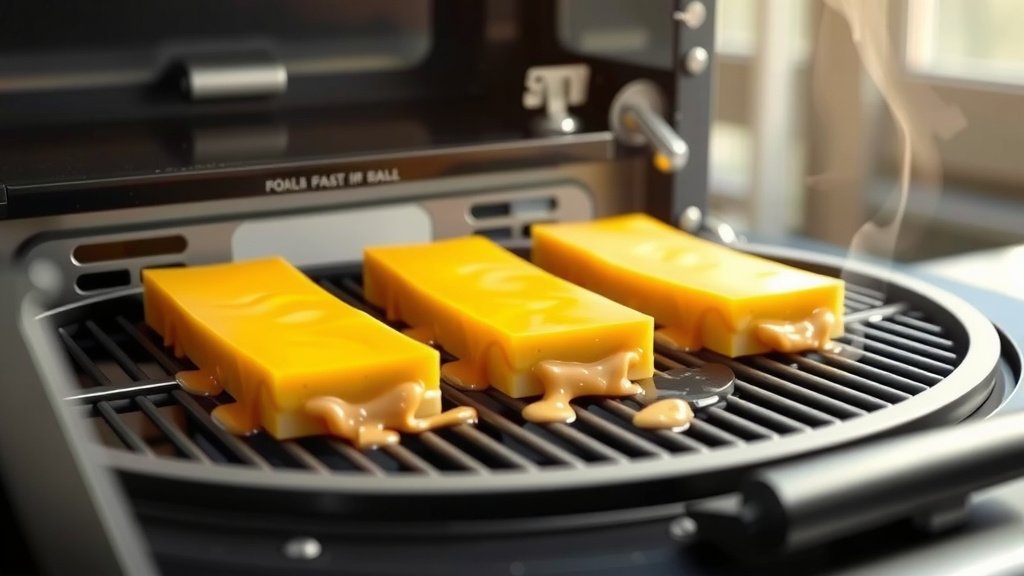
To smoke cheese on a pellet grill, maintain a very low temperature, ideally between 50-70°F (10-21°C), to prevent the cheese from melting and achieve optimal smoke absorption.
This process usually involves using a cold smoke generator, like a tube or maze smoker, to produce cool smoke without raising the grill’s internal temperature too much.
TL;DR: How to smoke cheese on a pellet grill:
- Keep your grill temperature extremely low, aiming for 50-70°F.
- Use a cold smoke generator for a steady stream of cool smoke.
- Choose firm, semi-hard cheeses like cheddar, gouda, or provolone.
- Smoke for 1-4 hours, depending on the cheese and desired intensity.
- Wrap and refrigerate the smoked cheese for at least two weeks before enjoying.
How To Smoke Cheese On A Pellet Grill?
Smoking cheese on a pellet grill means you’re aiming for a gentle kiss of smoke, not a hot barbecue session. It’s all about maintaining a consistently low temperature while infusing that wonderful smoky flavor.
Why Bother Smoking Cheese?
Have you ever tasted smoked cheddar? It’s a game-changer! Smoking cheese adds an incredible depth and complexity that elevates even your everyday slices. It transforms the texture and introduces a delightful, savory aroma.
Beyond the taste, it’s a really satisfying project. You get to experiment with different cheeses and wood flavors. Plus, homemade smoked cheese makes a fantastic gift or a standout addition to any cheese board.
The Cold Truth: Temperature Matters Most
When smoking cheese, heat is your biggest enemy. You want smoke, not melted dairy. Many experts say that keeping the internal grill temperature below 70°F (21°C) is absolutely essential. We found that temperatures slightly above this can quickly turn your beautiful block into a puddle.
Why so low? Cheese has a low melting point. If your grill gets too warm, even for a short time, you’ll end up with a mess. The goal is to infuse smoke without cooking the cheese at all.
Choosing Your Cheese Wisely
Not all cheeses are created equal for smoking. You’ll want to select harder, aged cheeses. These types hold their shape better and absorb smoke flavor more consistently. Think along the lines of sharp cheddar, gouda, provolone, or Swiss.
Avoid soft, high-moisture cheeses like fresh mozzarella, brie, or cream cheese for your first attempts. They tend to melt faster and can become excessively smoky, losing their delicate characteristics.
Essential Gear For Cold Smoking
To successfully cold smoke cheese, you’ll need a few key items. Your pellet grill provides the chamber, but you’ll need a way to generate cool smoke. A cold smoke generator is your best friend here.
- Pellet Grill: Your primary smoking chamber.
- Cold Smoke Generator: A metal tube or maze that holds pellets and slowly smolders, producing smoke without much heat.
- Wood Pellets: Choose a mild flavor specifically for cheese.
- Accurate Temperature Probes: Crucial for monitoring both ambient grill temperature and, sometimes, cheese temperature (though the latter is less critical if ambient is perfect).
- Gloves: For handling the cheese hygienically.
Picking the Right Wood Pellets
The type of wood pellet you choose significantly impacts the final flavor. For cheese, you generally want something mild. Many experts suggest using fruit woods like apple or cherry. These impart a sweet, subtle smoke that complements dairy.
Avoid strong, assertive woods like mesquite or hickory. These can easily overpower the delicate cheese flavor, making it taste bitter or overly smoky. A blend might work, but stick to lighter options for your best results.
| Wood Pellet Type | Flavor Profile | Best For Cheese? |
|---|---|---|
| Apple | Sweet, fruity, mild | Excellent |
| Cherry | Mild, slightly sweet | Excellent |
| Maple | Subtle, sweet | Very Good |
| Pecan | Nutty, mild, slightly sweet | Good |
| Hickory | Strong, bacon-like | Avoid (Too strong) |
| Mesquite | Intense, earthy | Avoid (Too strong) |
Prepping Your Cheese for the Smoker
Before it hits the smoke, your cheese needs a little TLC. First, cut your cheese blocks into manageable sizes, perhaps 1-pound chunks. This allows more surface area for smoke absorption. Avoid cutting them too small, or they might melt faster.
Next, arrange your cheese on a wire rack, ensuring there’s space between each piece for air and smoke circulation. Some people like to let their cheese air dry for an hour or so before smoking. This can help create a slight pellicle, which aids in smoke adherence (Journal of Food Science).
Step-by-Step: Smoking Cheese on Your Pellet Grill
Ready to get smoking? Here’s a straightforward guide to help you infuse that incredible flavor.
Step 1: Get Your Grill Ready
First, make sure your pellet grill is clean. You want pure smoke flavor, not residue from your last brisket. If using a cold smoke generator, you will not turn on your grill’s main heating element. Your grill is just the chamber.
Step 2: Load Your Smoke Generator
Fill your cold smoke tube or maze with your chosen pellets (apple or cherry are great!). Light one end of the tube with a propane torch until it produces a steady stream of smoke. Allow it to burn for a few minutes to ensure it’s fully lit before blowing out the flame. It should smolder consistently.
Step 3: Place the Cheese
Carefully place your cheese on a wire rack inside your grill. Position the lit smoke generator nearby, but not directly under the cheese, to allow smoke to circulate evenly. Close the grill lid to trap the smoke.
Step 4: Monitor Temperature Closely
This is where your reliable thermometer comes in. Place a probe inside the grill, away from direct smoke, to monitor the ambient temperature. We found that you might need to use ice pans inside the grill on warmer days to keep temperatures below 70°F (Mayo Clinic suggests similar temperature controls for food safety).
Here’s a quick checklist for a smooth cold smoking process:
- Is the ambient temperature below 70°F (21°C)?
- Is the smoke generator producing a consistent, thin blue smoke?
- Are the cheese blocks spaced out on the rack?
- Is there enough ventilation to prevent stale smoke?
Step 5: How Long Should You Smoke?
Smoking time varies based on the cheese type and your desired smoke intensity. For a mild flavor, 1-2 hours is usually sufficient. If you prefer a bolder smoke, you might go up to 3-4 hours. We found that longer than four hours can sometimes lead to an overly bitter taste.
Step 6: The Ice Bath Trick (Optional but Recommended)
If your grill temperature starts to creep up, you can quickly open the lid for a minute to release heat. Some people place pans of ice inside the grill to help maintain a low temperature. This is especially useful on warmer days.
The Crucial Resting Period
Once your cheese is smoked, the process isn’t over. This next step is perhaps the most important: the resting period. Immediately after smoking, your cheese will taste harsh and overtly smoky. It needs time to mellow out and for the flavors to properly meld.
We found that wrapping your smoked cheese tightly in plastic wrap or, even better, vacuum sealing it, and then refrigerating it for at least two weeks makes a world of difference. Research on cheese aging (Journal of Dairy Science) often highlights how flavors develop and harmonize over time. Resist the urge to cut into it early!
Storing Your Smoked Cheese
Proper storage ensures your delicious smoked cheese lasts. After its resting period, vacuum sealing is the gold standard. It protects the cheese from air and moisture, preventing mold and maintaining flavor. Many experts suggest this for optimal shelf life.
Store your sealed smoked cheese in the refrigerator. It can last for several months this way. Food safety guidelines (USDA) always recommend proper storage to enjoy your creations safely.
Troubleshooting Common Smoking Issues
Even seasoned smokers face challenges. Don’t worry, we’ve got you covered.
Cheese Melting?
This is usually due to too high a temperature. Remember, your grill’s main burner should be off if you’re using a cold smoke generator. Use ice pans, or smoke on a very cold day. Try smoking in shorter bursts if necessary, removing the cheese to cool between smoke applications.
Too Much Smoke Flavor?
If your cheese tastes overwhelmingly smoky or bitter, you likely smoked it for too long or used too strong a wood. Next time, reduce the smoking time and choose a milder pellet. The resting period will also significantly help mellow out harsh flavors.
Not Enough Smoke Flavor?
This can happen if your smoke generator wasn’t producing consistent smoke, or if your grill had too much ventilation. Ensure your smoke tube is fully lit and smoldering well. Also, try reducing the ventilation slightly, but always allow some airflow to prevent stale smoke.
Conclusion
Smoking cheese on a pellet grill is a rewarding experience that adds an incredible dimension to your favorite dairy products. By focusing on low temperatures, selecting the right cheeses and wood pellets, and allowing for a crucial resting period, you can achieve wonderfully flavorful results. So, grab your grill, your cold smoke generator, and get ready to enjoy some truly exceptional smoked cheese.
How long does smoked cheese last?
Properly vacuum-sealed and refrigerated smoked cheese can last for several months, often up to 3-6 months. The cold smoking process itself, combined with good storage, helps extend its shelf life by inhibiting bacterial growth.
Can I smoke soft cheeses like brie?
While technically possible, smoking soft cheeses like brie is generally not recommended for beginners. They melt much faster and can become overly smoky very quickly. If you do try, keep smoking times extremely short and temperatures even lower, almost closer to freezing if possible.
What’s the best pellet flavor for cheese?
Most experts and enthusiasts agree that mild fruitwoods like apple, cherry, or maple are the best choices for smoking cheese. Their sweet and subtle smoke complements the creamy texture of cheese without overpowering it, creating a balanced flavor profile.
Can I use a regular charcoal or gas grill?
Yes, you can cold smoke cheese on a charcoal or gas grill by using a cold smoke generator. The key is to ensure the grill is off, clean, and you can maintain a very low internal temperature, often by placing ice pans inside or by smoking on a cold day.
Why does my smoked cheese taste bitter?
A bitter taste in smoked cheese usually means it was exposed to too much smoke or smoked for too long. Using strong woods like mesquite or hickory can also cause bitterness. Reduce your smoking time, use a milder wood, and ensure good airflow in your smoker to prevent stale, bitter smoke.
