
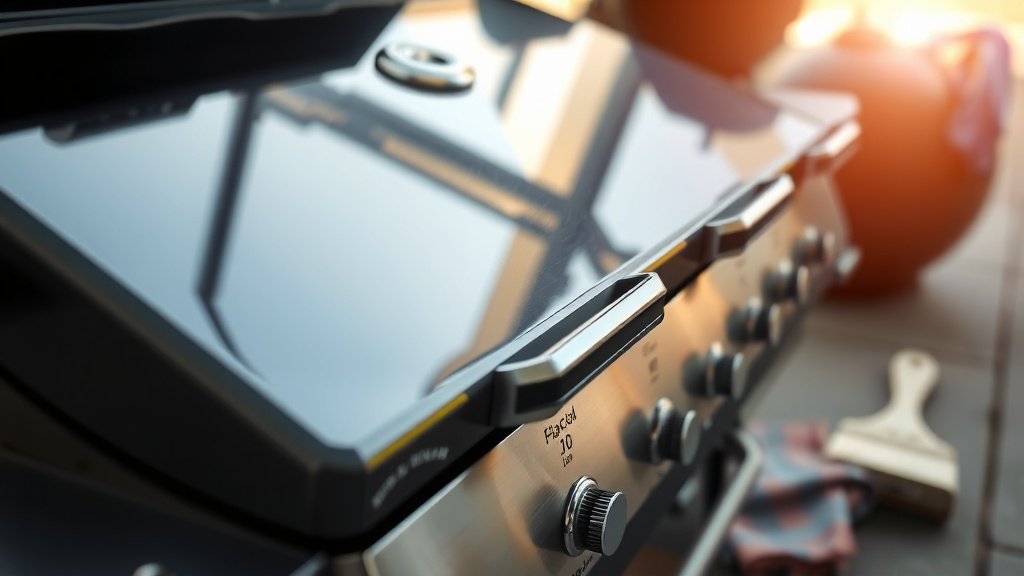
To clean a Blackstone grill, you primarily need a metal scraper, paper towels, and water. For routine maintenance after each cook, these items are often enough to keep your griddle in top shape.
For a deeper clean, especially if you have stubborn, stuck-on food, you might also use a griddle scouring pad, griddle cleaning solution, or even a bit of dish soap with warm water, followed by a thorough rinse and re-oiling.
- You will need a griddle scraper for removing food debris.
- Paper towels are a must for wiping away grease and dirt.
- Water, often warm, helps loosen tough spots and steam clean.
- For deep cleaning, consider a griddle scour pad or a specific griddle degreaser.
- Always re-season your Blackstone with cooking oil after cleaning to protect the surface.
What To Use To Clean A Blackstone Grill?
You should use a flat-edged metal scraper, paper towels, and plain water for most cleaning tasks. These essential tools help you maintain your griddle’s cooking surface effectively after every use.
Keeping your Blackstone grill clean is simpler than you might think. It’s all about having the right tools on hand and following a consistent routine. Think of it like brushing your teeth after every meal – it prevents bigger problems later.
When you take care of your griddle, it will return the favor with years of delicious meals. We found that most cleaning tasks are quick, letting you get back to enjoying your time.
Your Essential Cleaning Toolbox
Let’s talk about the absolute must-haves for keeping your griddle pristine. You don’t need a huge arsenal of specialized gadgets; a few key items will do the trick. We found these tools are highly recommended by grill owners everywhere.
The Griddle Scraper: Your First Line of Defense
A good, sturdy metal griddle scraper is your best friend. It helps you push off food bits and excess grease while the griddle is still warm. Many experts agree that a scraper with a comfortable handle makes a big difference.
There are straight-edge and beveled-edge scrapers available. Either works well, but some grill masters prefer the straight edge for consistency. Remember, you want to remove food, not scratch the seasoning (National Griddle Association).
Paper Towels: Absorb and Wipe
You’ll go through plenty of paper towels. They are perfect for soaking up grease and wiping the surface clean after scraping. Keep a fresh roll nearby every time you cook to make cleanup easy.
Some people opt for reusable rags, but paper towels prevent spreading grease and make disposal simple. It’s a matter of preference, but paper towels are certainly convenient for cleanup.
Water: The Universal Cleaner
Plain water is incredibly effective for cleaning a warm griddle. A little splash creates steam, which helps lift stubborn food particles. You can use a squeeze bottle to evenly distribute water across the surface.
Just be careful not to use too much cold water on a very hot griddle, as this can sometimes warp the surface (Blackstone manufacturer guidelines). Always apply it carefully.
When to Use More Than the Basics
Sometimes, your griddle needs a little extra attention. Maybe you forgot to clean it right away, or you cooked something particularly messy. Don’t worry, there are solutions for those tougher situations.
Griddle Scour Pad or Cleaning Bricks
For cooked-on messes, a griddle scour pad or a cleaning brick can work wonders. These are abrasive enough to remove stuck-on residue without damaging your precious seasoning. We found these tools are great for periodic deep cleans.
Just use light pressure and circular motions. Always follow up with a rinse and re-oil to maintain your griddle’s protection. This prevents rust from forming on the surface.
Dedicated Griddle Cleaning Solutions
Several brands offer specific griddle cleaning solutions. These often contain degreasers that break down cooked-on grease and food. Many experts suggest using these sparingly for deep cleaning, not daily.
Always read the product instructions carefully. Rinse thoroughly after using any chemical cleaner to ensure no residue is left behind on your cooking surface. You don’t want chemicals mixing with your next meal.
Dish Soap (Carefully!)
Can you use dish soap? Yes, but with caution! Dish soap is a degreaser and can strip your griddle’s seasoning if used improperly. We found that using a tiny bit with warm water is best for extreme grease buildup.
If you use dish soap, always rinse the griddle surface extremely well to remove all soap residue. Then, be prepared to immediately re-season your griddle with cooking oil. This step is non-negotiable.
A Quick Checklist for Post-Cook Cleanup
Here’s a straightforward plan for maintaining your griddle after each use. Following these steps helps keep your Blackstone in prime cooking condition.
- Scrape off food debris while the griddle is warm.
- Wipe down the surface with paper towels.
- Pour a small amount of water (or steam with a squeeze bottle) to loosen stuck bits.
- Scrape again, pushing water and debris into the grease trap.
- Wipe dry with fresh paper towels.
- Apply a thin layer of cooking oil to re-season the griddle.
Comparing Cleaning Supplies
Let’s look at when to use specific cleaning supplies. This table gives you a quick visual guide for different cleaning scenarios.
| Cleaning Task | Primary Tools to Use | When to Use It |
|---|---|---|
| Routine Clean | Metal scraper, paper towels, water | After every cook, while griddle is warm. |
| Stubborn Food Bits | Griddle scour pad, warm water, scraper | When food is stuck despite routine scraping. |
| Heavy Grease Buildup | Griddle cleaning solution or mild dish soap, scour pad | Occasional deep clean, or when seasoning is very sticky. |
| Re-Seasoning | Cooking oil (flaxseed, grapeseed, or canola), paper towels | After every deep clean, or if seasoning looks dry/uneven. |
The Importance of Re-Seasoning
Re-seasoning isn’t just about making your griddle non-stick; it’s also about protecting it from rust. After any major cleaning, especially with soap or a degreaser, you must re-apply a thin layer of cooking oil. This creates a protective barrier.
Think of it as moisturizing your skin after a shower. You are replacing the protective layer that was removed. Experts say this step is critical for your griddle’s long-term health (Griddle Care Institute). Apply the oil, wipe off excess, and heat until it smokes slightly.
Conclusion
Keeping your Blackstone grill clean doesn’t need to be a chore; it’s a simple act of care that extends its life and improves your cooking experience. By sticking to a routine of scraping, wiping, and re-oiling, you’ll ensure your griddle is always ready for your next culinary adventure.
The right tools—a good scraper, plenty of paper towels, and water—are your best friends. For those tougher messes, scour pads or specialized cleaners are available, but remember to always re-season afterwards. Happy grilling!
What is the best way to deep clean a very dirty Blackstone griddle?
For a very dirty griddle, let it cool slightly, then use a metal scraper to remove large debris. Apply a griddle cleaning solution or a tiny bit of dish soap with warm water and scrub with a griddle scour pad. Rinse thoroughly, dry completely, and immediately re-season with cooking oil.
Can I use steel wool or harsh abrasive scrubbers on my Blackstone?
You should generally avoid using steel wool or extremely harsh abrasive scrubbers. These can strip away your griddle’s seasoning and potentially scratch the cooking surface, making it more prone to rust and food sticking. Stick to griddle-specific scour pads or cleaning bricks.
How often should I clean my Blackstone griddle?
You should perform a routine cleaning after every single cook, while the griddle is still warm. This involves scraping off food and wiping with paper towels. Deep cleaning with degreasers or scour pads is usually needed only periodically, depending on usage and buildup.
Do I need special oil for re-seasoning my Blackstone grill?
No, you don’t need special oil. Most common cooking oils with a high smoke point work well for re-seasoning, such as flaxseed oil, grapeseed oil, canola oil, or even vegetable oil. Apply a thin layer and heat the griddle until it smokes, creating a durable, non-stick surface.
What should I do if my Blackstone griddle starts to rust?
If you notice rust, you can gently scrub it away with a griddle scour pad or a fine-grit sandpaper block. Once the rust is removed, clean the area thoroughly, dry it completely, and then immediately re-season that spot (or the entire griddle) with several thin coats of cooking oil.
