
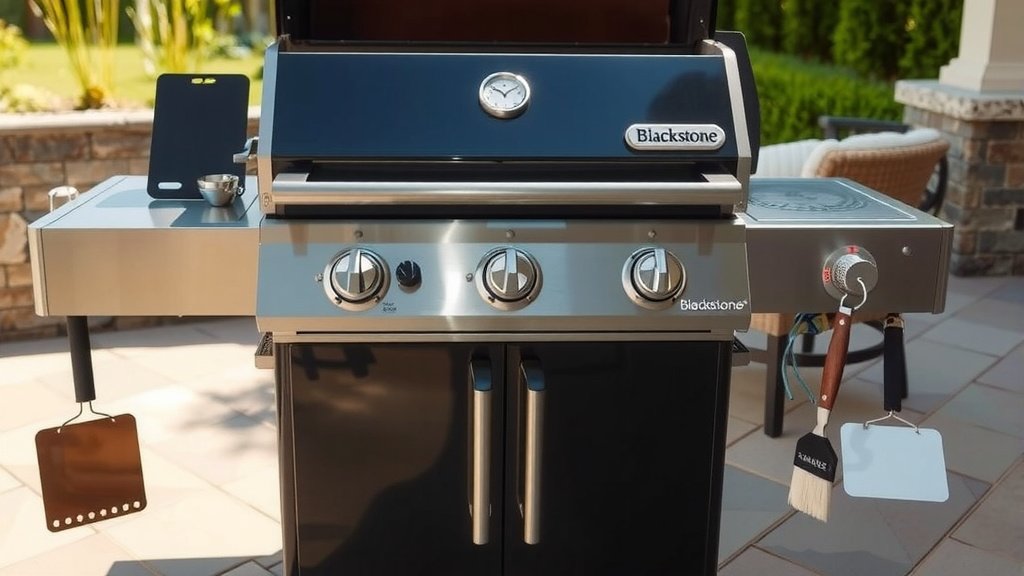
The best way to clean a Blackstone grill involves a simple process of scraping, wiping, and seasoning after each use to maintain its non-stick surface.
For a deeper clean, you’ll use hot water, a grill scraper, paper towels, and a thin layer of cooking oil to protect the griddle surface.
- Scrape After Each Use: Remove food debris with a metal scraper while the griddle is still warm.
- Wipe Down: Use paper towels to wipe away residual grease and food particles.
- Water and Steam: Pour a small amount of water on the griddle for stubborn spots, then scrape and wipe.
- Re-season Often: Apply a thin coat of cooking oil after every clean to prevent rust and maintain a non-stick surface.
- Avoid Harsh Soaps: Stick to water and oil; harsh soaps can strip the seasoning.
What Is The Best Way To Clean A Blackstone Grill?
The best way to clean a Blackstone grill is to clean it immediately after cooking while it’s still warm, focusing on scraping debris and re-seasoning to protect the surface.
Why Clean Your Blackstone Grill Immediately?
Cleaning your griddle right after you finish cooking makes a huge difference. Imagine leaving a dirty pan on your stove overnight; it’s much harder to clean the next morning, right?
The same logic applies here. When your Blackstone is warm, food particles lift away much more easily.
This immediate action prevents food from hardening onto the griddle, saving you time and effort later.
We found that regular, immediate cleaning keeps your griddle in top shape (Blackstone Griddles User Manual).
Gather Your Blackstone Cleaning Tools
Before you dive into cleaning, make sure you have the right tools ready. This isn’t just about grabbing any old rag; specific tools make the job simpler and more effective.
Think of it like getting ready for a big project; having everything at hand streamlines the process.
You will need a sturdy metal griddle scraper, a good stack of paper towels, and your preferred cooking oil for seasoning.
A squirt bottle of water can also be incredibly helpful for steaming away stubborn bits.
Essential Cleaning Supplies
- Metal Griddle Scraper
- Paper Towels or Microfiber Cloths
- Cooking Oil (flaxseed, canola, or grapeseed work well)
- Squirt Bottle of Water
The Step-by-Step Blackstone Cleaning Process
Cleaning your Blackstone doesn’t have to be a chore. It’s more of a ritual that ensures your next meal is just as delicious as your last.
Let’s walk through the steps together, making sure you feel confident with each move.
You’ll be amazed at how quickly your griddle returns to its pristine state.
Step 1: Scrape Off Food Debris
This is your first line of defense against a messy griddle. As soon as you finish cooking, while the griddle is still hot but not scorching, grab your metal scraper.
Push all those leftover food bits and excess grease into the rear grease trap. It’s like sweeping a floor; you’re gathering all the loose items.
Be firm but gentle; you don’t want to gouge the surface. Many experts say this initial scrape is the most important step for easy cleaning.
Step 2: Wipe Down the Surface
After scraping, you’ll still have some residue left behind. Take a few paper towels and carefully wipe down the griddle surface.
You might need several towels, especially if you cooked something particularly greasy. Keep wiping until most of the grime is gone.
This step removes the smaller particles that the scraper might have missed.
Step 3: Tackle Stubborn Spots with Water
Do you have a stubborn, stuck-on piece of food that just won’t budge? Don’t fret! Here’s where the water comes in.
Turn off the burners or lower the heat to medium-low. Carefully pour a small amount of water (about a quarter cup) onto the hot griddle surface.
The water will sizzle and steam, lifting those baked-on bits. Use your scraper to gently work them loose while the water is steaming.
Once you’ve scraped them free, push the dirty water and debris into the grease trap, then wipe it clean with paper towels.
Step 4: Re-Season Your Griddle
This step is absolutely vital, like moisturizing your skin after a shower. Re-seasoning protects your griddle from rust and maintains its non-stick quality.
Make sure the griddle is clean and completely dry. Turn the heat to low. Apply a thin, even layer of cooking oil over the entire griddle surface.
Use a paper towel to spread the oil thinly, then wipe off any excess. You want a sheen, not a puddle.
Let the griddle heat for a few minutes until the oil starts to smoke, then turn off the heat and let it cool.
This process creates a protective, polymerized layer.
When to Perform a Deeper Clean
While daily cleaning is key, sometimes your Blackstone needs a little more TLC. Maybe you had a particularly messy cookout, or it’s been a while since a thorough cleaning.
A deeper clean ensures longevity and optimal performance. How do you know when it’s time?
If you notice a sticky residue even after your regular wipe-down, or if your food starts to stick more often, it’s a good sign.
A sticky surface suggests old oil build-up needs removal.
Deep Cleaning: A Gentle Approach
For a deeper clean, you can repeat the water and scrape method several times. Some people prefer using a griddle scouring pad or grill stone very gently.
However, be very cautious with abrasive tools as they can strip your seasoning. Research often connects aggressive scrubbing with seasoning damage (Blackstone Griddles Care Guide).
After a deeper clean, it is incredibly important to perform a full re-seasoning with several thin layers of oil.
Common Blackstone Cleaning Mistakes to Avoid
It’s easy to make a mistake when you’re learning something new. We’ve all been there!
But when it comes to your Blackstone, avoiding certain actions can save you a lot of headache and protect your investment.
Let’s make sure you steer clear of these common pitfalls.
| Mistake | Why Avoid It | Better Practice |
|---|---|---|
| Using dish soap | Strips away precious seasoning. | Use hot water and a scraper. |
| Letting food sit | Causes hard-to-remove stuck-on mess. | Clean immediately after cooking. |
| Skipping seasoning | Leads to rust and food sticking. | Always apply a thin oil layer. |
| Using steel wool | Damages the griddle surface. | Opt for a plastic scraper or paper towels. |
| Cleaning when cold | Food debris is much harder to remove. | Clean while the griddle is still warm. |
Maintaining Your Blackstone Grill Between Cooks
Think of your griddle as a living surface; it needs consistent care to thrive. Proper maintenance goes beyond just cleaning; it’s about protecting it when not in use.
Just like you wouldn’t leave your car uncovered in the rain, your griddle needs protection.
What can you do to keep it happy and ready for its next cooking adventure?
Blackstone Maintenance Checklist
- Ensure the griddle is completely dry after cleaning to prevent rust.
- Apply a fresh, thin coat of cooking oil after every single use for protection.
- Cover your Blackstone grill with a weatherproof cover when not in use.
- Store it in a dry area, away from direct rain or extreme humidity.
- Empty the grease trap regularly to prevent overflow and pests.
How Often Should You Clean Your Blackstone?
This is a question we hear all the time! The simple answer is: after every single use. Yes, every time you cook on it, it needs a quick scrape and wipe.
This habit is your best defense against rust and stubborn food buildup. Many expert grillers recommend this consistent approach.
A quick clean takes only a few minutes, but saves hours of hard scrubbing down the road.
Conclusion
Cleaning your Blackstone grill doesn’t have to be a dreaded task. By adopting a consistent routine of cleaning after each use, you can keep your griddle in excellent condition for years of delicious meals.
Remember the core steps: scrape, wipe, and re-season. Avoid harsh soaps and always cover your griddle when it’s not in action.
With these simple practices, you’ll ensure your Blackstone remains a reliable and enjoyable cooking surface for every gathering.
Can I use dish soap on my Blackstone grill?
No, you should avoid using dish soap on your Blackstone grill. Dish soap can strip away the natural seasoning layer that gives your griddle its non-stick properties and protects it from rust. Stick to hot water and a scraper for cleaning.
How do I remove rust from my Blackstone griddle?
To remove rust, heat the griddle to medium, then use a grill stone or coarse-grit sandpaper (120-grit) to gently scrub the rusted areas. Once the rust is gone, wipe it clean, and then immediately re-season the entire griddle surface with several thin layers of cooking oil to build back protection.
What kind of oil should I use for seasoning a Blackstone?
For seasoning your Blackstone, good choices include flaxseed oil, canola oil, grapeseed oil, or vegetable oil. These oils have high smoke points and polymerize well, creating a durable, non-stick layer. Many users have success with simple vegetable shortening too.
Is it okay to leave food on the griddle overnight?
Leaving food on your griddle overnight is not recommended. Food particles can harden and become much more difficult to remove, potentially damaging your seasoning when you try to scrape them off. It also can attract pests and promotes rust.
How often should I re-season my Blackstone grill?
You should apply a thin layer of cooking oil (re-season) every time you finish cleaning your Blackstone grill after use. A full, initial seasoning involves multiple layers, but daily upkeep requires just one thin coat to maintain the protective surface.
