
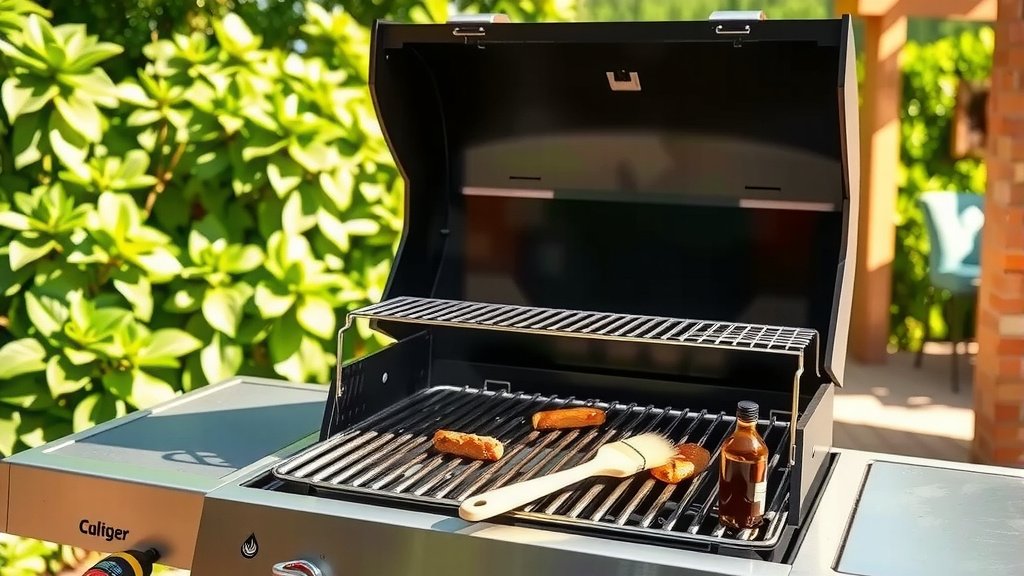
To season a BBQ grill, thoroughly clean the grates, apply a high-smoke-point oil like flaxseed or grapeseed oil evenly, and then heat the grill to a moderate temperature for about 30-60 minutes to bake the oil into a protective layer.
Seasoning your grill helps prevent rust, creates a natural non-stick surface, and enhances the flavor of your grilled foods, making cooking and cleanup much easier for you.
- Get your grill grates sparkling clean before you begin.
- Pick an oil with a high smoke point, such as flaxseed or grapeseed.
- Apply a very thin, even layer of oil to all cooking surfaces.
- Heat your grill slowly to a moderate temperature (around 350-400°F).
- Let the oil bake onto the grates, then cool and repeat for best results.
How To Season BBQ Grill?
Seasoning a BBQ grill means creating a baked-on layer of oil on your cooking grates. This process builds a protective, non-stick surface, making your grilling experience smoother.
Why Bother Seasoning Your Grill?
You might wonder, “Is this step really necessary?” Yes, it absolutely is. Seasoning your grill provides several key benefits for you and your barbecue.
Firstly, it protects your grill grates from rust. Without a protective layer, metal grates, especially cast iron, can quickly corrode when exposed to moisture.
Secondly, a properly seasoned surface becomes naturally non-stick. This means your steaks won’t cling to the grates, and delicate fish will lift off easily. We found that food sticking less is a major user satisfaction point.
Finally, seasoning can actually enhance the flavor of your food. Over time, the baked-on oil layer imparts a subtle, desirable character to everything you cook.
What You’ll Need For Grill Seasoning
Gathering your supplies before you start will make the process much smoother. You likely have most of these items already in your home.
You’ll need a grill brush, warm soapy water, clean rags or paper towels, and your chosen seasoning oil. A good pair of heat-resistant gloves can also be handy.
Choosing The Right Oil
Selecting the correct oil is a critical step for successful grill seasoning. Not all oils are created equal when it comes to high heat.
You need an oil with a high smoke point. This allows the oil to bake onto the metal rather than burn off into a sticky mess. Many experts say a high smoke point is key (Cook’s Illustrated).
| Oil Type | Smoke Point (Approx.) | Notes for Grill Seasoning |
|---|---|---|
| Flaxseed Oil | 225°F (Low) | Creates a hard, durable finish. Use very thin layers and lower heat. |
| Grapeseed Oil | 420°F | Excellent all-rounder, clean burn, good for multiple layers. |
| Canola Oil | 400°F | Widely available, cost-effective, decent for seasoning. |
| Vegetable Oil | 400°F | Similar to canola, a common choice for general seasoning. |
| Avocado Oil | 520°F | Very high smoke point, great for high-heat seasoning. |
Step-by-Step: Seasoning Your New Grill Grates
Let’s walk through the actual seasoning process. It’s simpler than you might think, but consistency is your friend here.
Cleaning Your Grill First
Before any seasoning can happen, your grill grates must be spotless. This removes any manufacturing residues or old food bits.
Use warm, soapy water and a stiff brush to scrub the grates thoroughly. Rinse them completely and dry them immediately to prevent flash rust.
Make sure they are completely dry before moving on. Any lingering moisture will hinder the seasoning process, we found.
Applying The Oil Evenly
This step requires a light touch. You want a very thin, almost invisible layer of oil, not a thick coating.
Pour a small amount of your chosen oil onto a paper towel or clean rag. Wipe down all surfaces of the grates, ensuring every part is covered.
Then, take a fresh, dry paper towel and wipe off as much oil as you can. You are aiming for a thin, residual film, not a visible layer.
Heating Your Grill Properly
Now it’s time to bake that oil onto the grates. This is where the magic of polymerization happens, turning liquid oil into a hard coating.
Turn your grill on to a moderate temperature, around 350-400°F (175-200°C). Close the lid and let it heat for 30-60 minutes.
You might see some smoke; this is normal. It indicates the oil is baking onto the surface. Research often connects consistent heat with a durable seasoning (Serious Eats).
Repeating The Process
One layer of seasoning is good, but multiple thin layers are far better. Think of it like building up strength over time.
After the first heating cycle, let the grill cool down completely. Then, repeat the oil application and heating steps.
Many experts suggest repeating this process at least 2-3 times, or even more for cast iron, to build a robust, durable seasoning.
Specific Grate Materials: A Quick Guide
While the general principles remain, different grill grate materials have slightly different needs when it comes to seasoning.
Cast Iron Grill Grates
Cast iron truly benefits from generous seasoning. It’s porous and rusts easily, so a good seasoning protects it and makes it genuinely non-stick.
Follow the steps above, but consider doing 3-5 seasoning cycles for cast iron. This builds a deep, protective layer.
Stainless Steel Grill Grates
Stainless steel doesn’t rust as readily as cast iron, and it’s less porous. Seasoning it is still beneficial, mainly for its non-stick properties.
You might not need as many layers for stainless steel, but 1-2 good seasoning cycles will make a noticeable difference for your cooking.
Porcelain-Coated Grates
Porcelain-coated grates are already designed to be non-stick. Applying oil to these types of grates is often not necessary for initial seasoning.
However, you can still apply a very light coat of oil before each cook to help with food release and prevent carbon build-up. Always check your grill manufacturer’s recommendations.
Maintaining Your Seasoned Grill
Seasoning isn’t a one-and-done deal. Proper maintenance after each cook helps preserve that hard-earned surface.
Post-Cook Cleaning Tips
After grilling, clean your grates gently. Avoid harsh metal brushes or abrasive cleaners that can strip away the seasoning.
A nylon grill brush or even a crumpled aluminum foil ball works well. Lightly brush off any food residue while the grill is still warm.
Many guidelines point to gentle cleaning as a good first step (Weber Grills).
Re-Seasoning When Needed
Your seasoning will naturally wear down over time with use and cleaning. Don’t worry, it’s easy to refresh.
If you notice food starting to stick or see signs of rust, it’s time to re-season. Just repeat the oiling and heating steps as needed.
A quick re-seasoning every few months, or after particularly heavy use, keeps your grill in prime condition.
Here’s a quick checklist to keep your seasoning game strong:
- Always clean grates gently after each use.
- Never use abrasive brushes on seasoned surfaces.
- Apply a thin layer of oil before each cook for extra protection.
- Store your grill in a dry place, or use a grill cover.
- Re-season fully if you see rust or food sticking regularly.
Conclusion
Seasoning your BBQ grill is a small effort that yields big rewards. You’re not just oiling a piece of metal; you’re investing in better-tasting food, easier cleanup, and a longer life for your grill.
By following these steps, choosing the right oil, and maintaining your grates, you’ll ensure every grilling session is a success. Go ahead, season your grill, and enjoy the delicious results!
How often should I season my BBQ grill?
For new grills, season them 2-3 times initially. After that, a light re-seasoning might be beneficial every few months or as soon as you notice food starting to stick, especially for cast iron grates.
Can I use cooking spray to season my grill?
While cooking spray contains oil, it often includes propellants and additives that can leave a gummy residue on your grill grates when heated repeatedly. It’s generally better to use pure high-smoke-point oils applied with a cloth.
What temperature should I use for seasoning?
Aim for a moderate temperature between 350-400°F (175-200°C). This temperature allows the oil to polymerize and bake onto the grates without burning excessively, creating a durable finish.
My grill grates are rusty. Can I still season them?
You can, but you must first thoroughly remove all rust. Scrub the grates with a wire brush or steel wool until all visible rust is gone, then clean and dry them completely before proceeding with seasoning.
Does seasoning work on gas, charcoal, and electric grills?
Yes, the principle of seasoning applies to all types of grills that have metal grates, whether they are gas, charcoal, or electric. The goal is to create a protective, non-stick surface on the cooking grates regardless of the heat source.
