
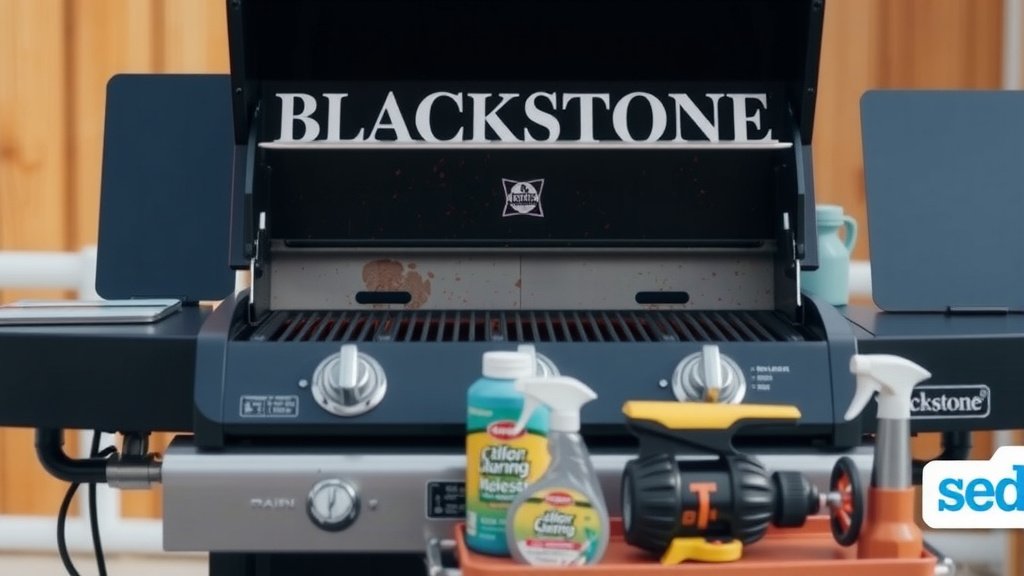
To remove rust from a Blackstone Grill, you generally need to heat the griddle, scrape off loose rust, apply an abrasive like a mix of oil and coarse salt, and scrub vigorously with a rust eraser or steel wool until the rust is gone.
After scrubbing, wipe clean, rinse, dry thoroughly, and immediately re-season your Blackstone grill to prevent new rust from forming.
TL;DR: Rust on your Blackstone is fixable! Here’s the quick guide to getting it looking great again:
- Heat your griddle to loosen rust.
- Scrape away loose flakes with a metal scraper.
- Use an abrasive (like oil and salt or vinegar) with a rust eraser or steel wool.
- Scrub hard until the rust spots are gone.
- Clean, dry, and immediately re-season to protect the surface.
- Prevent future rust by always cleaning and oiling after each use, then covering your grill.
How To Remove Rust From A Blackstone Grill?
Removing rust from your Blackstone griddle doesn’t have to be a nightmare. You can bring your beloved cooking surface back to life with the right approach and a little elbow grease.
Why Does Rust Form on Your Blackstone?
Rust is the arch-nemesis of any cast iron or steel cooking surface. It forms when iron reacts with oxygen and moisture. If your Blackstone griddle is left exposed to rain, humidity, or even just condensation after washing without proper drying, rust can quickly appear. It’s like leaving a metal tool out in the rain – it just happens.
Is Rust Harmful on a Grill?
A little surface rust isn’t usually a major health hazard, but you definitely don’t want to cook on it. It affects the taste of your food and can make your griddle surface uneven. Many experts say that while tiny bits of rust ingested occasionally are unlikely to cause serious harm, it’s always best to remove all rust before cooking (Cleveland Clinic).
Essential Tools for Rust Removal
Before you jump in, let’s gather your arsenal. Having the right tools makes a huge difference in how smoothly this process goes. Think of it like a handyman’s preparation – you wouldn’t build a house without a hammer, right?
- Stiff metal scraper (Blackstone branded or similar)
- High-heat cooking oil (flaxseed, grapeseed, canola, or Blackstone seasoning & conditioning oil)
- Coarse salt (kosher salt works great)
- White vinegar (optional, for tougher spots)
- Rust eraser or heavy-duty scouring pad (e.g., Scotch-Brite)
- Steel wool or fine-grit sandpaper (for very stubborn rust)
- Clean rags or paper towels
- Heat-resistant gloves
Method 1: The Scraper and Oil Approach (For Lighter Rust)
This method is excellent for tackling light to moderate surface rust. It’s often the first line of defense for many grill owners. You’ll be surprised at how effective a simple scraper and some oil can be.
Step 1: Heat It Up
Turn your Blackstone grill on to medium-high heat. Let it warm up for about 10-15 minutes. This helps to loosen any rust and makes scraping much easier. It’s like warming up a stubborn sticker before peeling it off.
Step 2: Scrape Away
Using your metal scraper, push and scrape off any loose rust flakes, charred food bits, or stubborn grime. Apply firm, even pressure. You might hear some satisfying scraping noises as the rust gives way. Work slowly and methodically across the entire rusted area.
Step 3: Oil and Scrub
Once you’ve scraped the loose bits, turn off the heat. Pour a generous amount of your high-heat cooking oil onto the griddle, especially over the rusty spots. Add a good handful of coarse salt. Now, with your rust eraser or heavy-duty scouring pad, scrub the oiled and salted areas vigorously. The salt acts as an abrasive, and the oil helps lift the rust. Keep scrubbing until the rust visibly diminishes or disappears.
Method 2: Vinegar Power for Tougher Spots
White vinegar is a fantastic, natural acidic cleaner. It can work wonders on rust that’s a bit more set in. We’ve found that it’s a great option for those persistent rust patches.
Step 1: Apply Vinegar
After scraping off loose rust (Method 1, Step 2), ensure your griddle is cool. Spray or pour undiluted white vinegar directly onto the rusted areas. You don’t need to flood it, just make sure the rust is well-covered.
Step 2: Let it Sit
Allow the vinegar to sit for about 10-15 minutes. The acidity in the vinegar will start to break down the rust. You might even see it fizzing slightly, which means it’s working!
Step 3: Scrub and Rinse
Using a rust eraser, steel wool, or a sturdy scrub brush, scrub the rusted areas. The vinegar will have softened the rust, making it easier to remove. Wipe away the rust and vinegar residue with a clean cloth. You might need to repeat this process for very stubborn spots. Rinse the griddle surface with water and dry it immediately and thoroughly.
Method 3: The Salt and Potato Trick (Abrasive Aid)
This is an old-school method that uses natural abrasives. It’s simple, effective, and uses things you likely already have in your kitchen.
Step 1: Cut a Potato
Take a potato and cut it in half. The cut side will become your scrubbing surface. Many home cooks swear by this method for light rust, especially for cast iron pans.
Step 2: Add Salt
Sprinkle a generous amount of coarse salt onto the rusted areas of your cool griddle. Then, take one half of your cut potato and dip the cut side into the salt, picking up a good layer.
Step 3: Scrub with Force
Using the potato (salt-side down) as a scrubber, rub the rusted areas of the griddle vigorously. The potato’s natural oxalic acid combined with the abrasive salt helps lift the rust away. Continue scrubbing, reapplying salt and even trimming the potato if it gets too mushy, until the rust is gone. Clean off the residue and dry thoroughly.
After Rust Removal: Seasoning is Key!
Once you’ve conquered the rust, your battle isn’t over. The exposed metal needs immediate protection. Think of it like applying sunscreen after a long day at the beach – you need to protect your skin!
Why Seasoning Matters
Seasoning is a layer of polymerized oil baked onto your griddle. This layer creates a natural non-stick surface and, more importantly, a protective barrier against moisture and oxygen. Without it, your freshly cleaned griddle will rust again, possibly faster than before. Research often connects a good seasoning with long-term griddle health (Cook’s Illustrated).
How to Re-Season Your Griddle
Apply a very thin, even layer of high-heat cooking oil (like flaxseed, grapeseed, or Blackstone’s own seasoning blend) across the entire griddle surface. Wipe off any excess, leaving only a microscopic film. Heat your griddle to medium-high for 15-20 minutes until the oil stops smoking. Let it cool slightly, then repeat this oiling and heating process 3-5 times. This builds up that crucial protective layer.
Preventing Rust: Your Best Defense
The easiest way to deal with rust is to stop it from happening. Prevention is always better than cure, especially with something as valuable as your Blackstone griddle. We found that a consistent routine makes all the difference.
Always Clean After Use
After every cookout, scrape off food residue while the griddle is still warm. A quick wipe-down with a paper towel can often be enough. Never leave food particles to sit overnight, as they can hold moisture.
Proper Oiling
After cleaning and drying, apply a very thin layer of cooking oil across the entire griddle surface. This creates a barrier against moisture. It’s a small step that pays huge dividends.
Invest in a Good Cover
A custom-fit Blackstone griddle cover is a wise investment. It shields your griddle from rain, dew, and airborne moisture. Ensure it fits snugly and doesn’t trap condensation underneath.
Store in a Dry Place
If possible, store your griddle in a garage or under a covered patio. Keeping it out of direct elements, especially in humid climates, drastically reduces rust risk.
Checklist for Rust Prevention Success:
- Always clean the griddle immediately after cooking.
- Apply a thin layer of cooking oil after cleaning.
- Ensure the griddle is completely dry before oiling and covering.
- Use a quality, fitted cover to protect from weather.
- Store in a sheltered or dry location when not in use.
| Rust Removal Method | Best For | Key Materials | Effort Level |
|---|---|---|---|
| Scraper and Oil | Light to moderate rust | Metal scraper, high-heat oil, coarse salt, rust eraser/scouring pad | Medium |
| Vinegar Power | Tougher, more set-in rust | White vinegar, spray bottle, steel wool/scrub brush | Medium-High |
| Salt and Potato | Light surface rust, natural approach | Potato, coarse salt | Medium |
Conclusion
Dealing with rust on your Blackstone grill might seem daunting, but it’s a completely solvable problem. By following these steps and giving your griddle a little TLC, you can restore its original glory. Remember, the key is not just removing the rust but also diligently re-seasoning and maintaining it to prevent future occurrences. Your Blackstone is an investment in delicious meals, and keeping it rust-free ensures countless joyful cooking experiences ahead!
How often should I re-season my Blackstone grill after rust removal?
After removing rust, you should re-season your Blackstone grill immediately and perform 3-5 seasoning cycles to build up a strong protective layer. After that, you’ll likely want to re-season lightly after every 3-5 uses or whenever the surface looks dull or less non-stick.
Can I use steel wool on my Blackstone griddle?
Yes, you can use steel wool (especially finer grades) or a dedicated rust eraser for stubborn rust spots on your Blackstone griddle. However, always use it carefully to avoid scratching the griddle excessively and ensure you re-season thoroughly afterward to restore the protective layer.
What kind of oil is best for seasoning and preventing rust?
High-heat cooking oils like flaxseed, grapeseed, canola, or Blackstone’s proprietary seasoning & conditioning oil are excellent choices. These oils have a high smoke point and polymerize well, creating a durable, non-stick, and rust-resistant surface.
My griddle keeps rusting even after I clean it. What am I doing wrong?
If your griddle keeps rusting, you might be missing a crucial step: proper drying and immediate re-oiling/seasoning after each cleaning. Ensure no moisture is left on the surface, and always apply a thin layer of oil before storage to create a protective barrier. A good griddle cover is also essential.
Is rust on the side walls or frame of the Blackstone grill a concern?
Rust on the side walls or frame of your Blackstone grill is primarily a cosmetic issue and generally less critical than rust on the cooking surface. You can clean it with a wire brush and apply a rust-inhibiting paint, but it won’t affect your food directly.
