
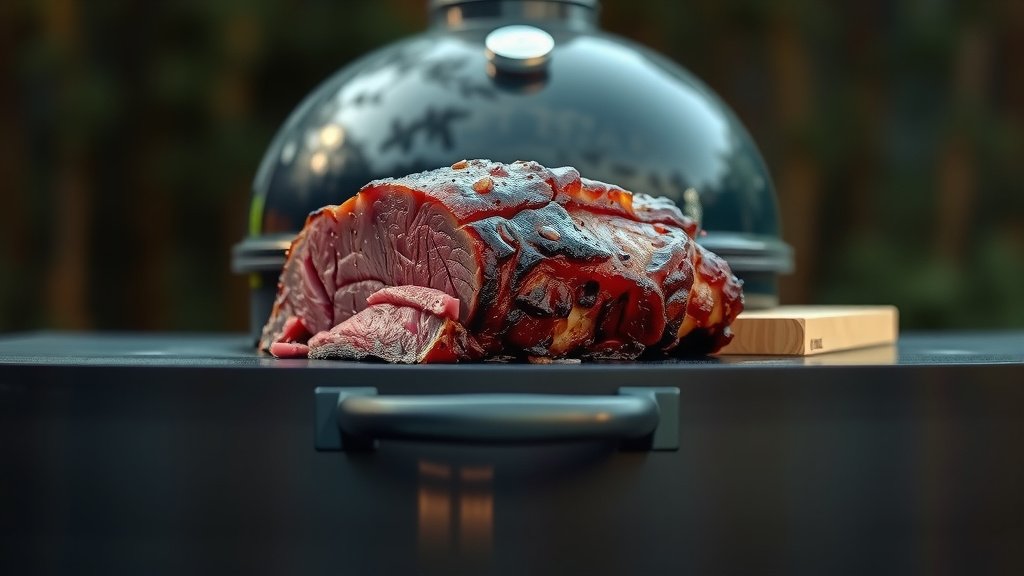
To smoke a beef brisket on a pellet grill, you first trim the fat to a quarter-inch, apply a generous dry rub, and then smoke it low and slow at around 225-275°F until it reaches an internal temperature of 203°F in the thickest part.
This method, favored by many pitmasters, results in a tender, juicy, and flavorful beef brisket with a dark, rich bark, making your pellet grill a fantastic choice for this BBQ masterpiece.
- Select a high-quality, full packer brisket for the best outcome.
- Trim excess fat to about 1/4 inch thick, leaving some for moisture.
- Apply a liberal amount of your preferred beef rub, covering all surfaces.
- Smoke at a steady temperature of 225-275°F until the internal temp hits 165°F.
- Wrap the brisket tightly in butcher paper or foil to push through the stall.
- Continue cooking until it probes tender, typically around 203°F internal temperature.
- Rest the smoked brisket for several hours before slicing against the grain.
How To Smoke A Beef Brisket On A Pellet Grill?
Smoking a beef brisket on a pellet grill involves careful preparation and patient cooking. You’ll set your grill to a consistent low temperature and allow the smoke to work its magic over many hours.
The key steps involve trimming, seasoning, steady temperature control, and proper resting to achieve that legendary tender, smoky result.
Why Use a Pellet Grill for Brisket?
Pellet grills are a fantastic option for smoking brisket due to their consistent temperature control. You simply set your desired temperature, and the grill maintains it, removing much of the guesswork.
This consistency helps you achieve a perfectly cooked brisket without constant monitoring, which is a big plus for beginners and experienced smokers alike. We found that this automation makes long cooks much less stressful.
Picking Your Perfect Brisket
Choosing the right brisket is your first and most important step. Look for a “full packer” brisket, which includes both the flat and the point muscles, connected by a layer of fat.
Many experts recommend a brisket weighing between 12-16 pounds, with good marbling throughout the lean muscle. A flexible, pliable brisket often indicates good fat content and tenderness (Texas A&M AgriLife Extension).
Flat vs. Point: What’s the Difference?
The brisket flat is the leaner, rectangular part, ideal for slicing. The point is thicker, fattier, and becomes wonderfully shreddable, often used for burnt ends.
When you buy a packer brisket, both parts are together. Learning their characteristics helps you understand how they cook differently.
Trimming Your Brisket Like a Pro
Trimming is crucial for an even cook and bark formation. You want to remove hard, thick fat that won’t render, but leave a thin, consistent layer of fat about 1/4 inch thick.
This remaining fat helps keep the meat moist during the long smoke. Don’t be afraid to take your time; a well-trimmed brisket performs much better on the grill.
Seasoning for Success: The Rub
A good rub adds a significant layer of flavor and helps form that desirable bark. A simple blend of coarse black pepper, kosher salt, and garlic powder is a classic choice for beef brisket.
Apply the rub generously to all surfaces of the brisket. Many pitmasters say to apply it several hours, or even a night, before smoking to let the flavors penetrate the meat.
Setting Up Your Pellet Grill
Before putting the brisket on, ensure your pellet grill is clean and filled with fresh pellets. We found that certain wood types pair exceptionally well with beef.
Preheat your grill to your target temperature, typically between 225°F and 275°F. Using a lower temperature like 225°F generally produces more smoke flavor and a thicker bark.
The Smoking Process: Low and Slow
Place your trimmed and seasoned brisket fat-side up or down, depending on your grill’s heat source location. Insert a reliable probe thermometer into the thickest part of the flat, avoiding fat pockets.
Allow the brisket to smoke undisturbed for the first several hours, letting the smoke adhere to the meat. This initial phase is where the bark truly begins to develop.
The “Stall” and When to Wrap
Around 150-165°F internal temperature, your brisket will hit a “stall” where its temperature temporarily stops rising. This is due to evaporative cooling on the surface of the meat.
Many pitmasters choose to wrap the brisket in butcher paper or foil at this point. Wrapping helps push through the stall and keeps the brisket moist, though some prefer to “go naked” for a crispier bark.
What About the Spritz?
Some people like to spritz their brisket every hour or so with apple cider vinegar, water, or beef broth after the first few hours. This can help keep the surface moist and potentially aid in bark development.
Others prefer not to spritz, believing it can cool the surface too much and extend the cook time. It’s a matter of personal preference; try both ways to see what you like best.
Finishing Strong: Reaching Target Temperature
After wrapping, continue cooking your brisket until it reaches an internal temperature of about 203°F. However, temperature is just a guideline; the real indicator is tenderness.
When probed with a thermometer or skewer, it should feel like “poking soft butter” with little resistance. This “probe tender” feeling means the collagen has rendered and the meat is perfectly cooked.
The Critical Rest Period
Once your brisket is probe tender, resist the urge to slice it immediately! Resting is arguably the most important step. Remove the brisket from the grill and let it rest, still wrapped, for 2-4 hours.
You can rest it in a cooler, wrapped in towels, to maintain temperature. This resting period allows the juices to redistribute throughout the meat, resulting in a much juicier and more tender final product.
Slicing Your Smoked Brisket
After resting, unwrap your brisket and separate the flat from the point (if not already done). Always slice against the grain for both sections. Slicing with the grain will make the meat tough, no matter how perfectly cooked.
Use a long, sharp slicing knife. For the flat, aim for slices about pencil-thick. The point can be sliced or chopped, often used for delicious burnt ends.
Common Brisket Mistakes to Avoid
Here’s a quick checklist to help you avoid common pitfalls when smoking your brisket:
- Don’t rush the cook: Brisket takes time.
- Avoid over-trimming: You need some fat for moisture.
- Never skip the rest: It’s vital for juicy meat.
- Don’t slice with the grain: Always go against it.
- Don’t rely solely on temperature: Probe for tenderness too.
Wood Pellet Flavor Guide
The type of wood pellets you use significantly impacts your brisket’s flavor. Here’s a quick guide to popular choices:
| Wood Type | Flavor Profile | Best For |
|---|---|---|
| Hickory | Strong, bacon-like, savory | Beef, pork, poultry |
| Oak | Medium, earthy, classic BBQ | Beef, lamb, venison |
| Mesquite | Very strong, bold, distinct | Beef, game meats |
| Pecan | Mild, sweet, nutty | Pork, poultry, beef (milder smoke) |
Conclusion
Smoking a beef brisket on a pellet grill is a rewarding experience that produces incredibly flavorful and tender meat. By following these steps—from proper trimming and seasoning to patient, low-and-slow cooking and a crucial rest—you’re well on your way to mastering this BBQ classic.
Remember, practice makes perfect. Don’t be discouraged if your first brisket isn’t exactly what you hoped for. Each cook is a learning opportunity, and soon you’ll be turning out brisket that will impress everyone.
How long does it take to smoke a 12-pound brisket on a pellet grill?
A 12-pound brisket typically takes about 10-14 hours to smoke on a pellet grill at 225-275°F. The exact time can vary based on the brisket’s thickness, fat content, and your grill’s consistency, so always cook to temperature and tenderness, not just time.
Should I trim all the fat off a brisket before smoking?
No, you should not trim all the fat off. It’s recommended to trim the fat cap down to about 1/4 inch thickness. This fat layer renders during the cook, adding moisture and flavor, and also helps to create a delicious bark.
What is the best temperature for smoking brisket on a pellet grill?
The optimal temperature range for smoking brisket on a pellet grill is generally between 225°F and 275°F. Many experts prefer 225°F for a deeper smoke ring and more pronounced smoke flavor, while 250-275°F can speed up the cook slightly.
Do I need to spray or spritz my brisket while smoking?
Spritzing your brisket with a liquid like apple cider vinegar or beef broth is optional. Some pitmasters believe it helps keep the surface moist and improves bark development, while others avoid it to prevent cooling the meat and extending cook times. Try both approaches to find your preference.
How long should a smoked brisket rest after cooking?
A properly smoked brisket should rest for a minimum of 2 hours, but ideally 3-4 hours, before slicing. This extended resting period allows the muscle fibers to relax and the juices to redistribute evenly throughout the meat, resulting in a significantly more tender and juicy outcome.
